The History Center brings back a unique piece of Eastern Iowa history with the new exhibit “Bruce & Nola Bucknell – Partners in Puppetry.” The Bucknells toured all over the United States and Canada with their marionettes, each one handmade by Bruce and costumed by Nola. The Hy-Vee slogan, “A helpful smile in every aisle” actually debuted in a commercial featuring Bucknell puppets in 1963.
Bruce and Nola’s sons grew up with the puppets and eventually toured with their own versions of the show. For the opening of the exhibit, they are staging a live outdoor puppet show, the first Bucknell show in decades!
Two shows, 10:00 and 11:30am on June 3. Tickets and more in of at www.historycenter.org.
Subscribe to The Culture Crawl at www.kcck.org/culture or search “Culture Crawl” in your favorite podcast player. Listen Live at 10:30am most weekdays on Iowa’s Jazz station. 88.3 FM or www.kcck.org/listen.
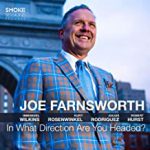
Listen to this week’s playlist on YouTube and Spotify Drummer Joe Farnsworth sets out on a bold new path in answer to the question, “In What Direction Are You Headed?” The new disc marks a turning point in his career, as he’s assembled a new quintet featuring not his renowned forebears but esteemed talents from his own generation and a younger, rising class. While Joe has honed his skills through decades of work with some of jazz’s greatest elders—iconic names like McCoy Tyner, Pharoah Sanders, Horace Silver, Benny Golson, Cedar Walton, Curtis Fuller, Johnny Griffin and others—in recent years, he’s seen many of his mentors pass away. His new stellar all-star quintet includes guitarist Kurt Rosenwinkel, saxophonist Immanuel Wilkins, pianist Julius Rodriguez, and bassist Robert Hurst.
Bass player Dewayne Pate is so busy working as a sideman that it’s taken him 14 years and a pandemic lockdown to find the time to record his second album as a leader. He’s a master of many styles and has performed around the world with many top acts, like Arturo Sandoval, Huey Lewis, Robben Ford, Boz Scaggs, Maria Muldaur and Tower of Power, to name a few. “On the Upside” comprises funk, blues and fusion jazz tunes performed with a variety of instrumentation, and features an all-star band that includes Ford, Barry Finnerty, Ray Obiedo, Dennis Chambers, Norbert Stachel, Marc Russo and Michael Spiro.
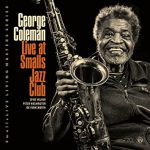
Also this week, the 6th album in the Smalls Living Masters series finds tenor titan George Coleman “Live at Smalls Jazz Club,” in the company of pianist Spike Wilner, bassist Peter Washington and drummer Joe Farnsworth;
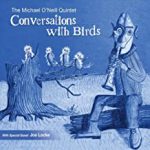
“Conversations With Birds,” the sixth recording by saxophonist Michael O’Neill, brings his expressive, lyrical playing to a beautiful range of original compositions;
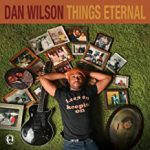
and guitarist/composer Dan Wilson gathers hope and inspiration from ancestral wisdom, dedicated to the enduring quality of the human spirit, throughout a curated selection of 12 songs on “Things Eternal.”
Cedar Rapids Children’s Theatre, better known as Playtime Poppy, presents Summer Theatre Adventure, a free summer program open to kids ages 7-14. Auditions will be June 4 at 1:15 in Whipple Auditorium at the Cedar Rapids Public Library. Participants will present “It’s Complicated: Fairy Tales from the Ukrainian Steppes,” the week of July 10.
More information at www.playtimepoppy.com or www.facebook.com/playtimepoppy.
Subscribe to The Culture Crawl at www.kcck.org/culture or search “Culture Crawl” in your favorite podcast player. Listen Live at 10:30am most weekdays on Iowa’s Jazz station. 88.3 FM or www.kcck.org/listen.
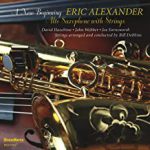
Listen to this week’s playlist on YouTube and Spotify As difficult times often beget new beginnings, the Covid-19 quagmire gave birth to alto saxophonist Eric Alexander. To some, a tenor-to-alto switch may not seem to be a newsworthy matter, but for the initiated, it’s the stuff of headlines. An inveterate tenor at the apex of the scene for more than three decades, Eric put the alto away in his teen years and never looked back. “But with the dearth of opportunities to play during the pandemic, I started to work on it,” he confesses. He successfully pitched the idea of using his second saxophone-with-strings project as a debut on alto.
Arturo O’Farrill returns to his first love—the piano—on his remarkable new Blue Note album, “Legacies.” Renowned as a composer, arranger and bandleader, here the 8-time Grammy-winner puts the emphasis back on his striking pianistic abilities with a 9-song set that juxtaposes stunning solo piano flights and dynamic trio performances with O’Farrill accompanied by his son, drummer Zack O’Farrill, and bassist Liany Mateo. The repertoire includes pieces by Bud Powell, Monk, Herbie Hancock, Carla Bley, and his father Chico O’Farrill.
Also this week, “What’s Trending” is Grammy-winning singer-songwriter LeoSidran’s eighth solo recorded, a hip, deeply personal exploration of how music can make life more livable in difficult times;
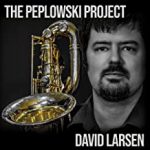
baritone saxophonist David Larsen’s “The Peplowski Project” features the great clarinetist and saxophonist Ken Peplowski on a mix of jazz standards and Larsen originals;
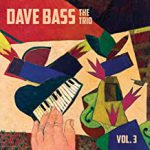
and “The Trio—Vol. 3” is the newest recording by pianist and composer Dave Bass, a lyrical, freewheeling buffet of solid originals together with an eclectic assortment of compositions ranging from the Great American Songbook to the jazz songbook.
Hey, Jazz fans! Be sure to tune in this week as we celebrate the birthdays of clarinetist/bandleader Artie Shaw, pianist/bandleader Sun Ra, singers Rosemary Clooney and Peggy Lee, trumpeter Miles Davis, bassist Max Bennett, organist Charles Earland, reedman Ken Peplowski and more. We’ll also mark the recording anniversaries of Sonny Rollins’ “Tenor Madness” (1956), Stan Getz’ “Getz Au Go Go” (1964), Cal Tjader’s “The Great Cathedral Concert” (1976), Ray brown Trio’s “Black Orpheus” (1989), Monty Alexander “Live at the Iridium” (2004) and many others 10am to 2pm, Monday thru Friday, with Jazz Masters at noon.
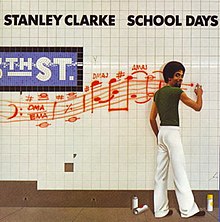
Craig invites us to join in on the fun as he spins a fine sampling from Stanley Clarke’s stellar 50-year career. We’ll hear from his many albums as a leader, as well as great work with Chick Corea, Stanley Cowell, George Duke, Tony Williams, Flora Purim, Airto, and others.
The Wednesday Night Special
Dr. Lonnie Smith with KCCK Program Director Bob Stewart backstage at the 2010 Iowa City Jazz Festival
Wednesdays at 6:00pm
Dr. Lonnie Smith at the ICJF
Organ master Dr. Lonnie Smith took the Iowa City Jazz Festival main stage in 2013. As we get closer to the 2023 Jazz Festival, we’re re-listening to this standout set from a true jazz legend.
Jazz Night in America
Thursdays at 11:00pm
Helen Sung’s Jazz Dreams
Host Christian McBride continues his celebration of Asian American and Pacific Islander Heritage Month. This week, he visits with pianist Helen Sung. She reflects on how she stuck to her jazz dreams even as she trained in classical music. We’ll also hear from her new thematic work for quartet, based on her emotions on social justice.
Jazz Corner of the World with Host Craig Kessler
Saturdays from 12 noon to 4:00pm
Miles Davis in the 1940s
Don’t miss this episode as Craig celebrates Miles Davis’s birth date anniversary with an in-depth look at Davis’s early days. We’ll hear his work with Charlie Parker, Benny Carter, Billy Eckstine, Coleman Hawkins, Tadd Dameron, and others.
KCCK’s Midnight CD
Every Night at Midnight
Each night, KCCK lets you hear a new CD played start-to-finish.
Big Band Trax by Wax: the Music of Michael Weatherwax by Kupkasonic Jazz Orchestra on Monday;Time Flies by Steve Smith & Vital Information on Tuesday; Exactly Right! by Louis Hayes on Wednesday; In Real Time by Artemis on Thursday; Everybody’s Buddy by Nic Clark on Friday; Far Enough by Jimmie Bratcher on Saturday; Of What Remains by the Melissa Pipe Sextet on Sunday.
KCCK’s Saul Lubaroff had a chance to talk with pianist Laurence Hobgood prior to Laurence and his trio performing at the Sound Conservatory Music Academy & Shoppe in Rock Island on May 28. More information and tickets are available by calling (309)373-0790 or visiting www.polyrhythms.org.

 Listen to this week’s playlist on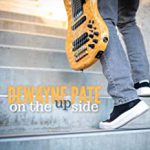
 Listen to this week’s playlist on
 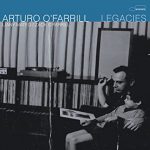 Arturo O’Farrill returns to his first love—the piano—on his remarkable new Blue Note album, “Legacies.” Renowned as a composer, arranger and bandleader, here the 8-time Grammy-winner puts the emphasis back on his striking pianistic abilities with a 9-song set that juxtaposes stunning solo piano flights and dynamic trio performances with O’Farrill accompanied by his son, drummer Zack O’Farrill, and bassist Liany Mateo. The repertoire includes pieces by Bud Powell, Monk, Herbie Hancock, Carla Bley, and his father Chico O’Farrill.
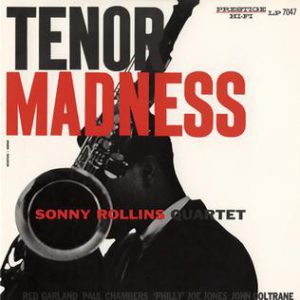 Hey, Jazz fans! Be sure to tune in this week as we celebrate the birthdays of clarinetist/bandleader Artie Shaw, pianist/bandleader Sun Ra, singers Rosemary Clooney and Peggy Lee, trumpeter Miles Davis, bassist Max Bennett, organist Charles Earland, reedman Ken Peplowski and more. We’ll also mark the recording anniversaries of Sonny Rollins’ “Tenor Madness” (1956), Stan Getz’ “Getz Au Go Go” (1964), Cal Tjader’s “The Great Cathedral Concert” (1976), Ray brown Trio’s “Black Orpheus” (1989), Monty Alexander “Live at the Iridium” (2004) and many others 10am to 2pm, Monday thru Friday, with Jazz Masters at noon.
 Jazz Corner of the World with host Craig Kessler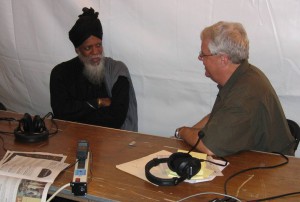
 Jazz Night in America
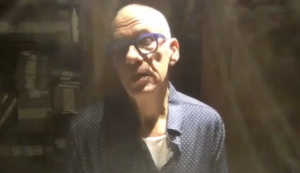 KCCK’s Saul Lubaroff had a chance to talk with pianist Laurence Hobgood prior to Laurence and his trio performing at the Sound Conservatory Music Academy & Shoppe in Rock Island on May 28. More information and tickets are available by calling (309)373-0790 or visiting www.polyrhythms.org.