Soundtrack to the Struggle: Herb Jeffries, “The Bronze Buckaroo”

It’s the late 1930’s and Herb Jeffries, a popular singer in several big bands, saddles up to become the first African American singing cowboy.  Dubbed “The Bronze Buckaroo,” Jeffries starred in several low-budget Westerns, like Harlem Rides the Range, and Two Gun Man from Harlem.

Every Saturday, children of all skin colors packed afternoon matinees, and watched the   adventures of such white Western stars as Tex Ritter and Gene Autry. If the cast did include people of color, the roles were stereotypes and caricatures. Children of color needed heroes they could identify with, Jeffries understood. They needed characters who went through life with dignity and humanity. 

In 1937, Jeffries financed and starred in Harlem of the Prairie, making history with the first talking, singing Black cowboy picture with an all-Black cast. Over two years, he made four movies, starring as Bob Blake, the lonesome hero who rides into town, solves problems with his fists, quick wits, and six-guns. And while winning the heart of the rancher’s daughter, he finds time to sing a ballad or two.

Jeffries hung up his spurs in 1939 to join Duke Ellington’s Blanton-Webster Orchestra. Over his long career he recorded with the Erskine Tate band, Earl Hines, Sidney Bechet, and the all-male orchestra led by Blanche Calloway. His rich, silky baritone kept him on the bandstand for decades. And his pioneering movies kept him signing autographs his entire life.

“Soundtrack to the Struggle” is hosted by Hollis Monroe. Produced by Ron Adkins. Executive Producer is Dennis Green.

PlayPlay

Soundtrack to the Struggle: Amanda Randolph, The First Black TV Star

It’s 1948 and the DuMont Television Network airs the first episode of its new program, The Laytons, starring jazz singer and actor Amanda Randolph. Little is known about this situation comedy, but Randolph made history in its mere ten episodes as the first African-American in a starring TV role.

Despite The Laytons’s brief run, Randolph’s performance was so well-received by the network that she made history, again, as the first African-American woman to host her own show. Simply titled Amanda, this musical variety program not only showcased Randolph’s talent, but allowed her to welcome other Black performers into the national spotlight.

But Amanda Randolph was a history-maker long before television. The piano rolls she cut in 1919 are the earliest existing recordings of a Black musician. As a singer in the Twenties, Randolph recorded with her own orchestra. She garnered rave reviews in the Eubie Blake/Noble Sissle review, Shuffle Along. She performed regularly on radio, and even lent her voice to a series of cartoons. She appeared alongside Sidney Poitier in No Way Out, and was a regular on Amos & Andy and the Danny Thomas Show.

When she passed in 1967, the entertainment trades printed tributes acknowledging Amanda Randolph’s trail-blazing career, and her work to advance the careers of fellow Black performers.

“Soundtrack to the Struggle” is hosted by Hollis Monroe. Produced by Ron Adkins. Executive Producer is Dennis Green.

PlayPlay

Culture Crawl 788 “Seinfeld-ish Rhythm”

TKM Theatrical Productions, the performing troupe founded by long-time Corridor favorites Deb Kennedy and Tom Milligan, present “The Love List,” Feb. 10-11 at the recently-reopened Amana Performing Arts Center.

Clark Skaggs plays Bill, whose friend Leon gives him a form to fill out, listing the quality’s of Bill’s perfect woman. Chaos ensues when a woman fitting the exact description walks through Bill’s door!

It’s an interesting role reversal for Clark and Deb. Clark directed Deb and Tom in the show some years ago. Deb is the director this time around!

Clark’s real-life spouse Kai plays Justine, with Ken Van Egdon rounding out the cast as Leon.

Visit TKM productions on Facebook for the ticket link, https://www.facebook.com/profile.php?id=100085171131736

Subscribe to The Culture Crawl at www.kcck.org/culture or search “Culture Crawl” in your favorite podcast player. Listen Live at 10:30am most weekdays on Iowa’s Jazz station. 88.3 FM or www.kcck.org/listen.

Soundtrack to the Struggle: Oscar Brown, Jr.’s “Brother Where Are You?”

Oscar Brown, Jr. was not a man easily defined. Labels like songwriter, composer, actor, singer, director, producer, playwright all fit, but not quite. He was also an activist, a visionary, and a social commentator. A vocalist whose technique was steeped in jazzy agility and swing, his performances were consistently witty, shrewd, musical and humane, and he wrote lyrics to several classic jazz anthems that sounded integral to them, rather than afterthoughts.

Born in Chicago, Brown’s father intended for him to follow in his footsteps and become a practicing lawyer, but influenced by the Harlem Renaissance as he was by the Civil Rights Movement, Brown had a desire to create and to communicate. In doing so he penned over 1,000 songs, recorded 11 albums, and wrote several plays.

A forerunner of the political consciousness that would become predominant in soul, funk, and hip-hop in the decades to follow, his efforts to exact social change spread across the arts and even into government, spurring two unsuccessful but memorable campaigns for office.

Of his work, Oscar Brown, Jr. said, “Our society is being bombarded with images designed to accustom it to horror and benumb all compassion … Therefore, I am launching a creative counter-attack. Where I confront hate, I will exemplify love. In the face of ugliness, I will present beauty. As an antidote to lies, I will reveal the truth. Boisterous, bellicose noises must be diminished by hip harmonies set to moving rhythms and messages.”

Though he never received the recognition many felt he deserved during his life, his music and words have had a continued influence on a whole new generation of artists and activists.

“Soundtrack to the Struggle” is hosted by Hollis Monroe. Produced by Ron Adkins. Executive Producer is Dennis Green.

PlayPlay

This Week’s Specials February 6 thru February 11

Jazz Corner of the World

Mondays from 6:00pm to 10:00pm

Tribute to Sam Salomone, Show 2

Craig Kessler continues his celebration of recently departed organist and local musician Sam Salomone. This week, Craig spins, among other goodies, more of Sam’s favorites. Don’t miss gems from Jimmy Smith, John Patton, Don Patterson, and other great jazz organists.


The Wednesday Night Special

Wednesdays at 6:00pm

daBluesapalooza ‘22 

We’re getting ready for KCCK’s night-long blues blowout, daBluesapalooza 23! To set the stage, the Wednesday Night Special listens back to Eastern Iowa’s top blues and R&B musicians from last year’s jam. This week, it’s the Craig Erickson Quartet, Molly Nova & the Hawk, and the Evan Stock Band!


Jazz Night in America

Thursdays at 11:00pm

The Rise of Baltimore  

Host Christian McBride spotlights the glory days of Baltimore, and celebrates the people behind Charm City’s jazz renewal. We’ll hear from trumpeter Sean Jones, NEA Jazz Master Todd Barkan, and The Baltimore Jazz Collective – a leaderless band – recorded live at the Keystone Korner jazz club.


Jazz Corner of the World 

Saturdays from 12 noon to 4:00pm

Keyboard Wizard Joe Zawinul

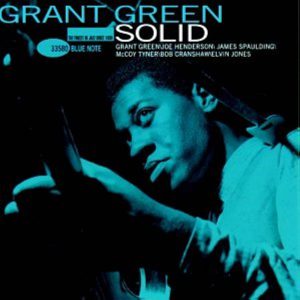
Host Craig Kessler takes a loving listen to the career of Joe Zawinul. A tasteful (and tasty) variety of Joe’s earlier works is set to play in this first of three episodes. Zawinul made legendary recordings with Cannonball and Nat Adderley, Miles Davis, and co-founded the supergroup Weather Report.


KCCK’s Midnight CD

Every Night at Midnight

Each night, KCCK lets you hear a new CD played start-to-finish.

Feelin’ It by Jim Witzel oMonday; Connected, Vol. 1 by Richie Goods & Chien Chien Lu on Tuesday; Unjust by Ben Wolfe on Wednesday; Phoenix by Lakecia Benjamin on Thursday; Live! At the Fallout Shelter by the Diane Blue All-Star Band on Friday; Riffin’ the Blues by Tas Cru on Saturday; I Love a Love Song! by Racheal & Vilray on Sunday.

This Week In Jazz February 5 thru February 11


Hey, Jazz fans! Be sure to tune in this week as we celebrate the birthdays of bassists Walter Page and Rufus Reid, reedmen Pony Poindexter and Joe Maini, drummers Joe Dodge and Walter “Baby Sweets” Perkins, pianists Sir Roland Hannna and Antonio Adolfo and more. We’ll also mark the recording anniversaries of “Horace Silver and The Jazz Messengers” (1955), Hank Mobley’s “Soul Station” (1960), Pat Martino’s “Exit” (1976), Machito & His Salsa Band’s “1983 Grammy Winner” (1982), Slide Hampton & the Jazz Masters’ “Dedicated To Diz” (1993), Barbara Morrison’s “I Wanna Be Loved” (2017) and many others Monday thru Friday at noon on Jazz Masters.   

Clean Up Your Act 2-28-23

The University of Iowa is launching a new research center to improve flood prediciton.

Soundtrack to the Struggle: Max Roach/Abbey Lincoln

Actress/singer Abbey Lincoln and musician Max Roach attend the premiere of ‘For Love Of Ivy’ on July 16, 1968 at Loew’s Tower East Theater in New York City. (Photo by Ron Galella/Ron Galella Collection via Getty Images)

1956, and Abbey Lincoln stood poised to become jazz music’s next glamour star. She had just appeared in the film, The Girl Can’t Help It, wearing Marilyn Monroe’s flaming red dress from Gentlemen Prefer Blondes. Her stage presence was honed to accentuate her looks and figure, rather than her voice. None of this sat well with Lincoln, who remembered her life growing up in poverty. She fired her manager and moved to New York, and from then on immersed herself in the growing Civil Rights Movement. 

She met future husband, drummer Max Roach, while singing at the Village Vanguard. He introduced Lincoln to the jazz elite, and mentored her development as an activist and socio-political artist. She, Roach, Oscar Brown, Jr., and others began performing at rallies and fundraisers for the NAACP, CORE, and other Civil Rights organizations. In 1960, she collaborated on Roach’s masterpiece to the Struggle, “We Insist! Freedom Suite.”

Lincoln believed that her art and her activism were one and the same. “When everything is finished in a world,” she said, “the people look for what artists leave. It’s the only thing that we really have in this world – an ability to express ourselves and say, ‘I was here.’” Her lyrics, though charged with her social conscious, were steeped in sweet poetry. Next generation singers like Cassandra Wilson and Kendra Shank are adding the Lincoln catalogue to their repertoire, solidifying Abbey’s indelible mark on her world, and continuing her impact on the ongoing Struggle.

“Soundtrack to the Struggle” is hosted by Hollis Monroe. Produced by Ron Adkins. Executive Producer is Dennis Green.

PlayPlay