Orchestra Iowa presents “Magical Movie Moments: John Williams” Feb. 19 and 20 at the Paramount Theatre. Tim Hankewich explains that Williams has written not just music that is great for movies, but great in and of itself. The orchestra will perform all your favorites from Star Wars, Superman, and more, along with some lesser-known gems.
Early 1939. The lights go down at New York’s Cafe Society. The waiters hush the drinking audience, a single small spotlight shines on her face. And Billy Holiday begins to sing. “Southern trees, bears strange fruit blood on the leaves, blood at the root.” The song ends, and the spotlight goes out. Billy leaves the stage, the room is silent until one patron, then another, then finally the entire room begins to applaud. They rise for a standing ovation, but Billy doesn’t return for encores or vows.
Billy would repeat this performance many times in her last two decades, albeit only in clubs that would tolerate such a song. As with all forms of protest, Strange Fruit met with resistance. Columbia record refused to record it. So, she went to an independent label. It took months for radio stations to muster the courage to play it.
But Strange Fruit eventually grew to become more than an anthem on the horrors of torture and lynching in Jim Crow America. Leonard Feather hailed it as the first significant protest in words and music, “the first unmuted cry against racism,” Stud Turkels proclaimed it “ declaration of war. The beginning of the civil rights movement.” First sung 16 years before Rosa parks refused to yield her seat on a Montgomery Alabama bus. And as one Southern civil rights worker stated , “If Billy Holiday didn’t light the fuse, she unquestionably fed the flame.”
“Soundtrack to the Struggle” is written and hosted by Hollis Monroe. Produced by Ron Adkins. Executive Producer is Dennis Green.
Melba Liston performs on Art Ford’s Jazz Party, a television program broadcast from Newark, N.J., in 1958.
Although Melba Liston was a woman in a male-dominated profession, she excelled anyway. Some consider her an unsung hero and she is very highly regarded in and outside of the jazz community as a trailblazer, as a musician and as a woman.
Melba Liston selected the trombone as her instrument because she thought it was the most beautiful thing she had ever seen. Only a year later, she was good enough to play a solo on a local radio station.
She broke barriers by joining the emerging major players of the bebop scene in the mid-1940s. She recorded with Dexter Gordon in 1947, and joined Dizzy Gillespie‘s big band, which included saxophonists John Coltrane, Paul Gonsalves, and pianist John Lewis. She toured with Count Basie, and then with Billie Holiday. But the experience of touring the south, coping with the strains of limited income and limited audiences, was strenuous, disheartening and exhausting.
In later years, Melba spoke candidly about the extreme difficulties of being a Black, female jazz musician during this era. More than being shunned or overlooked, she, and likely many other women musicians trying to make their way, were abused. Melba also dealt with larger issues of inequity in the industry. She had to continually prove her credentials and was not paid equitable scale.
In 1958, Melba Liston recorded her only album as a leader, Melba Liston and Her ‘Bones – a true gem in jazz history.
“Soundtrack to the Struggle” is written and hosted by Hollis Monroe. Produced by Ron Adkins. Executive Producer is Dennis Green.
1925, and Louis Armstrong hits the music scene with a splash. With trumpet in hand and a wonderfully unique voice, he took on popular songs and stretched the boundaries of their rhythms and melodies so profoundly that American music hasn’t been the same since. Indeed, Louis Armstrong was America’s first “pop star,” whose appeal ignored the demographics of race in America.
Armstrong’s presence greatly impacted the African-American community. As Charles Black, a lawyer who participated in the 1954 Brown vs. Board of Education case and who grew up in racist, anti-black Texas in the 1930’s, notes: “He (Louis Armstrong) was the first genius I had ever seen. It is impossible to overstate the significance of a sixteen-year-old southern boy seeing genius, for the first time, in a black. We literally never saw a black then in anything but a servant’s capacity.”
For many years, however, “the Father of Jazz” kept silent on race issues. He never marched or made appearances with civil rights leaders. When criticized for not taking any public stand, Armstrong would simply reply, “I don’t get involved in politics. I just blow my horn.” To many whites, Armstrong, with his trademark handkerchief, big smile, and down-home demeanor, represented something less threatening to the status quo. Sadly, this perception turned many black Americans against him. Criticized by activists and black musicians for playing into an “Uncle Tom” stereotype, Louis Armstrong, however, had his own subtle way of addressing racial issues. In 1929, he recorded Fats Waller’s “(What Did I Do To Be So) Black and Blue?” – a song from the musical Hot Chocolates. The powerful lyrics include the phrase:
My only sin Is in my skin What did I do To be so black and blue?
Out of the context of the show and sung by a black performer in that period, these words were a risky and weighty commentary. Armstrong carefully placed its performance at the end of his concerts for best effect. It was September 1957 when Armstrong did speak publicly about race relations in America. The country’s attention was on Little Rock, Arkansas, where Governor Orval Faubus and local segregationists defied a Supreme Court ruling desegregating the city’s Central High School. In an interview, Louis said, “It’s getting almost so bad a colored man hasn’t got any country.” President Dwight Eisenhower, he charged, was “two faced,” and had “no guts.” As for Faubus, Armstrong called him an “uneducated plow boy.”
“Soundtrack to the Struggle” is written and hosted by Hollis Monroe. Produced by Ron Adkins. Executive Producer is Dennis Green.
September 1944, and saxophone legend Lester Young arrives at Fort McClellan, Alabama, for basic training. Young is a jazz star, and he expects to be placed in a military band, like white musicians Glenn Miller and Artie Shaw. Instead, he’s assigned to a combat unit. Here marks the beginning of the end for the “President of Jazz.”
Lester Young’s impact on jazz, and popular culture, is immeasurable. He rose to fame as one of the Count Basie Orchestra’s standout. His solos, it was said, could take the audience’s collective breath away. His smooth, passionate sax work influenced generations – from Charlie Parker to Sonny Rollins. He was a true original. He coined the hipster phrases, “cool,” and “bread.” He dubbed Billie Holiday “Lady Day.” And you knew him at a glance by his pork pie hat.
Lester Young was not cut out for the army. He refused to follow orders. He resisted cutting his hair, sleeping in a barracks, or even wearing army boots. He openly drank and smoked marijuana. And, he declared that he didn’t need basic training because he would never fire a gun. “I don’t want to kill anyone,” he said. “I want to play and make them happy.” He was court martialed in short order and sentenced to one year in a detention barracks, then dishonorably discharged.
Details of his year in custody are sparse. What is known, though, is that Young was subjected to brutal abuse and bigotry. The experience was so traumatic, his sax playing was never quite the same. And it set in motion a long, slow spiral into alcoholism. “The sooner I drink myself to death,” Prez once joked, “the happier I’ll be.”
“Soundtrack to the Struggle” is written and produced by Ron Adkins. Executive Producer is Dennis Green. Hosted by Hollis Monroe.
Lena Horne left school at 16 to help support her family. She became a dancer at Harlem’s Cotton Club was soon a sought-after performer – a role she would maintain throughout her life. A long run at the Savoy-Plaza boosted Horne’s career even further. She was featured in Life magazine, and listed as the highest-paid Black entertainer of the day.
MGM signed Horne to a seven-year contract, but not before she demanded (with some assistance from her father and the NAACP) that she not play industry-standard roles, like domestic workers, that stereotyped African-American women. This was a controversial stance, but her convictions paid off. She appeared in legendary films like Cabin In The Sky and Stormy Weather.
By the end of the 1940s, Horne had sued a number of restaurants and theaters for discrimination. She became an outspoken member of the leftist group, Progressive Citizens of America. McCarthyism swept Hollywood, and Horne found herself, and friend Paul Robeson, blacklisted. It didn’t stop her career, though. She found work in posh nightclubs and on TV, and sang extensively in Europe. The ban eased by the mid-1950s, and Horne was as popular as ever. Her albums, “Feelin’ Good” and “Lena In Hollywood,” were hits.
Horne continued to use her fame on behalf of the NAACP, the National Council for Negro Women, and the Civil Rights Movement. She was a vocal participant at the 1963 March on Washington, and she lifted her voice for the voiceless until her death in 2010.
“Soundtrack to the Struggle” is produced by Ron Adkins. Executive Producer is Dennis Green. Written and hosted by Hollis Monroe.
It’s 1967, and singer and actress Nichelle Nichols attends a fund-raiser for the NAACP. A man approaches and says, “Ms. Nichols, I’m your greatest fan.” That fan was Dr. Martin Luther King, Jr. During their chat, Nichols confides her plans to leave her current TV gig for a career on Broadway. King was mortified. “You can’t leave Star Trek,” he said. “You’re a part of history. You aren’t cast as a servant. You play a Black woman in authority. You’re a role model for women and Negroes everywhere.” Nichols took Dr. King’s words to heart, and stayed with the show. She made TV history again when, as part of an episode, she took part in television’s first interracial kiss.
Before Star Trek, Nichols made her name in jazz. She sang with Duke Ellington’s and Lionel Hampton’s big bands. She was a lead in Oscar Brown’s musical, “Kids and Company.” She sang in clubs all over Chicago and New York, and starred in productions of Carmen Jones and Porgy & Bess.
After Star Trek, she worked tirelessly to recruit women and minorities for NASA. Her efforts inspired dozens to become astronauts, including Dr. Sally Ride – the first American woman in space, and Colonel Guion (guy-on) Bluford – the first African-American astronaut.
She’s continued to sing, recording two albums. And yes, she made it to Broadway – starring in a one-woman musical review.
“Soundtrack to the Struggle” is written and produced by Ron Adkins. Executive Producer is Dennis Green. Hosted by Hollis Monroe.

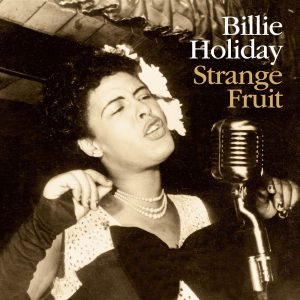 Early 1939. The lights go down at New York’s Cafe Society. The waiters hush the drinking audience, a single small spotlight shines on her face. And Billy Holiday begins to sing. “Southern trees, bears strange fruit blood on the leaves, blood at the root.” The song ends, and the spotlight goes out. Billy leaves the stage, the room is silent until one patron, then another, then finally the entire room begins to applaud. They rise for a standing ovation, but Billy doesn’t return for encores or vows.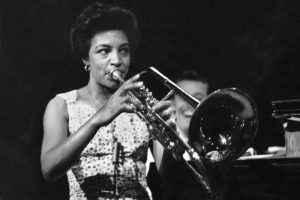
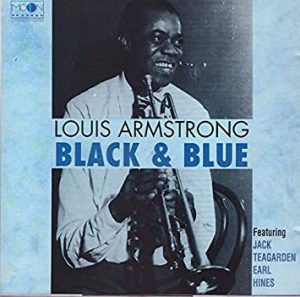 1925, and Louis Armstrong hits the music scene with a splash. With trumpet in hand and a wonderfully unique voice, he took on popular songs and stretched the boundaries of their rhythms and melodies so profoundly that American music hasn’t been the same since.
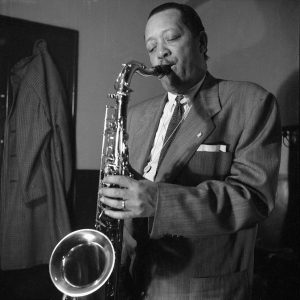 September 1944, and saxophone legend Lester Young arrives at Fort McClellan, Alabama, for basic training. Young is a jazz star, and he expects to be placed in a military band, like white musicians Glenn Miller and Artie Shaw. Instead, he’s assigned to a combat unit. Here marks the beginning of the end for the “President of Jazz.”
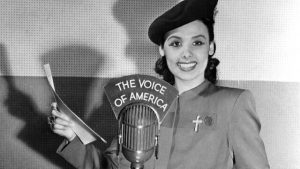 Lena Horne left school at 16 to help support her family. She became a dancer at Harlem’s Cotton Club was soon a sought-after performer – a role she would maintain throughout her life. A long run at the Savoy-Plaza boosted Horne’s career even further. She was featured in Life magazine, and listed as the highest-paid Black entertainer of the day.
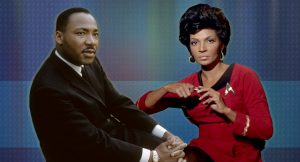 It’s 1967, and singer and actress Nichelle Nichols attends a fund-raiser for the NAACP. A man approaches and says, “Ms. Nichols, I’m your greatest fan.” That fan was Dr. Martin Luther King, Jr. During their chat, Nichols confides her plans to leave her current TV gig for a career on Broadway. King was mortified. “You can’t leave Star Trek,” he said. “You’re a part of history. You aren’t cast as a servant. You play a Black woman in authority. You’re a role model for women and Negroes everywhere.” Nichols took Dr. King’s words to heart, and stayed with the show. She made TV history again when, as part of an episode, she took part in television’s first interracial kiss.