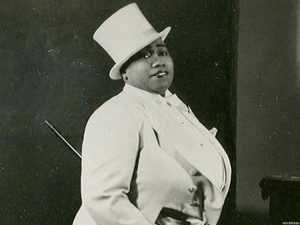
 It’s Prohibition-era Harlem, and Gladys Bentley is at the piano at Harry Hansberry’s Clam House, one of the biggest gay speakeasies in New York. Dressed in her signature tuxedo and top hat, she sings bawdy lyrics to popular songs. Her voice is deep and growling, and she flirts with the women in the audience.
Even as a child, Gladys Bentley raised eyebrows. She was the only girl in a family of boys and preferred her brothers’ suits to dresses. Ostracized, she left home for New York at age 16, where she soon headlined at Harlem’s Ubangi Club, the Apollo, and the Cotton Club, backed by a chorus line of drag queens. Wrote Langston Hughes of her performance, “Miss Bentley was an amazing exhibition of musical energy – a large, dark, masculine lady … a perfect piece of African sculpture, animated by her own rhythm.”
The repeal of Prohibition meant the demise of the Harlem speakeasies. Moving to Los Angeles, she was dubbed “The Brown Bomber of Sophisticated Songs,” and “America’s Greatest Sepia Piano Player.” She counted Cary Grant, Cesar Romero, and Barbara Stanwyck as loyal fans, but her popularity, and the culture’s tolerance for her lifestyle, waned.
Still, as author James Wilson wrote, Bentley’s legacy endures. This prominent figure of the Harlem Renaissance “troubled the distinctions between black and white and masculine and feminine,” and remains an inspiration for African Americans and the LGBT community.
“Soundtrack to the Struggle” is written and produced by Ron Adkins. Executive Producer is Dennis Green. Hosted by Hollis Monroe.
Podcast (soundtrack): Play in new window | Download
Subscribe: Apple Podcasts | RSS
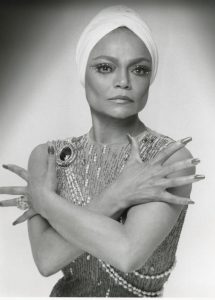 Eartha Kitt was never afraid to use her distinctive voice. Born on a South Carolina cotton plantation, Eartha Mae Keith grew to record the standards, “Let’s Do It,” and “C’est Si Bon.” She was fluent in French, spoke four other languages, and sang in 11. She recorded, sang in nightclubs, and appeared in films, television, and Broadway.
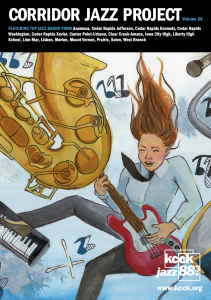 Three new schools join The Corridor Jazz Project as the program celebrates its fifteenth year at a massive concert March 8th at the Paramount Theatre, Cedar Rapids. The concert will be presented in two “sessions,” to accommodate those who are not able to attend the entire concert. Ticket holders can attend one or both sessions for the same $15 price, and also come and go if they need a break.
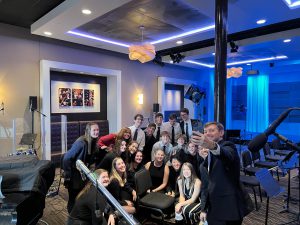 In addition to returning as an in-person event, two things make this year’s program special. Three new schools participate for the first time: Anamosa, Clear Creek-Amana, and West Branch. And after the success of 2021’s video recordings, KCCK will release video recordings of each band on DVD instead of an audio CD.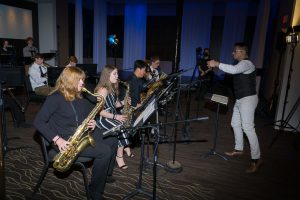
 Jazz Corner of the World Encore
 Jazz Night in America