Legendary Fingers Stilled

Ron DeWitte, one of Iowa’s most celebrated blues and rock guitarists, passed away February 16 after a battle with pancreatic cancer. He was 68.

A Cedar Rapids native, Ron formed his first band, called The Tremelos, when he was just thirteen. He graduated from Cedar Rapids Jefferson, and would go on to join The Legends, which would be the first of four bands with whom he would be inducted into the Iowa Rock and Roll Hall of Fame.

He also performed with the Linn County Band, The Blue Band, and many others. He was inducted into the Iowa Blues Hall of Fame in 2003.

For the last decade, he performed often with his wife, Lynn Rothrock, and even at the height of his illness, gave stunning shows, performing until just a few weeks before his passing.

Ron is survived by his wife Lynne, children Michael DeWitte and Jody Jensen, grandchildren Nolan and Evyn, and hundreds of friends and fans whose life he enriched through music and love.

KCCK’s Wednesday Special this week will be a broadcast tribute to Ron.
Soundtrack to The Struggle #6: Jack Johnson

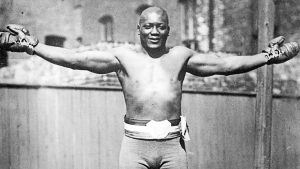
They crowned Jack Johnson the first Black heavyweight champion in 1908, but the fight had just begun. The Black community was overjoyed, seeing Johnson’s title as a major step toward equality. Whites in America, however, were often near panic. Even the New York Times wrote that “thousands of his ignorant brothers will misinterpret [Johnson’s] victory as justifying claims to more than physical equality.”

Calls went out for a “Great White Hope” to step into the ring and take away the crown. Each Johnson fight was met equally with parades, celebrations, and race riots. Johnson was aware of his impact on history and American culture. He kept the public’s eye through bravado and by never letting people forget that a Black man was the Champ. This larger-than-life persona is perhaps Johnson’s lasting legacy, frightening to whites at the time, but today has inspired generations of African Americans.

More than a century later, Jack Johnson’s legacy – his rise to glory at the height of Jim Crow America continues on. James Earl Jones was nominated for an Oscar for his portrayal of Johnson in “The Great White Hope.” Miles Davis recorded his album, “Tribute to Jack Johnson,” in 1971. Filmmaker Ken Burns produced “Unforgivable Blackness: The Rise and Fall of Jack Johnson” in 2004. The Champ appears in novels, films, songs, and even video games.

Here is Wynton Marsalis with “Jack Johnson Two-Step” from Unforgivable Blackness: The Rise of Jack Johnson.

“Soundtrack to the Struggle” is written and produced by Ron Adkins. Executive Producer Dennis Green. Host: Hollis Monroe.

Soundtrack to The Struggle #5: Dinah & Night Train

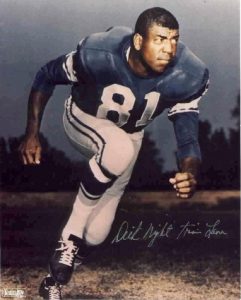
Singer Dinah Washington and her seventh husband, football legend Dick “Night Train” Lane, were an unlikely pair. She wasn’t a fan of football, but she was madly in love with Night Train. They each fought bigotry in their own ways – Washington by challenging segregation in the music industry, Lane by changing the perception of Blacks in professional sports.

Night Train’s ominous nickname arose from his ferocious tackling. The face-mask and clothes-line penalties in force today result from injured quarterbacks and the force with which he hit them. Lane hit the color barrier with the same ferocity. He took the bitter lessons of his segregated high school and played standout football in college, as the only black player on the team. His fierce drive for excellence won him the universal respect of fans and players.

Dinah Washington and her husband were very much alike. Both were driven professionals, and both fought hard for equity and equality. Joe Zawinul tells of the time in Odessa, Texas, when she led her entire band through a bathroom window, rather than play in a segregated club. The local sheriff had refused to let Zawinul, the only white musician, join the band on stage. The audience rioted and the band left town.

Here is Dinah Washington, singing one of Night Train’s favorites, “Teach Me Tonight.”

“Soundtrack to the Struggle” is written and produced by Ron Adkins. Executive Producer Dennis Green. Host: Hollis Monroe.

Soundtrack to The Struggle #4: Amanda Rudolph

The year was 1948, and the DuMont company had recently created a TV network to help build demand for their line of television sets.

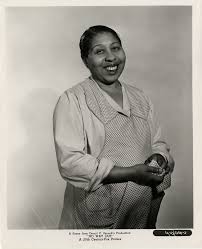
Actress and singer Amanda Randolph was the first African-American woman to star in a network television show. The program was The Laytons, and Randolph was one of the stars.

It only lasted two months and we don’t know much about its characters or plot, but Rudolph must have done well. Because later that same year, she appeared in a second show, a daytime musical variety series titled Amanda which lasted a full season.

As a singer in the Twenties, Amanda Randolph recorded with pianist Sammie Lewis, then joined the all-black review by Eubie Blake and Noble Sissle, Shuffle Along, in 1924, which was a sensation in its day. Before she pioneered on the small screen, Rudolph found lots of radio work on variety programs and soap operas, especially Amos and Andy and The Danny Thomas Show. She was in the movie No Way Out with Sidney Portier in 1950. Amanda Randolph died of a heart attack just short of her 71st birthday in 1967.

Here she is in a 1936 recording.

“Soundtrack to the Struggle” is produced by Ron Adkins. Written by Bob Naujoks. Executive Producer Dennis Green. Host: Hollis Monroe

New Music Monday for February 19, 2018

Listen to this week’s playlist on YouTube and Spotify.      

America has always been fascinated by the popular music exported back to us by our neighbors from across the pond. The British Invasion of the 1960s profoundly influenced music in every decade to the present. For the trio of Hart, Scone and Albin, the invaders are the feminine kind, each exhibiting an abundance of passion, grit and soul. Included in their new collection, “Leading the British Invasion,” are some of today’s huge hit makers who are heavily steeped in the classic forms of American music—blues, soul, R&B and rock. A different angle is given to compositions from Amy Winehouse, Adele, Dusty Springfield, Joss Stone and Sade—and Lorde (from New Zealand) for good measure.


International best-selling singer, songwriter and musician Melody Gardot is releasing her first live set, “Live in Europe,” celebrating the success of her live shows around the world. It includes concert performances recorded between 2012 and 2016 in places like Paris, Vienna, Amsterdam, Zurich and London. Ms. Gardot says, “This album holds my heart, and the love of all the people who supported us along the way…simply a very long thank you to all of you.”
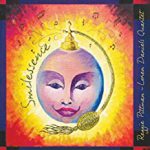


Also this week, the greatly anticipated second release from the Reggie Pittman/Loren Daniels Quartet, “Smilessence”.



Pianist Ben Paterson salutes the great drummer-less trios of Nat King Cole and Oscar Peterson with “That Old Feeling”.

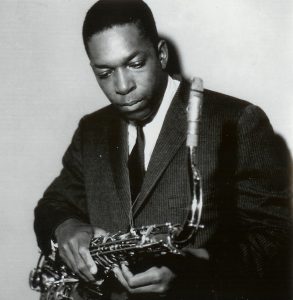


Saxophonist Andrew Neu leads a big band of veteran L.A. musicians and superstars on “Catwalk: The Big Band Side of Andrew Neu.”


Soundtrack to The Struggle #2: Coltrane’s “Alabama”

On Sunday, September 15, 1963, four Klansmen planted dynamite under the 16th Street Baptist Church in Birmingham, Alabama. The explosion killed four young girls and injured many others. History records this incident as a turning point in the Civil Rights movement.

Coltrane, his heart broken, was driven to tears, anger, and frustration. But instead of giving in to hate, he chose to create. He composed his elegy, “Alabama.” Coltrane patterned the tone on Dr. Martin Luther King’s sermon, delivered from the church sanctuary three days after the bombing. Like the speech, “Alabama’s” tone changes midway through, rising from sorrow and mourning to renewed determination against hatred and racism. If the Birmingham bombing was indeed a turning point, then “Alabama” was its clarion call.

“Alabama” speaks a powerful message, one that haunts our society even today. Over fifty years later, America is still rocked by church bombings, shocked to its core by racism, hatred, and anger. Police and protestors still clash. The walls of divide, though battered, still stand. The Struggle continues, but hope lives on.

Here is John Coltrane and his classic quartet, performing “Alabama.”

“Soundtrack to the Struggle” is written and produced by Ron Adkins.  Executive Producer Dennis Green. Host: Hollis Monroe.

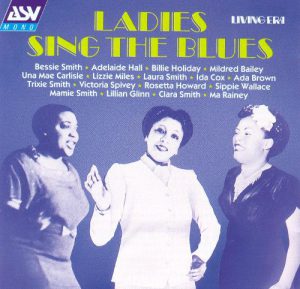
Soundtrack to The Struggle #1: Bessie Smith, Ma Rainey & Mamie Smith

Three pioneering women lay claim to Blues royalty. Mamie Smith, Ma Rainey, and Bessie Smith made an impact on American culture that still resonates today.

Mamie Smith became in 1920 the first Black musician to make vocal blues recordings. A savvy marketer, she exploited the new medium of radio to reach audiences across the country … in places she wasn’t allowed to perform live. Mamie introduced white audiences to Black artists, and in so doing, created a nationwide hunger for their music. She persevered against threats and boycotts, subtly poking holes in the color barrier.  

Ma Rainey, “The Mother of the Blues,” enthralled with her powerful voice, and unique “moanin’” style. Her fierce individuality became the subject of poems, Bob Dylan songs and an award-winning play. Ma Rainey’s contributions earned her a 1990 induction into the Rock and Roll Hall of Fame – 51 years after her death. But it was her discovery and mentorship of the great Bessie Smith that cements her legacy.

Bessie Smith, “The Empress of the Blues,” was, at the height of her career, the nation’s highest paid Black entertainer. And like Mamie Smith, she used the power of radio to reach white audiences across the country. She made history by performing by performing on Broadway and in an early “talkie” film. Billie Holiday, Aretha Franklin, and Janis Joplin, all credit Bessie Smith as a major influence.

Here’s Bessie Smith’s recording of “T’ain’t Nobody’s Bizness If I Do” – preserved as a National Treasure by the Library of Congress.


“Soundtrack to the Struggle” is written and produced by Ron Adkins. Executive Producer Dennis Green. Hollis Monroe, host.

Culture Crawl 326 “I Am Not An Animal!”

The Iowa City Community Theatre presents “The Elephant Man” Feb. 23 – March 4. It’s a bit of a passion project for director Liz Tracey, who saw David Bowie in the title role on Broadway in the 80s.

She says that the role of John Merrick is especially tough, as the actor uses his body, not makeup or prostheses, to demonstrate the physical changes the character goes through.

Tickets and information at www.iowacitycommunitytheatre.com.