 Short List with host Bob Naujoks
Monday – Friday at 8:35 AM and Saturday at 7 AM
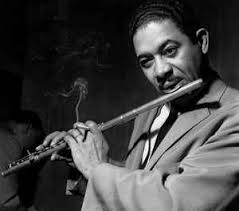
Formidable Flutes: Frank Wess
Frank Wess began as a classical artist. He switched to jazz as an early teenager and by 19 he was playing in big bands. After leaving the military, following World War II, he joined Billy Eckstine’s orchestra. He later played tenor sax, doubling on flute with Count Basie from 1953 to 1964. Wess was named one of the best jazz flautists of his time. From 1959 to 1964, he won the Down Beat magazine critics’ poll for flute.
Jazz Corner of the World with host Craig Kessler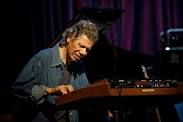
Monday, 6:00 PM – 10:00 PM
The Complete Chronological Early Years of Chick Corea, Part One
Craig travels back to July 9, 1962 for Chick’s very first recording session … a date led by Mongo Santamaria … to begin a series of shows that will spotlight the early years of Corea’s stellar recording career. In this first show, we’ll hear Chick with Mongo Santamaria, Sonny Stitt, Dave Pike, Hubert Laws, Montego Joe, Blue Mitchell, and a number of other jazz stars, many of whom are working in a Latin jazz vein. This is historically interesting and important music from one of today’s pillars of jazz!!
Jazz Profiles with host Nancy Wilson
Monday at 11:00 PM
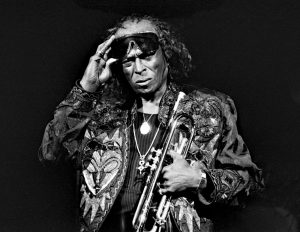
Miles Davis, Part One: Miles’ Styles
Trumpeter Miles Davis dominated jazz for much of the latter half of the twentieth century. While his trumpet sound is instantly recognizable, he refused to be boxed in any one style, consistently developing fresh musical shapes and structures. Miles’s powerful influence did not end with his death in 1991; his restless spirit continues to intrigue and inspire artists of all kinds.
Wednesday Night Special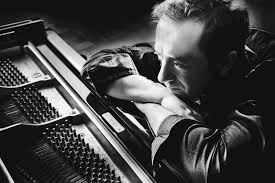
6:00 PM
Geoffrey Keezer at the 2006 Iowa City Jazz Festival
KCCK Program Director Bob Stewart has chosen some of the absolute best performances from past Iowa City Jazz Festivals, including the 2006 set from pianist Geoffrey Keezer. Keezer, whether as a sideman or the leader of his own combo, has worked with some legendary jazz superstars, like Chick Corea, Benny Green, and Wynton Marsalis. His virtuosity and sense of swing amazed the crowd on the U of I Pentacrest. Hear that set tonight – Geoffrey Keezer at the 2006 Iowa City Jazz Festival – on KCCK’s Wednesday Night Special.
 Jazz Night in America with host Christian McBride
Thursday at 11:00 PM
50 Years Of Monday Nights At The Vanguard
In the middle of their careers, trumpeter and composer/arranger Thad Jones and drummer Mel Lewis found themselves with a book of big band music — and no band to perform it. So they made their own, handpicking some of New York’s top talent across age and color lines. They rehearsed on Monday nights, when guys could actually make rehearsal. And by the time they debuted on a Monday in February 1966 at the famed Village Vanguard, they were already a force to be reckoned with, soon to become the most influential big band of the last 50 years. The Thad Jones-Mel Lewis Orchestra, now the Vanguard Jazz Orchestra, still plays every Monday night. Jazz Night In America heads to the basement jazz shrine to see the band’s 50th anniversary show, full of cuts from Thad’s songbook, and tells the story of how the band came to be.
 Jazz Corner of the World with host Craig Kessler
Saturday, Noon – 4:00 PM and Monday, 6:00 PM – 10:00 PM
Jazz Corner of the World’s Annual Jazz Fest Preview Show
Craig prepares us for the 2018 Iowa City Jazz Festival by spinning a number of tasteful selections from many of the participants in this year’s festival. We’ll hear from Jane Ira Bloom, Behn Gillece, Matt Wilson, Rene Marie, John Rapson’s Hot Tamale Louis Ensemble, Amanda Monaco, and many others. 2018 will clearly be another great lineup … continuing a 27-year history of excellence that makes the Iowa City Jazz Festival one of the top jazz festivals in the world!!
KCCK’s Midnight CD
The Monday – Sunday Midnight CD for this week can be found at:
 Listen to this week’s playlist on
 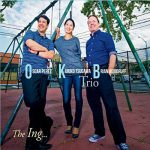 The OKB Trio was born at a jam session that drummer Brian Woodruff ran at Blackbird’s in Astoria, Queens that gave him the privilege of playing with different musicians each week. In June of 2010 he brought pianist Oscar Perez and bassist Kuriko Tsugawa and himself together for the first time and the chemistry was immediate. Woodruff and Perez talked about the difficulties they experienced in featuring their own playing while leading larger groups that play elaborately arranged originals, so they decided OKB would play simpler material so they could focus on the groove and expressing themselves more freely on their instruments. As Woodruff proudly boasts, “We always keep the ‘ing’ in swing.” Hence the title of their new disc, “The Ing…”
 Also this week, pianist Brad Mehldau unveils “Seymour Reads the Constitution,” a new trio recording with bassist Larry Grenadier and drummer Jeff Ballard.
 Jazz veterans Mark Sherman on vibes and drummer Mike Clark are joined by bassist Felix Patorius and the young Boston-based saxophonist Chase Baird in the new band Venture on their debut release, “Life Cycle.”
 Short List with host Bob Naujoks
 Jazz Profiles with host Nancy Wilson