This Week’s Shows February 10 thru February 16

Sunnyside RecordsJazz Corner of the World  (Encore)

Mondays at 6:00pm

Sunnyside Records, Part One

Craig begins a series that surveys Sunnyside Records. This wonderful jazz label was founded initially by Francois Zalacain in 1982 in order to record pianist Harold Danko. Since then, the label has grown to well over 600 top-notch titles.


Wednesday Night Special
Wednesdays at 6:00pm

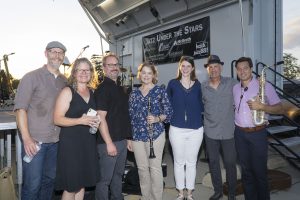
The Dandelion Stompers at Jazz Under the Stars

A sultry August night in 2022 was perfect for the New Orleans swing of the Dandelion Stompers, as they treated the Noelridge Park crowd to many old favorites, some forgotten gems, and new originals.


Blood on the Fields - Wynton Marsalis | Album | AllMusicJazz Night In America  

Thursdays at 11:00pm

Wynton Marsalis & the Truth

Host Christian McBride sits down with trumpeter and composer Wynton Marsalis to explore his powerful studio recordings that confront injustice. Together, they discuss the role of music in speaking truth to power and its lasting impact.


Jazz Corner of the World
Saturdays from 12:00 noon to 4:00pm

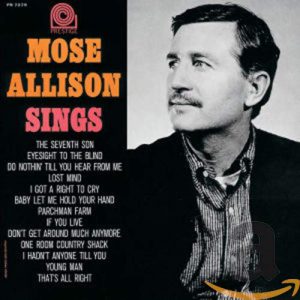
Mose Allison, Part Two

Craig continues his four-part chronological series of presentations by this unparalleled, legendary singer, pianist, and composer. In this week’s show, we’ll get into his famous Atlantic Records releases.


KCCK’s Midnight CD

KCCK features a new album every night, played from start-to-finish.

The Spell is Broken by Hans Luchs on Monday; You Better Bet by Wutzke on Tuesday; Solid Jackson by M.T.B. on Wednesday; New Perspective by Steve Smith & Vital Information on Thursday; Yeah Man by Steve Howell & the Mighty Men on Friday; Closer to the Bone by Tommy Castro & the Painkillers on Saturday; Thank You, Barry Harris! by Bruce Harris & Ehud Asherie on Sunday.
This Week In Jazz February 9 through February 15

Hey, Jazz fans! Be sure to tune in this week as we celebrate the birthdays of drummer/bandleader Chick Webb, pianist Sir Roland Hanna, saxophonists Wardell Gray, Buck Hill, Maceo Parker and Chad Eby, singer Roberta Flack and more.

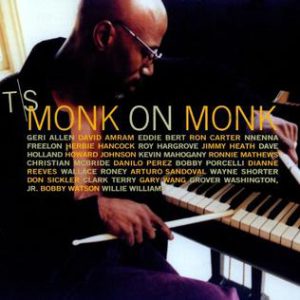
We’ll also mark the recording anniversaries of John Lewis’ “Grand Encounter” (1956), Miles Davis’ “Four and More/My Funny Valentine” (1964), Art Blakey & the Jazz Messengers’ “Night in Tunisia” (1979), Ray Bryant’s “Trio Today” (1987), T.S. Monk’s “Monk on Monk” (1997), Vanguard Jazz Orchestra’s “Monday Night Live at the Village Vanguard” (2008) and many others Mondays through Fridays at noon on Jazz Masters on Jazz 88.3 KCCK. 

Big Mo Pod Show 050 – “Variety Is The Spice Of Life”

Welcome back folks! On this week’s episode we’re featuring another helping of tunes from Friday night’s show! Along with the usual mix of blues genres we also get a little history lesson on Zydeco from professor John! Songs featured in the episode: 

  1. Stuff – “Feelin Alright” 
  2. Rockin Dopsie Jr. – “Down at the Mardi Gras” 
  3. Johnny Burgin – “Stepladder Blues” 
  4. Linn County – “Take A Swing With Me”
  5. Greg Nagy – “Mississippi Blues” 

Listen to ‘da Friday Blues with Big Mo each week at 6pm, and catch the podcast for a behind the scenes look at the show!

Soundtrack To The Struggle: Josephine Baker

“I wasn’t really naked. I simply didn’t have any clothes on.” 

Freda Josephine McDonald Baker was born and raised in the slums of St. Louis. After a successful audition at a local vaudeville theater, she left home at the age of 13, working as a waitress and working on the stage whenever she could. She caught her big break while dancing in the chorus for Noble Sissle and Eubie Blake‘s all-Black revue Shuffle Along. A frenetic dancer and relentless on-stage clown, she quickly attracted notice and was tapped for a bigger part in another Sissle/Blake production, 1924’s Chocolate Dandies. The show made her a star in New York and she became big in Harlem as well with performances at The Cotton Club and The Plantation Club. In 1925, she moved to Paris with the American production La Revue Nègre. Baker’s exotic dancing, uninhibited sexuality, and negligible attire — which included a skirt of feathers” — suited the Continent much more than America. “I wasn’t really naked,” she explained, “I simply didn’t have any clothes on.” She became an overnight sensation. and soon opened her own club (Chez Josephine) and starred in her first movie, the naturally exotic 1927 film La Sirene des Tropiques.

She returned to America in 1936 to star in Ziegfeld’s Follies with Bob Hope and Fanny Brice. However, Baker was subjected to a double dose of discrimination: cultural conservatives railed against the show’s promiscuity, while many hotels and restaurants refused entrance to the star of the show. Returning to Paris, she became a naturalized French citizen after marrying sugar magnate Jean Lion, though his status as a French Jew exposed the couple to additional discrimination when the Nazis invaded two years later.

Baker joined the French Resistance at an early date and worked throughout World War II to help the Allies, acting as a funnel to get important documents out of France several times, as a sub-lieutenant in the French Air Force’s Women’s Auxiliary, volunteering for the Red Cross to assist Belgian refugees streaming into France, and boosting troop morale by performing across Northern Africa. Baker earned several commendations including the Medal of Resistance and the Cross of the Legion of Honor.

After the war, she worked the cabaret circuit in Paris for several years before performing in Cuba and returning to America yet again. During the early ’50s, Baker’s fight to spread the gospel of Civil Rights made headlines when she performed to integrated audiences at a nightclub in Miami and canceled an Atlanta performance after being refused admission to a hotel. 

She participated in the 1963 Civil Rights march on Washington and gave a series of four concerts at Carnegie Hall to raise funds for the cause. After suffering a heart attack in 1964, however, her performance career practically ended, except for a brief comeback just before her death from a stroke in 1975.

Music: Josephine Baker from 1926, singing “La Vie en Rose”

Soundtrack to the Struggle: Cal Massey

Few casual fans of Jazz recognize the name of Cal Massey. Sadly ignored by countless Jazz critics, Massey was revered by the foremost musicians of his day as a genius of composition and as a solid trumpeter. John ColtraneFreddie HubbardLee MorganArchie Shepp, and many others have performed and recorded Massey‘s works. He was a forceful activist for the Black Liberation Movement and was seen as a pillar of his community.

While he was raised in Pittsburgh, Massey‘s family moved back to his birth city of Philadelphia in his teenage years, where by a chance encounter he earned a spot in Jimmy Heath’s big band trumpet section. The group featured a young alto sax player that immediately captivated Massey’s attention: John Coltrane. The two became lifetime friends and Massey’s song Bakai was recorded by Coltrane on the latter’s first recording session as a leader. Massey also contributed to Coltrane’s Africa/Brass sessions, notably “The Damned Don’t Cry,” which would become part of his seminal work The Black Liberation Movement Suite. 

The Black Liberation Movement Suite is Massey‘s masterpiece, thrusting him onto the same level as fellow composers and contemporaries Sun Ra and Charles Mingus. It was premiered at the first of a series of benefit concerts for the Black Panthers, but has rarely been performed since the 1970’s. More recently, Fred Ho rerecorded the suite with a large group ensemble, Each movement has a close connection to the B.L.M., with some numbers dedicated to heroes of the Civil Rights movement like Dr. Martin Luther King and Malcolm X.

Fred Ho, the late baritone saxophonist and Massey expert, related that in the early 1960’s, Massey stepped into an elevator with Francis Wolff, co-owner of the iconic Blue Note records. According to Massey‘s wife Charlotte, Massey attempted to speak to Wolff, but Wolff ignored him. Out of frustration, Massey kicked Wolff as he left the elevator. From then on, Massey was effectively blacklisted by Blue Note and other prominent record labels. If true, this and Massey’s ideology could have resulted in him getting blacklisted (or “whitelisted” according to Fred Ho) from major recording companies and only one album was recorded under his name, contributing to Massey‘s relative obscurity in the Jazz legacy.

Music: From 1961’s “Africa/Brass” – The John Coltrane Quartet with “The Damned Don’t’ Cry”


Culture Crawl 1025 “It Is… Wild”


City Circle Theatre Company presents Andrew Lippa’s “WILD PARTY: In Concert” Feb 7-9 & 14-16 at the Coralville Center for the Performing Arts. In the studio we have director Carrie Pozdol and actress/dancer Anna Slife who will be playing the role of Jackie. This wild show explores the contrast of darker themes with the bodacious glitter of the roaring twenties.

Tickets and more information can be found at coralvillearts.org 

Subscribe to The Culture Crawl at kcck.org/culture or search “Culture Crawl” in your favorite podcast player. Listen Live at 10:30am most weekdays on Iowa’s Jazz station. 88.3 FM or kcck.org/listen.


Talking Pictures 2-5-25

Companion (2025) and Superman (1940s animated film series) with Phil Brown and Ron Adkins.

Soundtrack To The Struggle: Beryl Booker

A child prodigy born in the midst of Black artistic expression in Philadelphia, a leader who never learned to read music, yet excelled at it along the way, she grew up to be a fine swing pianist and nightclub entertainer. 

Beryl Booker began her star-filled career as a girl sweeping kitchen floors for quarters while also touring the local amateur circuit as a preschool pianist, winning awards so frequently that rival parents complained to theater managers.

By her teens, she was performing regularly in clubs and theaters, where her big break came in the personage of bassist Slam Stewart. Stewart was one of the most recorded jazz bassists of the 1940s, and  although he sworn that he never work with women, he was so impressed by Booker’s playing that he invited her to join his trio.

Beryl Booker would go on to lead various trios from 1952 to 1954, including an engagement at the Embers in 1953 and a tour of Europe in 1954 (occasionally with Billie Holiday), and another tour with Dinah Washington in 1959. The even made a film appearance in the 1947 film, Boy What a Girl!.

Booker’s good friend, journalist Thom Nickels learned that she’d earned acclaim from Nat King Cole, received Christmas cards from Lena Horn, and urged her buddy “Frankie” Sinatra to record “Little Girl Blue” – which he did. Nickels said Booker was a self-made woman who turned racist attitudes on their heads in the Jim Crow South.

“She used to talk to me about traveling through the South when she couldn’t get into certain restaurants with her band,” recalled Nickels. “When Beryl was hungry and wanted a hamburger, she would do anything. So she would say, ‘I’m really an Indian princess; you have to let me in,’ and conned her way into a lot of these no-Blacks-allowed restaurants all throughout the South. She was a trickster. She was a handful. She was highly talented and extremely funny. Sometimes outrageously so.”

Music: The Beryl Booker Trio from 1953 with “Ebony”