Rising from extreme poverty and neglect in Baltimore, Ethel Waters attended a costume party
on her 17 th birthday, at a nightclub on Juniper Street. She was persuaded to sing two songs and
impressed the audience so much that she was offered professional work at the Lincoln Theatre
in Baltimore. After her start in Baltimore, she was asked to join the Braxton and Nugent
Vaudeville Show where she became an overnight sensation after singing “St. Louis Blues,” the
only woman to have done so at that time, and establishing herself as a recording artist, Waters
crossed the country on a national tour.
She became the first African American woman to integrate Broadway when composer Irving
Berlin awarded Waters a starring role in his Broadway musical “As Thousands Cheer”, also
becoming one of the highest paid actresses on Broadway regardless of race. Her Broadway
acclaim led Waters into a career in film and later television, including an appearance in the all-
black film, Cabin in the Sky, which stared Lena Horne and was directed by Vincente Minnelli.
Ethel Waters was a devoted advocate for actors’ rights serving on the executive council of
Actors Equity and the Negro Actors Guild of America, and, during World War II, she was part of
the Hollywood Victory Committee singing on the radio for the USO camp shows. She was the
second African American to be nominated for an Academy Award, the first African American to
star in her own television show, and the first African American woman to be nominated for a
primetime Emmy.
She married three times (her first marriage was at age 13) and had no children. In the early
phases of her career, Waters identified as bisexual but never made a public announcement
about her sexuality. During the 1920s, she lived with her girlfriend Ethel Williams. Waters
enjoyed a large lesbian and gay following, including devoted fan Carl Van Vechten, who took
the portraits of Waters found in the National Museum of African American of History and
Culture collection.
Her first autobiography, His Eye Is on the Sparrow, (1951), written with Charles Samuels, was
adapted for the stage by Larry Parr and premiered on October 7, 2005.
Music: From 1933, Ethel Waters singing “Stormy Weather”
Podcast (soundtrack): Play in new window | Download
Subscribe: Apple Podcasts | RSS
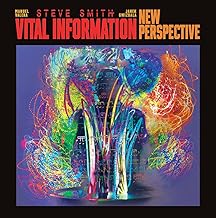 Steve Smith, who originally became well-known as the drummer with the rock band Journey, grew up playing jazz. He has led one of the world’s top fusion-oriented groups, Vital Information, for over 40 years now; they recorded their first album in 1983. Today’s version is a trio with keyboardist Manuel Valera and bassist Janek Gwizdala. Smith rarely looks backwards but he was so inspired by Valera’s transformation of Journey’s “Don’t Stop Believin’” into an up-temp jazz-rock piece, that he decided to record new versions of several songs from his illustrious past for the new album, “New Perspective.”


 Jazz Corner of the World (Encore)
 Jazz Night In America
 Jazz Night In America
 Hey, Jazz fans! Be sure to tune in this week as we celebrate the birthdays of pianist/composer Eubie Blake, arranger Sammy Nestico, trumpeter Snooky Young, reedman John Handy, pianist Bill Mays, singers Natalie Cole and Dennis Rowland, drummer Vinnie Colaiuta, guitarist Steve Cardenas and more.