Soundtrack to the Struggle – John Coltrane in Nagasaki

 In July 1966, the great jazz saxophonist John Coltrane embarked on a tour of Japan with his wife Alice Coltrane and the rest of his band. When they arrived at Tokyo airport Coltrane was shocked by the hundreds of fans who welcomed them. Coltrane and some other US jazz musicians had a massive following in both Japan and Germany at the time. Paradoxically, the popularity of jazz in these countries was a legacy of the tens of thousands of US troops stationed in both after the second world war. 

When the group arrived by train on July 16th for the concert that Coltrane had insisted on in Nagasaki, his hosts found him playing the flute in the express train. He said he was searching for an appropriate sound and asked if he could go immediately to the site where the atomic bomb had fallen on the city 21 years before. They took him there and he stayed for some time in silence and laid a wreath of flowers.  

During the sixties, partly in response to the growing civil rights and black power movement, John Coltrane had become progressively more political and his music more experimental. His 1964 ballad “Alabama” famously served as a requiem for four young girls killed by racists in an arson attack in Birmingham.

As Coltrane became more political his style became freer and less conventional and his popularity waned in the US. But in Japan and in Germany it grew. Partly this was because Coltrane’s music was taken up by the new left seeking a culture opposed to their national pasts but critical too of the cold war superpowers. 

On the night of July 16th at Nagasaski, John Coltrane and his band performed a new song, Peace on Earth, an elegy for the dead in the US nuclear attack on Nagasaki and a condemnation of war in general. The performance was received with reverence and rapture. 

Coltrane’s pioneering anti-war song was amongst the last pieces of music he created. He died tragically young at the age of 40 in the July of 1967. But the ghetto uprisings, anti-colonialism, the racism of the draft and the growing movement against the Vietnam War were starting to generate a militancy that linked the struggle against racism and poverty with the struggle against an imperial system.

Music:  Coltrane and Pharoah Sanders, pianist Alice Coltrane, bassist Jimmy Garrison and drummer Rashied Ali  with “Peace on Earth.” 

KCCK’s Featured Album for February 2026

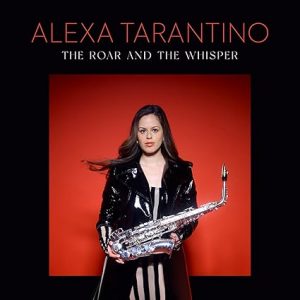
The KCCK Featured Album for February is “The Roar and the Whisper” by Alexa Tarantino. The saxophonist, composer and educator has long been lauded for her poise and precision–“a one-woman wrecking crew” as Wynton Marsalis calls her. Just last year Ms. Tarantino made history by becoming the first full-time female member of the renowned Jazz at Lincoln Center Orchestra in its 37 year history. Her fifth studio album captures the full breadth of her artistry, from spirited up-tempo improvisations to intimate ballads. “The Roar and the Whisper”  is from Blue Engine Records. Purchase

This Week’s Shows February 2 thru February 8

Song for My Father (album) - WikipediaJazz Corner of the World (Encore)

Mondays at 6:00pm

Horace Silver on Blue Note

Craig spins a variety of wonderful Blue Note releases from piano genius Horace Silver from 1952 through 1969. We’ll explore Silver’s work both as a leader and as a sideman.


Wednesday Night Special

Wednesdays at 6:00pm

Yellowjackets at the Iowa City Jazz Festival

The Yellowjackets, featuring Bob Mintzer, Russell Ferrante, Jimmy Haslip, and Marcus Baylor, took the main stage of the Iowa City Jazz Festival in 2004. They played a stellar set from their then-current album, Time Squared, and some fan favorites from previous albums.


Ralph Towner: My Foolish Heart - CDJazz Corner of the World

Saturdays at 12:00 noon

Remembering Ralph Towner

Craig pays tribute to the virtuoso guitarist RALPH TOWNER, who recently passed on January 18, by presenting a variety of his work with the European jazz label, ECM, as well as beautiful examples of his brilliant work with his own group, Oregon.


KCCK’s Midnight CD   (February 2 –  February 8)

Every Night at Midnight

KCCK features a new album every night, played from start-to-finish.

Spartan Strong by Michael Dease on Monday; Wake Up Call by Rick Roe on Tuesday; The Roar & The Whisper by Alexa Tarantino on Wednesday; Strasbourg 82  by Art Blakey & the Jazz Messengers on Thursday; Nothing But the Blues by The Rush Cleveland Trio on Friday; Retro Revival by Alex Lopez & the Xpress on Saturday; Old Knew by Gregory Groover Jr.  on Sunday.

Soundtrack to the Struggle – MLK in Berlin

“This is triumphant music.”

In 1964, Martin Luther King, Jr. penned an essay concerning the significance of jazz at the
request of the organizers of the 1964 Berlin Jazz Festival.
The lineup of the 1964 Festival included: Meade Lux Lewis; The Miles Davis Quintet; the
Coleman Hawkins-Harry Edison Swing All-Stars featuring Jimmy Rushing; Sister Rosetta Tharpe;
Roland Kirk; the Dave Brubeck Quartet, and many more.

Although Dr. King was not personally at the 1964 festival, his essay loomed large over the 3-day
event. In 1964, he had risen to prominence on many fronts of the Civil Rights movement. At the
time of writing the essay, he was a finalist for the Nobel Peace Prize. Also that year, he played
an essential role in the passing of the Civil Rights Act and appeared on the cover of Time
Magazine as “Man of the Year.”

Dr. King’s essay on the importance of Jazz to humanity and the Civil Rights movement was not a
speech, but even without his recorded voice, the words are powerful.
Dr. King wrote: “God has wrought many things out of oppression. He has endowed his creatures with the
capacity to create and from this capacity has flowed the sweet songs of sorrow and joy that
have allowed man to cope with his environment and many different situations.
Jazz speaks for life. The Blues tell the story of life’s difficulties, and if you think for moment, you
will realize that they take the hardest realities of life and put them into music, only to come out
with some new hope or sense of triumph. This is triumphant music.

Modern jazz has continued in this tradition, singing the songs of a more complicated urban
existence. When life itself offers no order and meaning, the musician creates an order and
meaning from the sounds of the earth which flow through his instrument.
It is no wonder that so much of the search for identity among American Negroes was
championed by Jazz musicians. Long before the modern essayists and scholars wrote of racialidentity as a problem for a multiracial world, musicians were returning to their roots to affirm that which was stirring within their souls.

Much of the power of our Freedom Movement in the United States has come from this music.
It has strengthened us with its sweet rhythms when courage began to fail. It has calmed us with
its rich harmonies when spirits were down.

And now, Jazz is exported to the world. For in the particular struggle of the Negro in America
there is something akin to the universal struggle of modern man. Everybody has the Blues.
Everybody longs for meaning. Everybody needs to love and be loved. Everybody needs to clap
hands and be happy. Everybody longs for faith. In music, especially this broad category called Jazz, there is a steppingstone towards all of these.”

Music – From “Miles in Berlin”, recorded at the Berliner Philharmonie on September 25, 1964, Miles
Davis with his "Second Great Quintet," featuring tenor saxophonist Wayne Shorter, pianist
Herbie Hancock, bassist Ron Carter and drummer Tony Williams, marking their first recorded
work, here’s “Autumn Leaves”.

New Music Monday for February 2, 2026

Listen to this week’s playlist on YouTube and Spotify
Dr. Scott Routenberg is an award-winning jazz pianist, composer, arranger and educator whose accolades include the John Lennon Songwriting Contest Song of the Year. His works have been premiered at Lincoln Center, Carnegie Hall, and around the world, and he is an established arranger for the Metropole Orkest since 2011. The Scott Routenberg Trio presents a swinging tribute to legendary pianist Oscar Peterson on “Live at Merriman’s Playhouse,” crafting a joyous set of Peterson’s memorable originals and the master’s arrangements of timeless jazz standards.

Hailed as a ‘prodigiously gifted composer and virtuoso pianist,’ James Fernando leads his dynamic Philly-based trio with a refreshing take on the piano trio format. The ensemble, featuring Kyon Williams and drums and bassists Sam Harris and Dan McCain, first came together in 2023, when Fernando assembled the band on just three days’ notice for a performance at The Kennedy Center. Since then, the trio has honed its sound through performances across the country, developing a voice that is both distinctive and deeply collaborative. “Philly 3”is their debut recording.


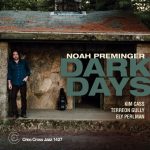
Also this week, The DZ Combo, an award-winning jazz quartet based out of Dubuque, debuts with “It’s Just Your Turn”; drummer John Clay, whose resume includes work with Zoot Sims and Jimmy Rainey, unveils “About Time”; and Boston-based saxophonist and composer Noah Preminger offers up “Dark Days.”

This Week In Jazz February 1 thru February 7

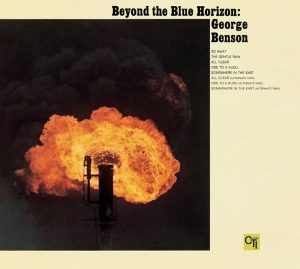
Hey, Jazz fans! Be sure to tune in this week as we celebrate the birthdays of saxophonists Sonny Stitt, Stan Getz, John Handy and Gregory Tardy, drummers Bobby Durham and Vinnie Colaiuta, pianists Lil Hardin Armstrong, Bill Mays and Caili O’Doherty, singers Dennis Rowland, Natalie Cole and Melody Gardot and more. We’ll also mark the recording anniversaries of Lee Morgan’s “Candy” (1957), Shelly Manne’s “2-3-4” (1962), George Benson’s “Beyond the Blue Horizon” (1971), Machito & His Salsa Big Band’s “1983 Grammy Award Winner” (1982), John Pizzarelli’s “My Blue Heaven” (1990), Igor Kogan’s “In a Big City” (2020) and many others, Mondays thru Fridays and at noon on JAZZ MASTERS on Jazz 88.3 KCCK. 

Culture Crawl 1164 “You Think Your Mailbox is Full”

Harrison March is in the studio today with information on upcoming programs and events at Heritage Agency on Aging as well as an overview of the non-profit’s mission and services offered. Mark your calendar for the Corridor Conference on Aging coming up May 20.

For more info visit heritageaaa.org. 

For more info about the conference visit kirkwood.edu/programs/community/corridor-conference-on-aging.

Subscribe to The Culture Crawl at kcck.org/culture or search “Culture Crawl” in your favorite podcast player. Listen Live at 10:30am most weekdays on Iowa’s Jazz station. 88.3 FM or kcck.org/listen.

Talking Pictures 1-28-26

“Anaconda” (2025 Action/Comedy), “Marty Supreme” (2025 Sports/Drama) and “Hamnet” (2025 Drama) with Hollis Monroe, Phil Brown and Denny Lynch.