
Jury selection is moving slowly in Donald Trump’s hush-money trial…the Iowa legislature has approved a bill laying out requirements for teachers to carry firearms in schools.
Podcast (news-digest): Play in new window | Download
Subscribe: RSS
Jury selection is moving slowly in Donald Trump’s hush-money trial…the Iowa legislature has approved a bill laying out requirements for teachers to carry firearms in schools.
Podcast (news-digest): Play in new window | Download
Subscribe: RSS
Riverside Theatre presents the world premiere of “Herein Lies the Truth,” by UI Nonfiction MFA candidate Aaron Pang. It’s an autobiographical solo play that tells the story of how an accident
changed the trajectory of Aaron Pang’s life.
Part stand-up comedy and part storytelling, Herein Lies the
Truth is a sincere, confused, hilarious, and imperfect story about life and love with a disability.
April 18-28 at Riverside Theatre. Tickets at www.riversidetheatre.org.
Subscribe to The Culture Crawl at www.kcck.org/culture or search “Culture Crawl” in your favorite podcast player. Listen Live at 10:30am most weekdays on Iowa’s Jazz station. 88.3 FM or www.kcck.org/listen.
Podcast (culturecrawl): Play in new window | Download
Subscribe: Apple Podcasts | RSS
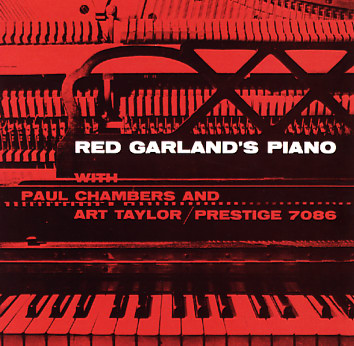 Jazz Corner of the World Encore with host Craig Kessler
Mondays at 6:00pm
Acoustic Jazz Piano Jamboree, Part 3
Craig celebrates Red Garland by spinning pieces that feature him as a leader, and also as an important sideman with John Coltrane, Miles Davis, and many others.
The Wednesday Night Special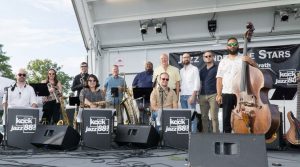
Wednesdays at 6:00pm
Blake Shaw at Jazz Under the Stars
Our celebration of Jazz Appreciation Month, where we spotlight jazz making in the schools, continues with a listen to the area’s outstanding jazz educators. Blake Shaw is a premier bassist, composer, and bandleader. He’s also a talented and well-respected educator at Kirkwood Community College. Blake leads his Big-ish Band at a 2022 Jazz Under the Stars.
 Jazz Night in America with host Christian McBride
Thursdays at 11:00pm
Jazz Master Terrence Blanchard
2024 NEA Jazz Master Terence Blanchard has a career spanning three decades in both jazz and film scoring. Christian McBride revisits a 2019 episode on Blanchard’s work with Spike Lee, his E-Collective band, and more.
Jazz Corner of the World with host Craig Kessler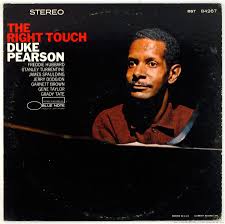
Saturdays from 12 noon to 4:00pm
Acoustic Jazz Piano Jamboree, Part 4
Craig spins a variety of wonderful records that feature Duke Pearson as a dynamic pianist, composer, and arranger. He’ll also take this opportunity to again celebrate the 85th anniversary of Blue Note Records.
KCCK’s Midnight CD
Every Night at Midnight
Each night, KCCK lets you hear a new CD played start-to-finish.
Old Souls by Neal Alger on Monday; Top Dog by Snorre Kirk on Tuesday; Compassion by Vijay Iyer on Wednesday; The Sky Will Still Be There Tomorrow by Charles Lloyd on Thursday; Stone Cold Hand by Sean Riley & the Water on Friday; The Piles High Club by Chief Keegan on Saturday; But Who’s Gonna Play the Melody? by Christian McBride & Edgar Meyer on Sunday.
The United Nations is concerned following the weekend attack on Israel by Iran…people gathered in Iowa City over the weekend to express concerns about the loss of a rape victim’s advocacy program.
Podcast (news-digest): Play in new window | Download
Subscribe: RSS
 Listen to this week’s playlist on YouTube and Spotify
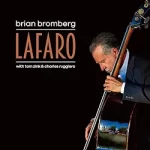
While Tucson-born, Los Angeles-based Brian Bromberg has been equally conversant and downright virtuosic on both electric and upright basses, he sticks to the latter on his latest offering, “LaFaro.” A tribute to the legendary jazz bassist Scott LaFaro whose revolutionary contributions to the classic Bill Evans Trio still reverberate to this day, Bromberg’s 28th as leader shows him in an unadulterated swinging trio setting in the company of pianist Tom Zink and drummer Charles Ruggiero.
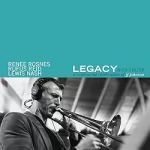
“Legacy” is a centennial celebration of the legendary J.J. Johnson by admired trombonist, composer and educator Nick Finzer. Known as one of jazz’s most profound luminaries, J.J. Johnson is considered one of the most influential and pioneering trombonists in jazz history. The new disc assembles Johnson’s original band members including bassist Rufus Reid, drummer Lewis Nash and pianist Renee Rosnes, and was recorded at the iconic Rudy Van Gelder Studios where Johnson himself recorded many of his classic albums.
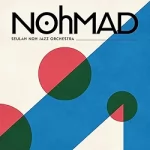

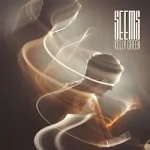
Also this week, Korean pianist, composer and conductor Seulah Noh materializes her creative vison by releasing her debut album, “Nohmad,” with her 21-piece Jazz Orchestra; Washington, DC native Leigh Pilzer, a baritone saxophone specialist, composer, arranger and educator whose resume includes work in the Diva Jazz Orchestra and the Smithsonian Jazz Masterworks Orchestra, unveils “Beatin’ the Odds” with her Seven Pointed Star band; and pianist, vocalist and composer Kelly Green, a protégé to legendary pianists Harold Mabern and Mulrew Miller, releases her fourth album, “Seems.”
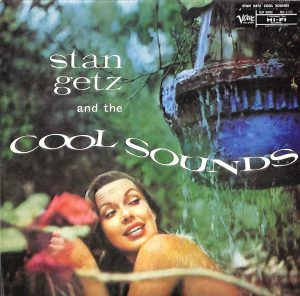 Hey, Jazz fans! Be sure to tune in this week as we celebrate the birthdays of singers Bessie Smith and Madeleine Peyroux, bassists Gene Cherico and Richard Davis, trombonist Bennie Green, composer Henry Mancini, flutist Herbie Mann, saxman Leo Parker, drummer Danny Gottlieb and more. We’ll also mark the recording anniversaries of Stan Getz’ “Stan Getz and the Cool Sounds” (1953), Miles Davis’ “Seven Steps to Heaven” (1963), Jim Hall’s “Concierto” (1975), Pharoah Sanders “Live” (1981), Phil Woods Quintet’s “Mile High Jazz Live in Denver” (1996), Gary Smulyan’s “The Jazz Soul of Frankie Laine” (2008), and many others, Mondays thru Fridays at noon on Jazz Masters on Jazz 88.3 KCCK.
Singer, composer and pianist Rachel Eckroth performs in concert with the Kirkwood Jazz Ensemble and CR Jazz big band Saturday, April 13 at 7:30 in Ballantyne Auditorium. Kirkwood Jazz Director Blake Shaw and Rachel talk with Dennis Green about composing, performing, and working with young people.
Podcast (specials): Play in new window | Download
Subscribe: Apple Podcasts | RSS
The Awful Purdies, an all-female group that performs acoustic and bluegrass-tinged songs, performs at CSPS Hall in Cedar Rapids on April 27th. Sarah Cram Driscoll talks about the band’s history, as well as their most recent album “The Great Unraveling.”
Tickets for the CSPS show at www.cspshall.org. Find the Awful Purdies online at www.awfulpurdies.com/ and on Facebook.
Subscribe to The Culture Crawl at www.kcck.org/culture or search “Culture Crawl” in your favorite podcast player. Listen Live at 10:30am most weekdays on Iowa’s Jazz station. 88.3 FM or www.kcck.org/listen.
Podcast (culturecrawl): Play in new window | Download
Subscribe: Apple Podcasts | RSS