KCCK’s Featured Album for March 2026

The KCCK Featured Album for March is “KCCK’s Corridor Jazz Project Volume 19”, featuring the outstanding students from a record twenty-one Eastern Iowa high school jazz bands. Each band is paired up with a professional guest artist who mentors the students during rehearsals and professional recording sessions. The experience culminates with concerts featuring the bands and their special guests. It’s all part of KCCK’s educational outreach program. Purchase.
Want to know when your favorite band will be played? Check the Corridor Jazz Airtime Schedule.

New Music Monday for March 2, 2026

Listen to this week’s playlist on YouTube and Spotify
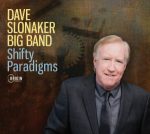
Dave Slonaker
has worked in Hollywood for over thirty years and is highly regarded as one of the top arrangers and orchestrators in film and television. His first two albums as a leader, including his Grammy nominated 2013 debut, received stellar reviews and wide airplay. He continues to explore the seemingly endless possibilities of large jazz ensembles on his new disc, “Shifty Paradigms,” with his intricate yet accessible compositions performed by A-list studio musicians from the L.A. scene.

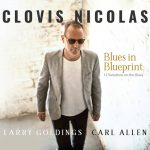
With “Blues in Blueprint,” bassist and composer Clovis Nicolas releases his fifth album as leader and takes on a singular artistic challenge: to perform an entire program of blues—or blues-related—music, exploring the many ways this foundational form continues to shape jazz. He deliberately emphasizes diversity of form, groove, tempo and stylistic lineage, drawing from multiple jazz eras to create a coherent, flowing, and engaging program. For the project, Nicolas assembled an exceptional trio featuring Larry Goldings, heard in a rare appearance on acoustic piano, and the ever-swinging Carl Allen on drums.


Also this week, saxophonist and composer Chris Madsen returns with “Threefold,” a compelling showcase of original music written specifically for his chordless trio featuring Grammy Award-winning bassist Clark Sommers and drummer Dana Hall; pianist and composer Monika Herzig takes an in-depth exploration of what it means to parent through a child’s gender reassignment on “Transparent”; and vocalist Kurt Elling teams up with the WDR Big Band “In the Brass Palace.”

This Week In Jazz March 1 thru March 7

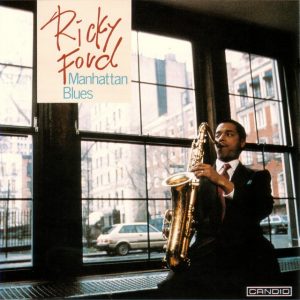
Hey, Jazz fans! Be sure to tune in this week as we celebrate the birthdays of guitarist Wes Montgomery,  reedmen Barney Bigard, Eddie “Lockjaw” Davis and Ricky Ford, pianist Lou Levy, bassists Doug Watkins, Pierre Michelot and Red Callender, trumpeter Howard McGhee, singers Carol Sloan and Flora Purim and more. We’ll also mark the recording anniversaries of Miles Davis’ “Kind of Blue” (1959), Art Blakey & the Jazz Messengers’ “The Big Beat” (1960), Gene Harris & the Three Sounds Live at the ‘It’ Club (1970), Ricky Ford’s “Manhattan Blues” (1989), Carol Sloane’s “The Songs Sinatra Sang” (1996), The Godfathers of Groove’s “3” (2008) and many others, Mondays thru Fridays and at noon on JAZZ MASTERS on Jazz 88.3 KCCK.
This Week’s Shows March 2 thru March 8

Jazz Corner of the World (Encore)

Mondays at 6:00pm

undefinedSampling Enja Records

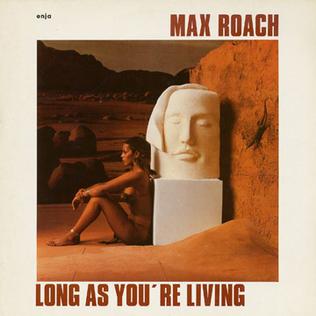
Craig serves up a choice sampling from the wonderful ENJA record label. Founded in 1971 by Matthias Winckelmann and Horst Weber, ENJA recorded and released classic sides from Elvin Jones, Abbey Lincoln, Mal Waldron, John Scofield, Bennie Wallace, and Max Roach.


Wednesday Night Special

Wednesdays at 6:00pm

Colossus Big Band

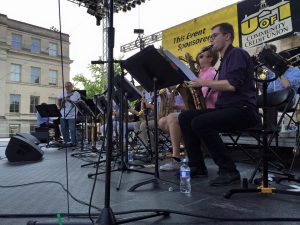
Iowa jazz legend Mike Conrad has been making incredible music since his school years. One of his breakout projects was the Colossus Big Band, featuring classmate, saxophonist Alexa Tarantino. They took the stage at the 2015 Iowa City Jazz Festival for a set of classics and Mike Conrad originals.


Jazz Corner of the World

Saturdays at 12:00 noon

Miroslav Vitous on ECM

Craig presents a fine sampling of brilliantly recorded material from the 78-year-old bassist Miroslav Vitous from his work on ECM. Miroslav recorded nine records for ECM between 1979 and 2011. He also worked five times as a sideman for the label, on records by Chick Corea, Terje Rypdal, and Jan Garbarek.


KCCK’s Midnight CD   (February 16 –  February 22)

Every Night at Midnight

KCCK features a new album every night, played from start-to-finish.

Scoopin’ the Loop by the Dana Legg Stage Band on Monday; Not Sure by the Jones Factor  on Tuesday; On My Own Time by Darren Litzie on Wednesday; Figments by Ella Grace on Thursday; Sunday Blues by The Rush Cleveland Trio on Friday; Issaquena Getaway by Charlie Barath on Saturday; Nothin’ Better to Do by Betty Bryant on Sunday.

Corridor Jazz Concert March 9-10

The Corridor Jazz Concert – One night can’t contain us! Join KCCK for Iowa’s biggest jazz concert. So big, it’s a two-night event. Monday, March 9th at the Paramount Theatre in Cedar Rapids, and Tuesday March 10th at the Voxman Hall of Music at the University of Iowa. It’s all to celebrate the 2026 Corridor Jazz Project album.

The Corridor Jazz Project matches top high school jazz bands with professional guest artists. Students get to work side by side with the Midwest’s top musicians and participate in a one-of-a-kind professional studio recording experience. And it’s capped off with a concert in one of our region’s top venues.

Admission to the Paramount concert is $15 at the door, and includes a copy of the Corridor Jazz Project album. Voxman admission is free. Preorder the album at this link.

Join us for one or both nights!

Performance Schedule

Paramount

  • 6:35 – Marion High School Jazz Band One, featuring Simon Harding, saxophone
  • 6:50 – Center Point-Urbana Jazz Band, featuring Sean Kiefer, trumpet
  • 7:05 – Cedar Rapids Washington High School Revolutionists, featuring Saul Lubaroff, saxophone
  • 7:20 – Williamsburg Jazz Outlet, featuring Lynne Hart, clarinet
  • 7:35 – Cedar Rapids Xavier High School Jazz Band One, featuring Blake Shaw, bass
  • 7:50 – Linn-Mar High School Colton Center Jazz Ensemble, featuring Mike Conrad, melodica
  • 8:05 – Prairie High School Jazz Band One, featuring Steve Shanley, keyboard
  • 8:20 – Independence High School Jazz Orchestra, featuring Toni Lefebvre, trumpet
  • 8:35 – Cedar Rapids Jefferson High School Band of Blues, featuring Brian Zeglis, drums
  • 8:50 – Anamosa High School Jazz I, featuring Tye Male, saxophone
  • 9:05 – Cedar Rapids Kennedy High School Jazz One, featuring Chad Eby, saxophone


Voxman

  • 6:35 – City High Jazz Ensemble featuring Joey Schnoebelen, trumpet
  • 6:50 – Clear Creek-Amana Jazz Ensemble featuring Bob Washut, piano
  • 7:05 – Lisbon Jazz Band featuring Rich Wagor, bass
  • 7:20 – West Liberty Varsity Jazz featuring Rod Pierson, saxophone
  • 7:35 – Mt. Vernon featuring Mike Livingston, saxophone
  • 7:50 – Liberty High Jazz Ensemble featuring Aaron Ottmar, piano
  • 8:05 – Mid-Prairie Jazz Band featuring Mike McMann, trombone
  • 8:20 – West High Jazz Ensemble featuring Chris Navarrete, trumpet
  • 8:35 – Solon Jazz Orchestra featuring David Kunz, bari saxophone
  • 8:50 – West Branch Jazz Ensemble featuring Joel Nagel, trombone

Soundtrack to the Struggle – Cora Bryant Breaks Barriers in Jazz

“When you put that iron in your mouth, you run into problems.”

Clora Bryant, a trumpet player who broke barriers in jazz, was raised a Baptist and
taught that anything with a backbeat was likely “the devil’s music,” But even on the
North Texas prairie where she grew up, the siren sounds of jazz found her. She was
excited by the jazz she heard on the radio and when her older brother was drafted, she
found a trumpet in his room that he had never truly learned to play. Her father, Charles
Bryant, warned his daughter she’d likely face resistance. “But anything you want to do,
I’m behind you,” she recalled her father telling her. “You keep playing.”

Bryant always knew that her gender and color would pose challenges in her desire to be
taken seriously as a modern jazz trumpeter. Ms. Bryant stated, “When you put that iron
in your mouth, you run into problems, the other horn players gave me respect, but the
men who ran the clubs considered me a novelty”

Bryant, self-proclaimed as a “trumpetiste”, was often seen, sequin-clad, in all-girl
combos. It was only in her middle years that she emerged as a regular participant in the
best big bands and small groups in LA and beyond. Bryant played the trumpet with such
passion and fury that she became a mainstay in the growing jazz scene along Central
Avenue in the 1940s. Dizzy Gillespie once told Los Angeles Times jazz critic Leonard
Feather that Bryant was the most underrated trumpet player in L.A. And when she
played the Riviera in Las Vegas, Louis Armstrong was so impressed that he hustled up
his band and joined her onstage.

Inspired by Dave Brubeck’s decision to take his music to Moscow, Bryant wrote a letter
directly to Soviet leader Mikhail Gorbachev and asked him to use his authority to let her
become “the first female horn player to be invited to your country to perform.” In 1988,
she arrived in Moscow and played at a jazz festival, and later the city’s marquee jazz
club. She was accompanied by a film crew from UCLA, where she — late in life —
decided to study music history. Filmmaker Zeinabu Irene Davis, a fellow student at
UCLA, released “Trumpetistically Clora Bryant,” a documentary that captures the
musician in full force, using her as a metaphor for the racism and gender bias that held
back women with ambition.

In 2002, Bryant was awarded the Mary Lou Williams Women in Jazz Award at the
Kennedy Center in Washington.

Much of her memorabilia — photos of her with Count Basie’s trumpet section, pictures
with Duke Ellington, a baby grand piano she composed on — burned in the 1992 riots
following the acquittal of four police officers in the beating of Rodney King.

Music: From her 1957 album “Gal with a Horn”, Clora Bryant with “This Can’t Be Love”.

Culture Crawl 1173 “Bass Player and Numerologist”

Summer of the Arts is back with a fundraiser featuring The Beaker Brothers Band coming up March 6 at First Avenue Club in Iowa City. Doors open 6:30pm with the show going 7:30-10:30pm. SOTA Development Director, Eric Johnson, and Beaker Brothers band member, Ed English, are in the studio with the details (and some big news!) 

Tickets are $15 at the door. 

For more info visit summerofthearts.org.

Subscribe to The Culture Crawl at kcck.org/culture or search “Culture Crawl” in your favorite podcast player. Listen Live at 10:30am most weekdays on Iowa’s Jazz station. 88.3 FM or kcck.org/listen.

https://vimeo.com/1168668363?share=copy&fl=sv&fe=ci

Soundtrack To The Struggle – The International Sweethearts of Rhythm

From 1938 to 1946, The International Sweethearts of Rhythm graced the stage as the
first racially integrated all-female jazz band to tour nationally. Their popularity came
during World War II, when many male jazz artists were serving overseas, leaving an
opportunity for women to shine their talents at home. Over time, the group attracted
some of the country’s strongest female jazz instrumentalists of the era.

The International Sweethearts of Rhythm was a racially mixed sixteen-piece all-women
Swing orchestra.  The word ‘International’ denoted its diverse ethnic makeup, including
African American, Latin, Asian, Jewish, Hawaiian, White and Native American
women. There were also several lesbians in the band, including Tiny Davis, whose
independent music career and partnership with Ruby Lucas were later the subject of the
documentary Tiny and Ruby: Hell Divin’ Women.

The venues where they performed were predominantly, if not only, for black audiences.
Critic Leonard Feather wrote, “if you are white, whatever your age, chances are you
have never heard of the Sweethearts.” Nevertheless, the Sweethearts swiftly rose to
fame, as evidenced by one Howard Theater show in 1941 when the band set a box
office record of 35,000 patrons in one week.

Despite their success, a few impediments remained. According to pianist Johnnie Mae
Rice, because of the Jim Crow laws in the southern states, the band “practically lived on
the bus, using it for music rehearsals and regular school classes”. Segregation laws
barred them from using certain restaurants and hotels.
Saxophonist Roz Cron said, “We white girls were supposed to say 'My mother was
black and my father was white' because that was the way it was in the South. Well, I
swore to the sheriff in El Paso that that's what I was. But he went through my wallet and
there was a photo of my mother and father sitting before our little house in New England
with the picket fence, and it just didn't gel. So, I spent my night in jail.” Because of
situations like this, the band members took precautions. For example, the white women
in the band wore dark makeup on stage to avoid arrest.

In March 2011, six of the surviving members of the band donated memorabilia from their
touring years to the National Museum of American History at the kick-off event of
the Smithsonian Institution's Jazz Appreciation Month. The band members received a
standing ovation from attendees.

In 2012, the compilation album International Sweethearts of Rhythm: Hottest Women’s
Band of the 1940s was selected by the Library of Congress for preservation in
the National Recording Registry for being “culturally, historically, or aesthetically
significant.” And in May 2021, the Urban One Honors ceremony recognized the band for
their contributions as a symbol of success over adversity.

Music: From 1945, The Sweethearts of Rhythm with “She’s Crazy with the Heat!”