Culture Crawl 1172 “You’re Directing Bert, Too”

Riverside Theatre presents “Primary Trust” by Eboni Booth coming up Feb 27-Mar 15. In the studio with the details are cast member Randy Jackson-Alvarenga (Kenneth) and director Saffron Henke. 

For tickets and more info visit riversidetheatre.org.

Subscribe to The Culture Crawl at kcck.org/culture or search “Culture Crawl” in your favorite podcast player. Listen Live at 10:30am most weekdays on Iowa’s Jazz station. 88.3 FM or kcck.org/listen.

https://vimeo.com/1168461279?share=copy&fl=sv&fe=ci

Talking Pictures 2-25-26

“Primate” (2025 Horror) and “How to Make a Killing” (2026 Thriller/Comedy) with Hollis Monroe, Phil Brown and Monica Schmidt.

Soundtrack to the Struggle – Mannenberg Is Where It’s Happening

Oppressors hate jazz. Whether in the U.S. or abroad, jazz has always made the right
enemies. The Soviets and Castro tried to stomp it out. Hitler was no fan, and you don’t
hear much about a Chinese jazz scene. Jazz requires, promotes, and symbolizes a kind
of democracy, an exchange of ideas that dictators can’t tolerate.

So, it’s no surprise that the burgeoning jazz scene in 1950s and ’60s South Africa was
crippled by the rise of apartheid. The Johannesburg jazz scene — mixing races and
ideas in a vital musical pot — was literally outlawed. And, of course, many musicians
fled the country for Europe and America.

In 1962, while the young composer and pianist Dollar Brand traveled through Europe,
his wife convinced Duke Ellington to catch his show, and Duke immediately ushered
Brand into a Paris recording studio launching his more than 50-year career.

In 1968, Dollar Brand, renamed Abdullah Ibrahim after a religious conversion, returned
to Africa, and recorded “Mannenberg – ‘Is Where It’s Happening’” in 1974, which soon
became an unofficial national anthem for black South Africans.

“Mannenberg” was created while the apartheid government of South Africa was forcibly
removing Coloured families from their homes as part of the destruction of District Six,
including the township of Mannenberg, considered symbolic with respect to apartheid in
the same way as Soweto. The destruction of a neighborhood viewed as a symbol of
resilience and creativity in the face of racial oppression informed Ibrahim’s music. Asked
how the title came about, Ibrahim said: “For us Mannenberg was just symbolic of the
removal out of District Six, which is actually the removal of everybody from everywhere
in the world, and Mannenberg specifically because … it signifies, it’s our music, and it’s
our culture.”

Described as the “most iconic of all South African jazz tunes”, the song sold more
copies in two years than any previous jazz LP recorded in the country, and it cemented
Ibrahim's status as South Africa's most popular jazz musician. Its release also has been
identified as the moment Cape jazz became well-known. “Mannenberg” is reported to
have inspired Nelson Mandela with hope during his imprisonment, and that on hearing
the song Mandela said: “Liberation is near.”

Music: From 1974, Abdullah Ibrahim with “Mannenberg.”

Soundtrack to the Struggle – Gil Scott-Heron’s Revolution

It’s 2021, and jazz poet Gil Scott-Heron is inducted posthumously into the Rock & Roll Hall of Fame for his “early influence” on rap. Scott-Heron bristled at the “Father of Rap” distinction, saying, “I don’t know if I can take the blame for rap music. I listen to the jazz station.” 

An artistic polymath, Scott-Heron created art in many genres. He was a poet and novelist, he wrote jazz charts and was a proficient vocalist, keyboardist and guitarist. But above all, Gil Scott-Heron was an activist, an ally of the people. His art was groundbreaking, but poets like Malik al-Nasir contend that art “was merely the delivery system for the message.”

Says Malik, “Gil Scott-Heron was first and foremost an activist. He was driven by the need for civil rights. He brought complex issues to the forefront and distilled them down for the common man. He was a ghetto reporter.” 

Active in the Black Power and Black Arts movements, Scott-Heron raised his voice through poetry and music. Critics praised his albums as “infectious groove … that belies the intelligence and integrity” of the vital message. Scott-Heron continued to write, perform, and protest until his death in 2011.  In 1979, he contributed the song, “We Almost Lost Detroit,” for the No Nukes movement. In 1985, he wrote and sang “Let Me See Your I.D.” for Artists United Against Apartheid. 

Gil Scott-Heron’s voice still calls for change. Egyptian protesters blared his poem, “The Revolution Will Not Be Televised” during the Arab Spring of 2011. And that poem became an anthem for the Black Lives Matter movement in the United States.  

Soundtrack to the Struggle – June Richmond Makes the Mold

It’s 1937, and June Richmond steps to the microphone for Jimmy Dorsey’s big band. Doing so, she makes history as the first Black singer in an all-white orchestra. Richman caught the attention of Dorsey and Bing Crosby during a set at the Los Angeles Cotton Club. They invited her to their table, made Richmond an offer, and two rehearsals later she was performing on Bing’s radio show.

Richmond’s strong, bluesy vocals and friendly, energetic stage presence was a hit with critics and audiences alike. Almost as popular was her sense of humor. When the press described her as “portly” for tipping the scales at over 220 pounds, she used it to her advantage. Her self-deprecating fat jokes became a part of her persona.

Her popularity, unfortunately, didn’t shield her from prejudice. Just a year into her tenure with Jimmy Dorsey, the press reported on an “unpleasantness” between Richmond and the Hotel New Yorker, where the Dorsey band was playing. The exact circumstances were never disclosed, but it is accepted that the incident led to Richmond leaving the band soon after. 

She sang with Cab Calloway for a time, then enjoyed a lengthy stint with Andy Kirk’s Clouds of Joy before transitioning to Broadway and movie musicals. She remained a darling with the press. One critic wrote, “whatever she does, June Richmond paves the way. Without her, there wouldn’t be Billie Holiday or any other Black singers. She’s not breaking the mold; she made the mold.” 

New Music Monday for February 23, 2026

Listen to this week’s playlist on YouTube and Spotify
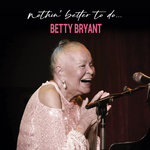
Betty Bryant
is a Los Angeles treasure. The singer, pianist and composer has been a regular on the Southern California jazz scene since 1955 when she moved from her hometown of Kansas City, where she was mentored by the late, great Jay McShann. Her blues-based piano and vocal stylings have garnered her a legion of fans at numerous jazz clubs and night spots up and down the West Coast and beyond. Now, at the remarkable age of 96, Ms. Bryant is releasing “Nothin’ Better to Do,” her 15th album. It features three original tunes as well as several tracks that are off the beaten path.

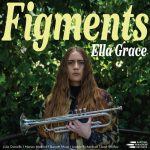
Trumpeter Ella Grace came up in the Twin Cities jazz scene before relocating to Chicago in 2021 to pursue a degree in Jazz Studies at DePaul University. Immersed in the city’s vibrant music culture, she steadily built a presence as both bandleader and side-person, culminating in her selection for the 2024 Chicago Music Scene Fellowship, which funded the recording of her debut disc, “Figments.” Featuring seven original compositions, the album is brought to life by some of Chicago’s most compelling young musicians and presents Ms. Grace’s compositional voice with clarity, depth and emotional resonance.


Also this week, Marshalltown, Iowa native Dana Legg presents the second recording from his Stage Band, “Scoopin’ the Loop”; trombonist and composer John Fumasoli unveils “Not Sure,” the fourth release from his 10 piece little big band The Jones Factor; and pianist and composer Darren Litzie, who’s been performing professionally for over fifteen years, brings us his second album as a leader, “On My Own Time.”

This Week’s Shows February 23 thru March 1

Jazz Corner of the World (Encore)

Mondays at 6:00pm

Blue Mitchell as a Session Leader

Craig spotlights a stack of records led by trumpeter and composer Richard Allen “Blue” Mitchell from his work at Blue Note, Riverside, and Mainstream Records. We’ll enjoy some fine discs led by one of the all-time greats!


Wednesday Night Special

Wednesdays at 6:00pm

Stanton Moore at the Iowa City Jazz Festival

Galactic drummer Stanton Moore brought his trio to the 2016 Iowa City Jazz Festival for a fun, high-energy set of jazz, blues, and funk, heavy with the grooves of his hometown New Orleans.


undefinedJazz Corner of the World

Saturdays at 12:00 noon

Sampling Enja Records

Craig serves up a choice sampling from the wonderful ENJA record label. Founded in 1971 by Matthias Winckelmann and Horst Weber, ENJA recorded and released classic sides from Elvin Jones, Abbey Lincoln, Mal Waldron, John Scofield, Bennie Wallace, and Max Roach.


KCCK’s Midnight CD   (February 16 –  February 22)

Every Night at Midnight

KCCK features a new album every night, played from start-to-finish.

Live in Beverly Hills by the Doug MacDonald Trio on Monday; Buddy! by Stephen Parisi Jr.  on Tuesday; Live in NYC by Charlie Apicella & Iron City on Wednesday; Eddie Told Me So by Bob Reynolds on Thursday; This Idea of Humanity … by Ed Altrom on Friday; Slideways by Lil’ Ed & the Blues Imperials on Saturday; Paris After Dark by Sacha Boutros on Sunday.

This Week In Jazz February 22 thru February 28

Hey, Jazz fans! Be sure to tune in this week as we celebrate the birthdays of composers John Benson Brooks, Hall Overton and Michel Legrand, bassists Ralph Pena, Bob Magnusson and Steve Charlson, saxmen Flip Phillips, Tommy Newsom, Dextor Gordon, and David “Fathead” Newman, cellist Fred Katz, singers Mildred Bailey and Roseanna Vitro and more! We’ll also mark the recording anniversaries of Clifford Brown/Max Roach’s “Study in Brown” (1955), Oliver Nelson’s “The Blues and the Abstract Truth” (1961), Sonny Criss’ “Crisscraft” (1975), “Diane Schuur & the Count Basie Orchestra (live)” (1987), Bob Mintzer Big Band’s “Swing Out” (1997), “Papa” John DeFrancesco’s “Walking Uptown” (2004) and many others, Mondays thru Fridays and at noon on JAZZ MASTERS on Jazz 88.3 KCCK.