“Everybody has a breaking point,” says trumpeter and composer Terence Blanchard, “and I feel we’re getting close to ours.” Blanchard refers to the level of gun violence in America, and the number of violent acts committed against people of color. 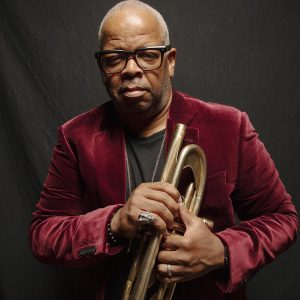
With his band E-Collective, Blanchard has recorded two albums considered open conversations, consciousness-raising dialogues on racism, violence, and the pattern of backward movement toward racial equality. “It’s like Ralph Ellison said: We’re invisible,” Blanchard believes. “It’s frustrating. You’re just tired of this.”
Songs produced for their “Live” album were recorded in cities plagued by racial tension and violence – Dallas, Cleveland, and Minneapolis. Comparisons are made to Max Roach’s 1960 protest, “We Insist.” “We Insist” uses Oscar Brown’s words to convey its message; Blanchard continues that message using sound and a sense of place. Blue Note Records describes Blanchard’s horn playing throughout as, “the sound of a group of people standing up for their rights … like a gathering of people chanting en masse in a communal demand for justice.”
Blanchard’s previous album, “Breathless,” takes its title from Eric Garner’s death by chokehold while being arrested in New York City. Garner, a 43-year-old African-American horticulturalist, is heard saying, “I can’t breathe,” as officers held him to the pavement.
Despite the signs of an even more ominous future ahead, Blanchard remains optimistic. He praises such positive acts as the March Against Gun Violence, and the eloquence of the Parkland School students. Because people still hold out hope, says Blanchard, so will he. And so will his music.
“Soundtrack to the Struggle” is hosted by Hollis Monroe. Produced by Ron Adkins. Executive Producer is Dennis Green.


Podcast: Play in new window | Download
Subscribe: RSS
 Jazz Corner of the World Encore
 Jazz Night in America
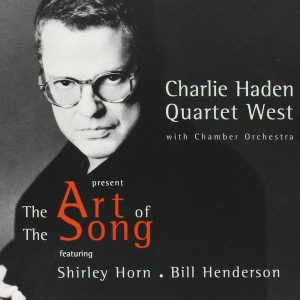 Hey, Jazz fans! Be sure to tune in this week as we celebrate the birthdays of pianist/composers Tadd Dameron and Michel LeGrand, saxmen Buddy Tate, David “Fathead” Newman and Wayne Escoffery, drummers Frank Issola, Harvey Mason, Sr. and Joe Labarbera, singer Nina Simone, trumpeter Joe Wilder and more. We’ll also mark the recording anniversaries of Louis Armstrong’s “The Hot Fives, Vol.1 (1926), Duke Ellington & Johnny Hodges’ “Side By Side” (1959), Oliver Nelson’s “The Blues and the Abstract Truth” (1961), Sonny Fortune’s “Awakening” (1975), Charlie Haden Quartet West’s “The Art of Song” (1999) and many others Mondays thru Friday at noon on JAZZ MASTERS on Jazz 88.3 KCCK.


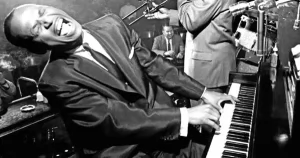 At the time, Hines led the house band at the famed Grand Terrace Café in Chicago. The Grand Terrace, a luxurious “black-and-tan” integrated speakeasy owned by Al Capone, was one of the most important jazz clubs in music history. Hines and Louis Armstrong, along with dozens of their protégés, were making solid reputations. Capone thought Hines was “nuts” when he announced his tour plans. Not only was he stepping outside the hot Chicago jazz scene, but he’d also be outside the protection of Capone and his boys. But, despite it all, Capone knew the tour was important.