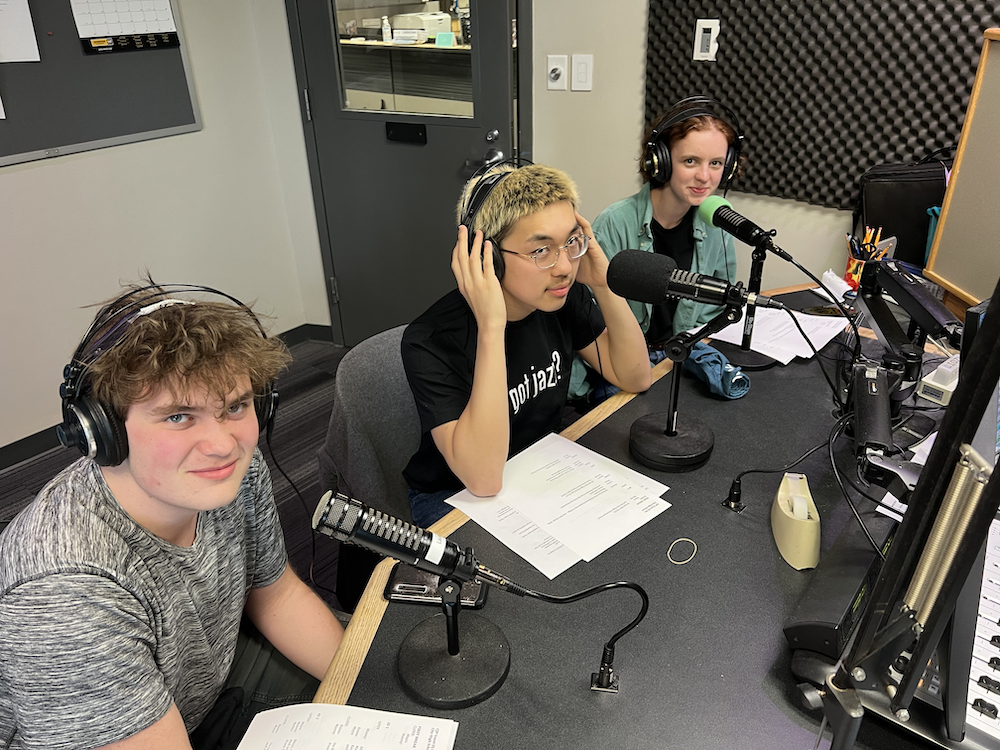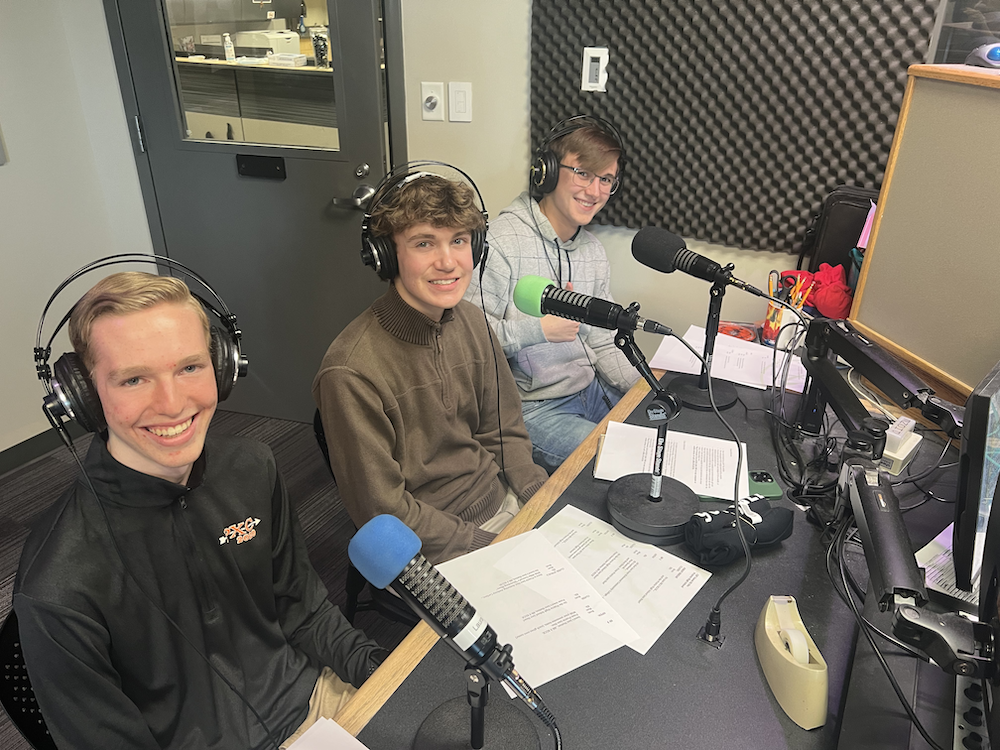
Talking Pictures 1-26-22

The Lost Daughter (2021) and The Electrical Life of Louis Wain (2021) with Hollis Monroe, Phil Brown and Monica Schmidt. 

This Week In Jazz January 23 thru January 29


Hey, Jazz fans! Be sure to tune in this week as we celebrate the birthdays of saxmen Benny Golson, Jimmy Forrest and Bob Mintzer, composer/guitarist/pianist Antonio Carlos Jobim, vibist Bobby Hutcherson and more. We’ll also mark the recording anniversaries of Hampton Hawes’ “Four!” (1958), Nat Adderley’s “Work Song” (1960), Keith Jarrett’s “The Koln Concert” (1975), “Ahmad Jamal/Gary Burton – In Concert” (1981) and many others Mondays thru Fridays at noon on JAZZ MASTERS ‘on Jazz 88.3 KCCK.

Special Programs for January 24 thru January 30

Jazz Corner of the World Encore  

Mondays at 6:00 PM

West Coast Jazz #1  

Join host Craig Kessler as he begins a four-week series on the phenomenon of “West Coast Jazz.” We’ll take a closer look at music from Gerry Mulligan, Chet Baker, and other artists involved in the beginnings of the Pacific Jazz record label. We’ll also explore early Dave Brubeck and the Fantasy label, among others topics. 


The Wednesday Night Special

Wednesdays at 6:00 PM

Planet Pluto at Jazz Under the Stars

Our Winter “Groove Cruise” continues with a trip to Planet Pluto. Guitar legend Craig Erickson led this cool project, deliciously melding funk, soul, jazz, and blues. Erickson has packed venues across the globe, but loves most to play at home in Eastern Iowa. The Jazz Under the Stars crowd definitely returned the love that hot August night.


Jazz Night in America

Thursdays at 11:00 PM

Force of Nature Bobby McFerrin

Host Christian McBride describes vocalist and NEA Jazz Master Bobby McFerrin as a “force of nature,” and is arguably the most unique voice in jazz history. While McFerrin considers himself a folk singer, the man who taught us to “don’t worry, be happy,” has collaborated with some of jazz’s best, including Jon Hendricks, Chick Corea, and Herbie Hancock.


Jazz Corner of the World  

Saturdays at 12:00 Noon

West Coast Jazz #2    

In this second of four “West Coast Jazz” presentations, host Craig Kessler takes a closer look at some relatively obscure artists, as well as major players Clifford Brown, Jack Montrose, Howard Rumsey, Bob Cooper, and others. Along the way, we’ll hear many goodies that have never before been featured on the Jazz Corner of the World!


KCCK’s Midnight CD

Every Night at Midnight

Each night, KCCK gives you the chance to hear a new CD played start-to-finish.

The Dark Fire Sessions by Alex Brown on Monday; Seen On the Scene by Jared Hall on Tuesday; Architecture of Storms by Remy LeBoeuf’s Assembly of Shadows on Wednesday; Myth & Wisdom by Blue Moods on Thursday; So Far So Good by Peter Veteska & Blues Train on Friday; On My Way by Katie Henry on Saturday; Breath By Breath by Fred Hersch on Sunday

New Music Monday for January 24, 2022

 Listen to this week’s playlist on YouTube and Spotify     
Bernie Dresel
has been one of the busiest studio musicians in the world since moving to Los Angeles in 1983. He’s traveled the world, occupying the coveted drum chair for Gordon Goodwin’s Big Phat Band since its inception in 1999, and an overlapping 15 years as drummer for the Brian Setzer Orchestra. Bernie’s own jazz orchestra, The BBB, is one of L.A.s most exciting large ensembles…a combination of intense swing and fiery soloing, as well as tight ensemble playing. Their new CD, “The Pugilist,” was recorded against the backdrop of the Covid-19 pandemic, with the musicians recorded separately in the own home studio settings and their parts then put together in a studio.


     John Coltrane is one of the great cultural icons of the 20th century, his influence transcending musical boundaries and his sound still resonating with music lovers of all stripes. “Stretching Supreme,” the newest disc from reedman Dave Wilson, is an homage to Wilson’s idol, whose music changed the course of Wilson’s life and career. The compositions were recorded live at Chris’ Jazz Café in Philadelphia in 2017 and 2018, representing the full, exciting sound and improvisatory chops of the band.


Also this week, pianist Pete Malinverni pays tribute to one of his idols, composer Leonard Bernstein, on his new release, “On the Town”;


keyboardist Yaron Gershovsky, who has been the musical director for The Manhattan Transfer since 1979, covers a broad spectrum, ranging from contemporary jazz to jazz/rock, samba and beyond on “Transitions”;


      and keyboardist Micah Graves’ third album, “Pawns,” fuses elements of bebop, fusion, funk and storytelling that fits the theme around renewal, hope and revival.


Soundtrack to the Struggle 5: Miles “You’re Under Arrest”

It’s 1984, and Miles Davis is changing his musical course yet again. He’d exhausted his exploration of jazz fusion and now looked for a fresh perspective. The result was “You’re Under Arrest.” This album was intentionally controversial – from its garish cover art, to its confounding mix of in-your-face statements and sugary pop ballads. It was also Miles’s most overtly political record to date.

Miles Davis chose this time to go public with his long-held views on nuclear proliferation, racism, and especially, police intimidation. He had fallen victim to police brutality in 1959, when he was beaten and arrested by a white New York City cop. As he released “You’re Under Arrest,” Miles also lent his horn to the Sun City anti-apartheid movement, and to Amnesty International.

He had always been a supporter of the equality struggle and a vocal defender of Black culture. He believed that jazz was the purview of Black America, and that white musicians had co-opted their way into the art form. He was a staunch defender of the disenfranchised and openly contemptuous of the aura of white privilege. At a White House gathering, Nancy Reagan is said to have asked Davis, “What have you done to deserve being here?” Miles replied, “Well, I’ve changed the course of music five or six times. What have you done?”

“You’re under Arrest,” Miles’s latest course change, was initially met by a mixed, confused response. But, like the musician himself, the music and the causes he championed are multi-layered, difficult to define, and require study and contemplation.

“Soundtrack to the Struggle” is written and produced by Ron Adkins.  Executive Producer Dennis Green. Host: Hollis Monroe.

Soundtrack to the Struggle 4: Ella and Marilyn

Very early in her career, Marilyn Monroe’s vocal coach insisted that she study Ella Fitzgerald’s singing. Rumor has it that the coach ordered Monroe to buy all of Fitzgerald’s records, and listen to them 100 times in a row. This made Monroe not only a pretty solid singer, but it was the beginning of a strange and beautiful friendship.

By the 1950’s, Ella Fitzgerald was jazz royalty. And yet, even she couldn’t sing in America’s biggest nightclubs. Prejudice kept her and countless other jazz legends relegated to smaller venues, and forced them to enter through the kitchen. Even Fitzgerald’s agent, Norman Granz, who insisted that all his clients be treated equally, couldn’t get her into some of the best venues.
One of those venues was Hollywood’s Mocambo Club. Sinatra made his LA debut there. Clark Gable, Humphrey Bogart, Lauren Bacall, and Lana Turner had reserved tables. But Ella wasn’t allowed through the door. Until, that is, an unlikely friend made a phone call. “I owe Marilyn Monroe a real debt,” said Ella. “She personally called the Mocambo’s owner and told him she wanted me booked immediately. The owner said yes. And Marilyn was there, front table, every night. After that, I never had to play a small jazz club again.”

Here is Ella Fitzgerald and Marilyn Monroe, each singing, “Heatwave”

“Soundtrack to the Struggle” is written and produced by Ron Adkins.  Executive Producer Dennis Green. Host: Hollis Monroe.

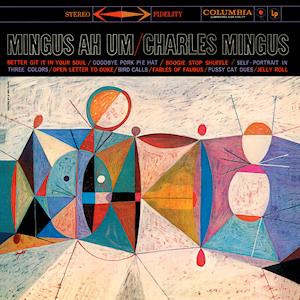
Soundtrack to the Struggle 3 : Charles Mingus “Fables of Faubus”

In 1957, Arkansas Governor Orval Faubus defied a presidential order and blocked the integration of the Little Rock school district. Bassist Charles Mingus, an outspoken civil rights advocate, i

mmediately wrote one of the greatest jazz protest songs of all time.

“Fables of Faubus” was set for release on his 1959 landmark album, “Mingus Ah Um.” Columbia Records, however, refused to allow the caustic vocal version to be included. Record execs were keenly aware of the growing volatility in American society and worried about taking a match to a powder keg. The full version, with lyrics, was finally recorded in 1960 for “Charles Mingus Presents Charles Mingus.”

As one music reviewer wrote, “the fact that the song caused such controversy shows what turbulent times these were and what touchy issues race relations were.” Other critics have gone so far as to proclaim “Fables of Faubus” the perfect jazz protest song and Charles Mingus’s defining contribution to the Civil Rights Movement. It is part lampoon of Orval Faubus as a fool, as Mingus calls him, and part a dissonant, sometimes atonal, reflection of the times and growing cultural tensions in America.

With the original lyrics, Here is Charles Mingus with “the Original Faubus Fables” from Charles Mingus Presents Charles Mingus.

“Soundtrack to the Struggle” is written and produced by Ron Adkins.  Executive Producer Dennis Green. Host: Hollis Monroe.


Talking Pictures 1-19-22

Ghostbusters: Afterlife (2021) and Playing God (2021) with Hollis Monroe, Phil Brown and Scott Chrisman.