New Music Monday for February 23, 2026

Listen to this week’s playlist on YouTube and Spotify
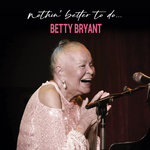
Betty Bryant
is a Los Angeles treasure. The singer, pianist and composer has been a regular on the Southern California jazz scene since 1955 when she moved from her hometown of Kansas City, where she was mentored by the late, great Jay McShann. Her blues-based piano and vocal stylings have garnered her a legion of fans at numerous jazz clubs and night spots up and down the West Coast and beyond. Now, at the remarkable age of 96, Ms. Bryant is releasing “Nothin’ Better to Do,” her 15th album. It features three original tunes as well as several tracks that are off the beaten path.

Trumpeter Ella Grace came up in the Twin Cities jazz scene before relocating to Chicago in 2021 to pursue a degree in Jazz Studies at DePaul University. Immersed in the city’s vibrant music culture, she steadily built a presence as both bandleader and side-person, culminating in her selection for the 2024 Chicago Music Scene Fellowship, which funded the recording of her debut disc, “Figments.” Featuring seven original compositions, the album is brought to life by some of Chicago’s most compelling young musicians and presents Ms. Grace’s compositional voice with clarity, depth and emotional resonance.


Also this week, Marshalltown, Iowa native Dana Legg presents the second recording from his Stage Band, “Scoopin’ the Loop”; trombonist and composer John Fumasoli unveils “Not Sure,” the fourth release from his 10 piece little big band The Jones Factor; and pianist and composer Darren Litzie, who’s been performing professionally for over fifteen years, brings us his second album as a leader, “On My Own Time.”

This Week’s Shows February 23 thru March 1

Jazz Corner of the World (Encore)

Mondays at 6:00pm

Blue Mitchell as a Session Leader

Craig spotlights a stack of records led by trumpeter and composer Richard Allen “Blue” Mitchell from his work at Blue Note, Riverside, and Mainstream Records. We’ll enjoy some fine discs led by one of the all-time greats!


Wednesday Night Special

Wednesdays at 6:00pm

Stanton Moore at the Iowa City Jazz Festival

Galactic drummer Stanton Moore brought his trio to the 2016 Iowa City Jazz Festival for a fun, high-energy set of jazz, blues, and funk, heavy with the grooves of his hometown New Orleans.


undefinedJazz Corner of the World

Saturdays at 12:00 noon

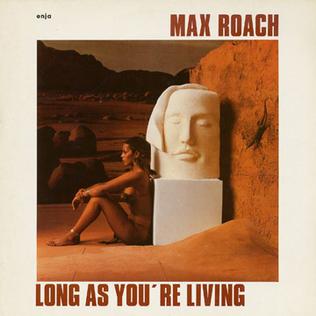
Sampling Enja Records

Craig serves up a choice sampling from the wonderful ENJA record label. Founded in 1971 by Matthias Winckelmann and Horst Weber, ENJA recorded and released classic sides from Elvin Jones, Abbey Lincoln, Mal Waldron, John Scofield, Bennie Wallace, and Max Roach.


KCCK’s Midnight CD   (February 16 –  February 22)

Every Night at Midnight

KCCK features a new album every night, played from start-to-finish.

Live in Beverly Hills by the Doug MacDonald Trio on Monday; Buddy! by Stephen Parisi Jr.  on Tuesday; Live in NYC by Charlie Apicella & Iron City on Wednesday; Eddie Told Me So by Bob Reynolds on Thursday; This Idea of Humanity … by Ed Altrom on Friday; Slideways by Lil’ Ed & the Blues Imperials on Saturday; Paris After Dark by Sacha Boutros on Sunday.

This Week In Jazz February 22 thru February 28

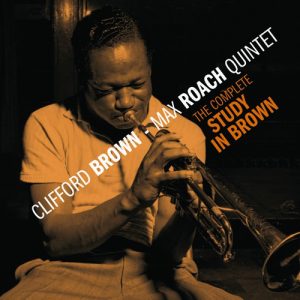
Hey, Jazz fans! Be sure to tune in this week as we celebrate the birthdays of composers John Benson Brooks, Hall Overton and Michel Legrand, bassists Ralph Pena, Bob Magnusson and Steve Charlson, saxmen Flip Phillips, Tommy Newsom, Dextor Gordon, and David “Fathead” Newman, cellist Fred Katz, singers Mildred Bailey and Roseanna Vitro and more! We’ll also mark the recording anniversaries of Clifford Brown/Max Roach’s “Study in Brown” (1955), Oliver Nelson’s “The Blues and the Abstract Truth” (1961), Sonny Criss’ “Crisscraft” (1975), “Diane Schuur & the Count Basie Orchestra (live)” (1987), Bob Mintzer Big Band’s “Swing Out” (1997), “Papa” John DeFrancesco’s “Walking Uptown” (2004) and many others, Mondays thru Fridays and at noon on JAZZ MASTERS on Jazz 88.3 KCCK.

Soundtrack to the Struggle – Malcolm X’s Influence on Jazz

The powerful oratory and evolving political views of civil rights leader Malcolm X deeply influenced jazz musicians in the 1960’s, including John Coltrane, who saw parallels between his own search for liberation and Malcolm X’s message. 

 As a young man, Malcolm was famously passionate about music. In his autobiography, he boasts of how, as a shoeshine boy in Boston’s Roseland State Ballroom, he shined the shoes of Duke Ellington, Count Basie, Lionel Hampton, and other greats. As a young man in Harlem, Malcolm danced and played drums at jazz bars, under the stage name Jack Carlton. But when he joined the Nation of Islam, his views began to change. In 1950, while in prison, Malcolm penned a letter to a fellow Muslim, describing his love of jazz and its “comforting effects.” “My ace girl was Dinah Washington,” he wrote, “She’s still the greatest.” But the music also reminded him of his “sinful past”, and he vowed to indulge only in jazz performed by Muslim artists.

For the rest of his life, Malcolm X would try to balance his love of music with his political and religious commitments. In a 1964 speech, he underscored the importance of music to black liberation, stating that music was “the only area on the American scene where the black man has been free to create. And he has mastered it.” 

Malcolm’s personal papers are sprinkled with references to music, containing mentions of Thelonious Monk and his “Muslim Band,” the vocalist Dakota Staton, and a newspaper clipping of Duke Ellington’s State Department tour in Syria and Iran. 

While traveling in Africa, Malcolm immersed himself in the musical life of the newly independent states, visiting social clubs and dance centers, heartened by how they were trying to revive indigenous musical forms as part of their decolonization. At the Ghana Press Club, he took in a heady performance of highlife music, and—in Maya Angelou’s telling—tapped his fingers on his lap, but refused to dance. In Cairo, he hung out with African American jazz aficionados who were trying to create a “progressive” Afro-Asian genre to counter what was being broadcast by the State Department.

In a society where inequality, bigotry and injustice were the norm for African Americans, Malcolm said, “No wonder we do some of the things we do … no wonder we drink, dope and all sorts of things to soothe our soul … no wonder we so continuously have sought the lures of night life to create some sort of peace within ourselves … no wonder we have so longingly turned so often to music for its comforting effects.”

Music:  “The Opening” from Terence Blanchard’s “The Malcolm X Jazz Suite.”

Culture Crawl 1171 “Do it as a Damn Polka”

Dreamer and The Hoping Machine is a new group formed from the rhythm section that accompanies the Family Folk Machine choir. The members also direct and contribute to much of the group’s original music. In fact, part of the reason for the group’s formation was that they wanted some of the original Family Folk Machine compositions to have a life beyond just one concert!

Alma Drake, Jean Littlejohn, Laurie Haag, and Pappy Klocke also perform one of their tunes! Join them Feb. 26 at The James in Iowa City. Tickets at thejamesic.com.

Subscribe to The Culture Crawl at kcck.org/culture or search “Culture Crawl” in your favorite podcast player. Listen Live at 10:30am most weekdays on Iowa’s Jazz station. 88.3 FM or kcck.org/listen.

Soundtrack to the Struggle – The BLM Suite, Cal Massey’s Magnum Opus

The 1950’s was a hopeful decade. People like Thurgood Marshall, Rosa Parks, Martin Luther King, Jr. each successfully battled against segregation. Philadelphia’s bebop scene was blossoming. Cal Massey’s touring days were over, and he had started his own band with Albert Heath on drums, Jimmy Garrison on bass, CClarence Sharpe on alto sax and a seventeenyearold pianist named McCoy Tyner

Still life as a musician was hard; there was never a steady income. Not one to give up easily, he began to produce his own concerts, giving them at his own house and organizing benefit concerts at the St. Gregory’s Church right across the street. Concerts that featured names as Rashaan Roland Kirk, Thelonious Monk, Elvin Jones and of course his close friend, John Coltrane

Then things got worse. On July 17, 1967 John Coltrane died from liver cancer at the age of 40. Then, on April 4th, 1968, Dr Martin Luther King, Jr. was shot dead on a balcony of the Lorraine Motel in Memphis Tennessee.

Cal Massey had gotten involved with musicians that had a more radical attitude towards black liberation, including the Black Panthers, and during the Pan African Festival in Algiers he paid a visit to one of their early leaders, Eldridge Cleaver, who lived there in exile. Cleaver asked Cal Massey to write the Black Liberation Movement Suite dedicated to black leaders. Cal compiled this suite of some of his best work and wrote pieces dedicated to Malcolm X, Cleaver himself, Dr. Marten Luther King, Huey P. Newton and John Coltrane.

Back in Brooklyn Massey organized a series of historic benefit concerts to help the Black Panthers party of which 21 members were on trial. The first benefit concert premiered Massey’s Black Liberation Movement Suite

The Black Liberation Movement Suite is an unsung masterwork worthy of joining MingusThe Black Saint and the Sinner, Oliver Nelson’s The AfroAmerican Suite, and Ellington’s Sacred Concerts. But while it is jazz on a scale of considerable musical and artistic grandeur, the BLM Suite is also a work of considerable sociopolitical significance, commissioned by The Black Panther Party and musically and ideologically expressing the revolutionary upsurge of the Black Liberation Struggle in the America of the mid to late 1960s

Music: From 1969, “Part 1: Prayer” from Cal Massey’s Black Liberation Suite.


Talking Pictures 2-18-26

“Iron Lung” ( 2026 Horror/Sci-fi) and “The Great Santini” (1979 Drama with Robert Duvall) with Hollis Monroe, Phil Brown and Ron Adkins.

Soundtrack to the Struggle – The Real Jazz Ambassadors

The Real Ambassadors was a vibrant mix of humor, social commentary and swinging music. And it couldn’t have existed if Dave Brubeck hadn’t taken over the world with Time Out, his epochal 1959 record with alto saxophonist Paul Desmond, bassist Eugene Wright and drummer Joe Morello — because The Real Ambassadors was a passion project and almost certainly a money loser.

The Real Ambassadors is a jazz musical developed in the late 1950s and early 1960s by Dave and Iola Brubeck, in collaboration with Louis Armstrong and his band. It addressed the Civil Rights Movement, the music business, America’s place in the world during the Cold War, the nature of God, and a number of other themes. It was set in a fictional African nation called Talgalla, and its central character was based on Armstrong and his time as a jazz ambassador.

In writing this work, the Brubecks drew upon experiences that they, and their friends and colleagues, had touring various parts of the world on behalf of the US State Department. The Brubecks and Armstrong (among many other musicians such as Dizzy Gillespie, Benny Goodman, and Duke Ellington) were part of a campaign by the State Department to spread American culture and music around the world during the Cold War, especially into countries whose allegiances were not well defined or that were perceived as being at risk of aligning with the Soviet Union. 

Among the events referenced, directly or indirectly, were the 1956 student riots in Greece in which stones were thrown at the US Embassy, which dissipated following performances by Dizzy Gillespie; Louis Armstrong’s 1956 visit to Ghana as the guest of Prime Minister Kwame Nkrumah; and Armstrong’s dispute with the Eisenhower Administration and President Eisenhower personally over the handling of the 1957 Central High School Crisis in Little Rock, Arkansas. In 1957, Armstrong canceled his state-sponsored tour of the Soviet Union after President Eisenhower refused to enforce court-ordered desegregation in Little Rock, Arkansas. “President Eisenhower should take these little children by the hand and lead them into that school” he erupted. “The way they are treating my people in the South, the government can go to hell.” After Eisenhower eventually acquiesced, Armstrong participated in the program.

The Real Ambassadors was able to capture the often complicated, and sometimes contradictory, politics of the State Departments tours during the Cold War Era. Addressing African and Asian nation building in addition to the US civil rights struggle, it satirically portrayed the international politics of the tour. The musical also addressed the prevailing racial issues of the day, but did so within the context of satire.

Despite Iola Brubeck’s intention for some of her lyrics to be light and humorous in presentation, believing that some of the messages would be better received if presented in a satirical manner, Armstrong saw this performance as an opportunity for him to address many of the racial issues that he had struggled with for his entire career, and he made a request to sing the songs straight. In one 2009 interview, Dave Brubeck remarked: “Now, we wanted the audience to chuckle about the ridiculous segregation, but Louis was cryin’… and every time we wanted Louis to loosen up, he’d sing ‘I’m really free. Thank God Almighty, I’m really free’. After years of demeaning roles in his public performances, The Real Ambassadors offered Armstrong material that was closer to his own sensibility and outlook. 

Music: From a performance at the 1962 Monterey Jazz Festival, Louis Armstrong sings “They Say I Look Like God.”