Culture Crawl 1168 “Vinyl from the 80s”

UNI celebrates 75 years of jazz at the university with an exciting lineup for the annual Tallcorn Jazz Festival. Festival committee member Eric Torneten has the details. 

It’s Thursday 2/19 & Friday 2/20 at the University of Northern Iowa. The Thursday night concert features UNI Jazz Bands One & Two with drummer Matt Wilson at 7:30pm in Bengtson Auditorium. The Friday night concert will feature two alumni jazz ensembles and Jazz Band One with Matt Wilson at 7:30pm in GBPAC Great Hall. 

For the full schedule visit tallcornjazzfest.com.
For tickets visit unitix.evenue.net/events/TJF.

Subscribe to The Culture Crawl at kcck.org/culture or search “Culture Crawl” in your favorite podcast player. Listen Live at 10:30am most weekdays on Iowa’s Jazz station. 88.3 FM or kcck.org/listen.

Soundtrack to the Struggle – Southern Trees Bear “Strange Fruit”

In her short life, Billie Holiday performed with a type of genius that is still imitated by singers today. She was best known for sad songs about heartache and pain from losing love. One thing people don’t say about Billie Holiday was that she was a protest singer. While there was plenty to sing about, these weren’t the kind of songs Billie Holiday was known to sing. In 1939, though, she made a recording of a song that brought out into the light one of America’s dirtiest secrets, what experts have called the “window to the soul of white supremacy and African American life in the South”—lynching.

It’s difficult today to imagine what life was like during the years when lynching was popular in the South. Black men lived in constant terror that someone might accuse them of a crime, and that a white mob would grab them, take them against their will to a tree, and lynch them. Lynching wasn’t just a way for white people to keep Black people in line. In some places, it was treated like a sport. Often at a lynching, photographers would take pictures and then sell them door to door. There were collectable post cards showing Black men hanging from trees with white people standing around and smiling. They sold for a dime or a dollar a piece in drugs stores and pharmacies. This is the kind of horrific behavior that Billie Holiday hoped to stop with her new song. And she felt that it wasn’t enough just to sing it for liberals in New York.

“Strange Fruit” originated as a protest poem against lynchings by Abel Meeropol and published under the title “Bitter Fruit” in January 1937. It was inspired by Lawrence Beitler’s photograph of the 1930 lynching of Thomas Shipp and Abram Smith in Marion, Indiana.

Holiday said that singing it made her fearful of retaliation but, she did so because its imagery reminded her of her musician father Clarence Halliday, who fell ill with a lung disorder while on tour in Texas and was refused treatment at a local hospital. He was treated in the colored ward of the Veterans Hospital, but by then pneumonia had set in and without antibiotics, the illness was fatal. Because of the power of the song, Josephson drew up some rules: Holiday would close with it; the waiters would stop all service in advance; the room would be in darkness except for a spotlight on Holiday’s face; and there would be no encore. During the musical introduction to the song, Holiday stood with her eyes closed, as if she were evoking a prayer.

Holiday approached her recording label, Columbia, about the song, but the company feared reaction by record retailers in the South, as well as negative reaction from affiliates of its co-owned radio network, CBS. When Holiday’s producer John Hammond also refused to record it, she turned to her friend Milt Gabler, owner of the Commodore label. Holiday sang “Strange Fruit” for him a cappella and moved him to tears. Columbia gave Holiday a one-session release from her contract so she could record it; Frankie Newton’s eight-piece Café Society Band was used for the session in an arrangement by Newton. Because Gabler worried the song was too short, he asked pianist Sonny White to improvise an introduction. It was recorded on April 20, 1939. The 1939 recording eventually sold a million copies, becoming the biggest-selling recording of Holiday’s career.

Music: From 1939, Billie Holliday sings “Strange Fruit.”


Culture Crawl 1167 “I Am The Light”

Musician, author, and vocal empowerment guide, Mary Jane Knight, is in the studio ahead of the release of her new book of poetry, “The Light Between the Lines.”  A book presentation and mini concert will be held at Prairie Lights Books in Iowa City on Sun, Feb 15 at 3pm and a longer, intimate concert will be held at Prairiewoods Spirituality Center on Fri, Feb 27 at 6:30pm in Cedar Rapids.

For more info visit maryjaneknight.com.

Subscribe to The Culture Crawl at kcck.org/culture or search “Culture Crawl” in your favorite podcast player. Listen Live at 10:30am most weekdays on Iowa’s Jazz station. 88.3 FM or kcck.org/listen.

Talking Pictures 2-11-26

“The Housemaid” (2025 Thriller/Mystery) and “The Wrecking Crew” (Amazon Prime Action/Comedy) with Hollis Monroe, Phil Brown and Scott Chrisman.

Soundtrack to the Struggle – The Zoot Suit Riots

In June 1943 Los Angeles erupted. Mobs of servicemen, off-duty police, and civilians attack young Latinos, Blacks, and other people of color. Any man wearing a “zoot suit” is fair game. 

The zoot suit had its origins in Jazz. Oversized and baggy, with wide shoulders and lapels, loose-fitting pants and tailored cuffs, they were wildly popular in 1930’s Harlem and Chicago. Jazz and Jump-Blues musicians liked how they looked on stage. Tap and Lindy-Hop dancers enjoyed the freedom of movement. Sporting a zoot suit made one feel like a hep-cat, a jive-talker, a bit of a rogue. A sub-culture emerged. Jazz-speak entered the American lexicon, and zoot suits became flags of cultural pride. Cab Calloway dubbed the fashion, “totally and truly American.”

But by 1943, zoot-suiters drew fire for wasting rationed wool. Clashes erupted, fueled by war fervor and simmering racism. In Los Angeles, full-blown riots spread into ethnic neighborhoods. An LA newspaper reported, “… mobs of several thousand … beat up every zoot-suiter they could find. Mexicans, Blacks, and Filipinos were attacked with sadistic frenzy.” A Governor’s Committee report stated that “the existence of racism cannot be ignored.” 

But rather than intimidate people of color, the riots ultimately fueled activism. The zoot suiters’ defiance inspired other minority groups and forged bonds between them. Zoot-suiters Cesar Chavez and Malcolm X. rose to spearhead the demand for racial equality. And historians now consider the Zoot Suit Riots a major impetus in the Civil Rights Movement. 

Soundtrack to the Struggle – Lil Hardin Armstrong Steps Out

It’s September, 1924, and Lil Hardin Armstrong gives her husband, Louis Armstrong, a
makeover. She teaches him how to dress for success, and she pushes him to be more of a
showman. Then, she persuades the new Louis Armstrong to leave the security of King Oliver’s
band to form his first Hot Five.

And while Lil enjoyed being the driving force behind Armstrong’s early career, she was not
content standing in her husband’s shadow. She was already an accomplished pianist, composer,
and bandleader. Many of the Hot Five’s biggest hits – the now-classic “Struttin’ With Some
Barbecue,” “Two Deuces,” and “Doin’ the Suzie Q,” – were Lil Hardin originals.

She was also a shrewd marketer. Dubbing her own band “Mrs. Louis Armstrong and her Chicago
Creolians” opened many doors. But it also presented challenges in Jim Crow, male-dominant
America. The band played over catcalls and racial slurs. They were often short-changed for their
work, and the threat of assault was a nightly fear. Wrote one jazz historian, “While Black
jazzmen had a hard time on the road, Black jazzwomen had it tougher.”

Lil knew the dangers, but they were worth the risk. Name recognition afforded her the chance
to prove women could be more than girl singers. Audiences and critics agreed. The Chicago
Defender wrote that Lil’s band could swing, “as capably as any masculine orchestra.”

Clean Up Your Act 2-10-26

Ospreys and peregrine falcons…whose populations in North America crashed in the mid-20th Century…are now doing well in Iowa.

New Music Monday for February 9. 2026

Listen to this week’s playlist on YouTube and Spotify
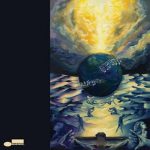
Vibraphonist and composer Joel Ross releases his fifth Blue Note album, “Gospel Music,” a sonic interpretation of the biblical story and an exploration of his faith that delivers a message of hope and love, performed by an expanded version of his Good Vibes band. An homage to an array of influences, the disc follows the arc of the grand biblical story. Each composition carries the emotional weight of the story of creation, the fall, and salvation, corresponding to biblical texts.

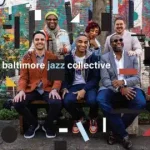
The way the members of the Baltimore Jazz Collective describe their hometown could just as easily apply to themselves—and to their striking self-titled debut album. “Musically, Baltimore is one of the most soulful cities, and you can’t really put the scene in a box,” say BJC founder Sean Jones, who ranks among the most revered jazz trumpeters of his generation. Overflowing with swing and spirit, the album features original compositions and arrangements by each member of the band: Jones, bass clarinetist Todd Marcus, pianist Alex Brown, bassist Kris Funn, drummer Quincy Davis and Brinae Ali, a singer, tap dancer and interdisciplinary artist.
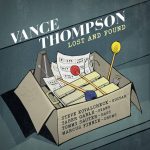
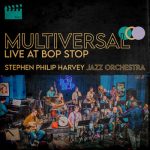
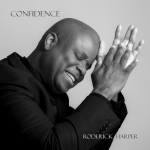
                               

Also this week, “Lost and Found” is the first album in more than ten years from Grammy-nominated composer and bandleader Vance Thompson, who embarks on a new chapter as a vibraphonist after a career-threatening neurological disorder forced him to set aside the trumpet; “Multiversal: Live at Bop Stop” is the eighth release from saxophonist, composer and educator Stephen Philip Harvey, and the second by his 17-piece Jazz Orchestra; and vocalist and songwriter Roderick Harper unveils his newest album, “Confidence.”