Culture Crawl 1033 “Cardboard Box Violin”

The Avita Duo is comprised of the mother-daughter team of Ksenia Nosikova, chair of the piano department at the University of Iowa, and Katya Moeller, currently studying at Juilliard.

The duo performs March 4 at Opus Concert Cafe prior to their first ever New York performance later in March. Tickets for the Opus show at www.artsiowa.com. Follow the Avita Duo at www.avitaduo.com.

Subscribe to The Culture Crawl at kcck.org/culture or search “Culture Crawl” in your favorite podcast player. Listen Live at 10:30am most weekdays on Iowa’s Jazz station. 88.3 FM or kcck.org/listen.

Soundtrack to the Struggle: Ella Arrested

It’s 1955, and Ella Fitzgerald and her band take a break between sets at the Houston Music Hall. In her dressing room, Ella and her assistant, Georgiana Henry, chat and drink coffee, while over in the corner, Dizzy Gillespie and Illinois Jacquet shoot a quick game of craps. The door suddenly bursts open and five plainclothes policemen rush in, guns drawn.

Producer and agent Norman Granz, a staunch integrationist and activist, faced them down. He followed a policeman into the bathroom, suspecting he might be planting drugs. “I’m watching you,” said Granz. The cop shoved his gun into Granz’s stomach and growled, “I oughta kill you.”

The vice squad made their arrests and the entire troupe was taken to the police station, where reporters and photographers were already waiting. They were charged with illegal gambling, paid a fine, and were eventually released. Throughout the booking process, and much to their chagrin, police officers approached them for autographs. They were driven back to the Music Hall and performed their second set, to thunderous applause from the entire audience.

The story made headlines worldwide, skewering the Houston police for a blatantly racist, pre-planned publicity stunt to stop a desegregated show. The band’s subsequent gigs sold out across the country. And in a final twist, they returned to Houston a year later and played to a standing-room-only, integrated audience.

Talking Pictures 2-26-25

“The Monkey” (2025) and “Captain America: Brave New World” (2025) with Hollis Monroe, Phil Brown and Scott Chrisman.

Soundtrack to the Struggle: Charlie Haden

It’s 1968, and the Democratic National Convention erupts into violence. Rejection of a plank
condemning the Vietnam War sparks protests on the streets of Chicago. Bassist Charlie Haden,
a vehement critic of the war, watches it all unfold. He is angry and disgusted, and he decide
that he must take action.

Haden forms the Liberation Music Orchestra, an ensemble of fellow activist-musicians,
including Carla Bley, Paul Motian, and Dewey Redman. Their repertoire includes “Circus ’68
’69,” a criticism of the convention violence. Haden considered jazz the “music of rebellion.” It
was his mission, he thought, to challenge the world through his jazz.

At a 1971 gig in Portugal, then under a fascist dictatorship, Haden dedicated his “Song For Che
(Guevara)” to revolutionaries in Portuguese-controlled African nations. He was arrested by the
Portuguese secret police, interrogated, and jailed. Haden never denounced his stance against
racist colonialism and Western empire-building, declaring it the root of social problems in
America.

Said Haden, “I want an America worthy of the dreams of Martin Luther King, and the majesty of
the Statue of Liberty. I always dreamed of a world without cruelty and greed, of a humanity
with the same creative brilliance of our solar system. Haden dedicated his music to those who
“still dream of a society with compassion, deep creative intelligence, and a respect for the
preciousness of life.”

Culture Crawl 1032 “We Love You, Trombonists!”

Orchestra Iowa performs their second concert in as many weeks, with “A Lyrical Journey,” featuring one of Tim’s favorite symphonies, Brahms 4, special guest pianist Lorraine Min performing Saint-Saëns, and a piece by composer Caroline Shaw, whose music is also featured in a new documentary on Leonardo de Vinci.

March 1, 7:30pm at Paramount Theatre and March 2 at 2pm at the Coralville Center for the Performing Arts. Tickets and more info can be found at artsiowa.com and orchestraiowa.org.

Subscribe to The Culture Crawl at kcck.org/culture or search “Culture Crawl” in your favorite podcast player. Listen Live at 10:30am most weekdays on Iowa’s Jazz station. 88.3 FM or kcck.org/listen.

Soundtrack to the Struggle: Harold Bradley, Jr.

Harold Bradley, Jr. was born two weeks before the Wall Street Crash. Times were tough, especially for
Blacks in Chicago, but Harold found opportunities to learn and grow. Introduced by his mother, he
talked jazz with Duke Ellington and Cab Calloway, and studied art with legendary illustrator E. Simms
Campbell.

Harold loved music. He was a gifted painter. And he was a natural athlete. He attended the University of
Iowa on a football scholarship. On the gridiron, he was named the Hawkeye’s Most Valuable Player. On
campus, however, Harold was barred from dorms and most Iowa City apartments. Celebrated activist
Helen Lemme gave Harold room and board, and mentored him in sociology and civil rights.

After graduation and a short stint in the Marines, Harold was recruited by the NFL. He led the Cleveland
Browns to two national championships. The sports world hailed him as a football star, Harold relished
the opportunity to be a role model, proving that a Black man can succeed in the white man’s world.

He never lost his drive to create. He and his wife, Hannelore, a Jewish Holocaust survivor devoted to
activism, moved to Italy. Harold continued painting, did theatre, television, and appeared in films,
including Cleopatra with Elizabeth Taylor and Barabbas with Anthony Quinn. He also began a popular
music career, singing gospel, blues, and jazz standards.

The couple eventually returned to Chicago to teach. Harold hosted a series of cultural affairs TV
programs. “Close-Up,” “Soul Side,” and “People Beat” featured discussions on racism in America and
other issues within the Black community.

And when others ponder retirement, Harold and Hannelor returned to Italy, where Harold recorded a
string of blues and jazz albums. He performed for the Pope and for Nelson Mandela, and was named by
the Italian government as an “ambassador to the Italian public on African-American music styles and
culture” before his death in 2021.

Soundtrack to the Struggle: Sun City

It’s 1985, and guitarist and activist Little Steven Van Zandt forms a supergroup to protest
apartheid in South Africa. That country’s system of white minority rule and institutionalized
racial segregation was in place for nearly 50 years. Despite world-wide condemnation,
embargos, and diplomatic isolation, the South African regime held firm. Van Zandt believed this
stubbornness led to apathy among the world community.

ase in point, a long-standing entertainment embargo against the luxury resort Sun City began
to show cracks. Major artists like Frank Sinatra, Rod Stewart, and Elton John broke ranks and
performed there. Van Zandt cited Sun City as a symbol of the oppression and denial of basic
rights to the country’s black majority.

In writing his protest song, Van Zandt drew parallels between South Africa’s apartheid and
America’s own engrained, systemic racism. Producers worried that the song would draw
backlash, and be unfavorably compared to USA For Africa’s “We Are the World.” Van Zandt
countered that his song, “is about change, not charity; freedom, not famine.” He gathered
dozens of artists who agreed, and came together as Artists United Against Apartheid.

Jazz legends Herbie Hancock, Ron Carter, Ray Barretto, and Gil-Scott Heron joined with (among
others) Miles Davis, Bruce Springsteen, Afrika Bambaata, and Run-DMC. The resulting single
and album a modest success in the United States, but found a strong international audience. It
debuted at the United Nations and raised over a million dollars for anti-apartheid organizations.
Most importantly, said Van Zandt, it raised awareness of apartheid injustice.

New Music Monday for February 24, 2025

Listen to this week’s playlist on YouTube and Spotify

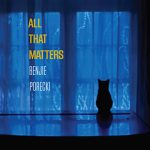
In his prolific career, Benjie Porecki has played keyboards in wide variety of genres. A professional since the age of 15, the keyboardist has worked with such notables as Tom Scott, Kirk Whalum, Nnenna Freelon, Buddy Guy, and Carlos Santana among many others. He’s also led his own albums since 1996. “All That Matters” is the latest accomplishment in Porecki’s career. He leads a trio that includes bassist Michael Bowie and drummer Mark Prince.


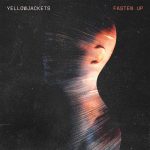
With their 27th studio album, the Grammy Award-winning, jazz-pioneering Yellowjackets return to redefine jazz fusion once again. Known for their genre-blending sound and impeccable musicianship, Russell Ferrante, Bob Mintzer, Will Kennedy, and Dane Alderson deliver a fresh yet timeless listening experience that’s as adventurous as ever. “Fasten Up” bursts with the band’s signature energy, featuring ten originals and a lively cover of Ben Tucker’s “Comin’ Home Baby.”


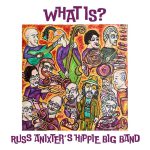
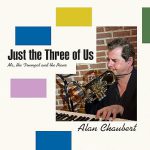
Also this week, the Colorado-based Eric Lilley Trio is back with ten new original compositions on their fourth release, “Swing Set”; Russ Anixter’s Hippie Big Band taps into some classic ’60s and ’70 rock compositions for their new disc, “What Is?”; and trumpeter and pianist Alan Chaubert plays both instruments simultaneously with his trio on “Just the Three of Us.”