
“Keeper” (2025 Horror) and “Duel” (1971 Action) with Hollis Monroe, Phil Brown and Ron Adkins.
Podcast (talkingpics): Play in new window | Download
Subscribe: Apple Podcasts | RSS
“Keeper” (2025 Horror) and “Duel” (1971 Action) with Hollis Monroe, Phil Brown and Ron Adkins.
Podcast (talkingpics): Play in new window | Download
Subscribe: Apple Podcasts | RSS
The Cedar Rapids Concert Chorale keeps busy during the holiday season with a variety of caroling and small-group appearances, and two main events. The choir’s holiday concert will feature Saint-Saen’s Christmas Oratorio and a contemporary contata by John Leavitt, Dec. 13 at First Lutheran Church. The next day they turn right around and performa with Iowa Brass at the Solon Fine Arts Center.
Tickets and more information at crchorale.org.
Subscribe to The Culture Crawl at kcck.org/culture or search “Culture Crawl” in your favorite podcast player. Listen Live at 10:30am most weekdays on Iowa’s Jazz station. 88.3 FM or kcck.org/listen.
Podcast (culturecrawl): Play in new window | Download
Subscribe: Apple Podcasts | RSS
Bluesman Michael Charles returns to Cedar Rapids December 13 for the latest leg of his “Guitar, Music, and Miles” tour. Born and raised in Australia, Michael first came to the USA at the behest of Buddy Guy, and has since became a fixture on the Chicago Blues scene, been inducted into the Chicago Blues Hall of Fame, and keeps a healthy road schedule.
Follow Michael at michaelcharles.us. Tickets for the Dec. 13 show at cspshall.org.
Subscribe to The Culture Crawl at kcck.org/culture or search “Culture Crawl” in your favorite podcast player. Listen Live at 10:30am most weekdays on Iowa’s Jazz station. 88.3 FM or kcck.org/listen.
Podcast (culturecrawl): Play in new window | Download
Subscribe: Apple Podcasts | RSS
 Listen to this week’s playlist on YouTube and Spotify
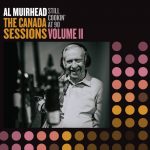
Al Muirhead is a true institution in Canadian jazz, widely recognized as one of the country’s elder statesmen of jazz trumpet. Since moving to Calgary in 1966, Al has been a cornerstone of the Western Canadian jazz scene, performing and touring with luminaries such as Dizzy Gillespie, Guido Basso, and Diana Krall. He has contributed as a sideman to more than 30 albums and received numerous awards. Remarkably, Al only began recording as a leader in 2014. Now celebrating his 90th birthday, his new album, “Still Cookin’ at 90: The Canada Sessions Vol.2,” marks a milestone in his extraordinary career, capturing the artistry, experience, and passion that have made him a treasured figure in Canadian jazz.
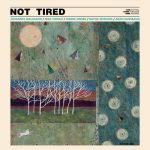
For Johannes Wallmann’s new album, “Not Tired,” the German-Canadian pianist/composer reunites with long-time friends and collaborators Nick Moran, Ingrid Jensin, and Dayna Stephens, and is joined by Adam Nussbaum, a veteran of the New York jazz community. Work on the disc began in 2023 as a collaboration between Wallmann and Moran at the University of Wisconsin-Madison, where Wallmann leads the university’s jazz program and Moran is pursuing a doctoral degree in music. The two workshopped music for the album, meeting weekly to play through sketches and shape them into fully formed compositions. They then travelled to New York City to record the resulting music with their New York colleagues in February 2024 at the iconic Samurai Hotel Recording Studios in Queens.
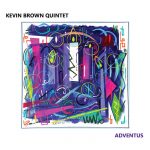
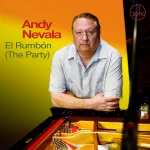
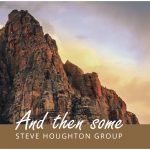
Also this week, guitarist Kevin Brown puts a jazz spin on historical music that has been traditionally used during the period of advent on “Adventus”; pianist, composer and educator Andy Nevala presents a powerful statement on the vitality of Afro-Cuban jazz with “El Rumbon (The Party)”; plus “And Then Some” is the new work from drummer Steve Houghton, who played with Woody Herman and Freddie Hubbard and taught at Indiana University for twenty years.
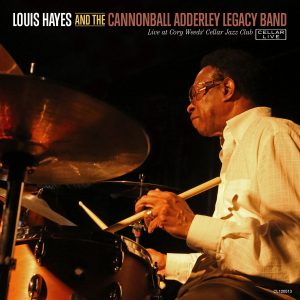 Hey, Jazz fans. Be sure to tune in this week as we celebrate the birthdays of singers Frank Sinatra, Joe Williams and Diane Schuur, organist Jimmy Smith, trumpeter/violinist/singer Ray Nance, trumpeter Donald Byrd, pianists McCoy Tyner and Beegie Adair and composer/pianist Toshiko Akiyoshi and more. We’ll also mark the recording anniversaries of Anita O’Day’s “This Is Anita O’Day” (1955), John Coltrane’s “A Love Supreme” (1964), Dexter Gordon’s “Homecoming” (1976), Louie Bellson & His Jazz Orchestra’s “East Side Suite” (1987), Poncho Sanchez’ “A Night At Kimball’s East” (1990), Louis Hayes & the Cannonball Adderley Legacy Band “Live at Cory Weed’s Jazz Cellar Club” (2013) and many others, Monday through Friday, and at noon on Jazz Masters on Jazz 88.3 KCCK.
 Jazz Corner of the World (Encore)
Mondays at 6:00pm
Jackie McLean’s Prestige Records
Craig presents a variety of jazz jewels from the 19 Prestige sessions featuring the great alto saxophonist, band leader, composer, and educator Jackie McLean.
Wednesday Night Special
Wednesdays at 6:00pm
Betsy & Ron’s Christmas Party
The Opus Concert Café’s audience got an early holiday treat as singer Betsy Hickok and guitarist Ron Roberts returned to First Friday Jazz last December. Their song list was filled with holiday classics, some new favorites, and loads of good cheer. 6:00 on KCCK’s Wednesday Night Special.
 Jazz Corner of the World
Saturdays at 12:00 noon
Pat Martino’s Prestige Career
Craig presents a variety of astonishing jazz guitar recordings from the 23 Prestige sessions that from award-winning guitarist and educator Pat Martino.
KCCK’s Midnight CD (December 8 – December 14)
Every Night at Midnight
KCCK features a new album every night, played from start-to-finish.
Holly Tunes by Wayne Wilkinson on Monday; The Nutcracker Remix by the Cincinnati Contemporary Jazz Orchestra on Tuesday; Christmas Interlude by Jeremy Pelt on Wednesday; Holiday Fun! by Wycliffe Gordon (Featured Album) on Thursday; Blues for Christmas by Mike Dangeroux on Friday; Know You from Old by Steve Howell & Fats Kaplan on Saturday; Swinging in the Holiday by Various Artists on Sunday.
After a short break during the Thanksgiving holiday your hosts are back at it again with another episode! This week features the usual mix of blues eras you’ve come to expect along with a few Californian artists, tune in to see which ones! Songs featured in the episode:
Podcast (bigmopodshow): Play in new window | Download
Subscribe: RSS | Subscribe to the Big Mo Pod Show
Heavy Metal! “Tuba Christmas” comes to the Cedar Rapids Public Library Dec. 13. It’s an ad hoc ensemble that will feature nearly 100 instruments. Rehearsal takes place immediately prior to the show, and all players are welcome, regardless of age or experience level.
Admission and participation are free, but audience members are encouraged to bring their own seating, since the band takes up just about every chair the Library owns! More into at crtubachristmas.com.
Subscribe to The Culture Crawl at kcck.org/culture or search “Culture Crawl” in your favorite podcast player. Listen Live at 10:30am most weekdays on Iowa’s Jazz station. 88.3 FM or kcck.org/listen.
Podcast (culturecrawl): Play in new window | Download
Subscribe: Apple Podcasts | RSS