Culture Crawl 1032 “We Love You, Trombonists!”

Orchestra Iowa performs their second concert in as many weeks, with “A Lyrical Journey,” featuring one of Tim’s favorite symphonies, Brahms 4, special guest pianist Lorraine Min performing Saint-Saëns, and a piece by composer Caroline Shaw, whose music is also featured in a new documentary on Leonardo de Vinci.

March 1, 7:30pm at Paramount Theatre and March 2 at 2pm at the Coralville Center for the Performing Arts. Tickets and more info can be found at artsiowa.com and orchestraiowa.org.

Subscribe to The Culture Crawl at kcck.org/culture or search “Culture Crawl” in your favorite podcast player. Listen Live at 10:30am most weekdays on Iowa’s Jazz station. 88.3 FM or kcck.org/listen.

Soundtrack to the Struggle: Harold Bradley, Jr.

Harold Bradley, Jr. was born two weeks before the Wall Street Crash. Times were tough, especially for
Blacks in Chicago, but Harold found opportunities to learn and grow. Introduced by his mother, he
talked jazz with Duke Ellington and Cab Calloway, and studied art with legendary illustrator E. Simms
Campbell.

Harold loved music. He was a gifted painter. And he was a natural athlete. He attended the University of
Iowa on a football scholarship. On the gridiron, he was named the Hawkeye’s Most Valuable Player. On
campus, however, Harold was barred from dorms and most Iowa City apartments. Celebrated activist
Helen Lemme gave Harold room and board, and mentored him in sociology and civil rights.

After graduation and a short stint in the Marines, Harold was recruited by the NFL. He led the Cleveland
Browns to two national championships. The sports world hailed him as a football star, Harold relished
the opportunity to be a role model, proving that a Black man can succeed in the white man’s world.

He never lost his drive to create. He and his wife, Hannelore, a Jewish Holocaust survivor devoted to
activism, moved to Italy. Harold continued painting, did theatre, television, and appeared in films,
including Cleopatra with Elizabeth Taylor and Barabbas with Anthony Quinn. He also began a popular
music career, singing gospel, blues, and jazz standards.

The couple eventually returned to Chicago to teach. Harold hosted a series of cultural affairs TV
programs. “Close-Up,” “Soul Side,” and “People Beat” featured discussions on racism in America and
other issues within the Black community.

And when others ponder retirement, Harold and Hannelor returned to Italy, where Harold recorded a
string of blues and jazz albums. He performed for the Pope and for Nelson Mandela, and was named by
the Italian government as an “ambassador to the Italian public on African-American music styles and
culture” before his death in 2021.

Soundtrack to the Struggle: Sun City

It’s 1985, and guitarist and activist Little Steven Van Zandt forms a supergroup to protest
apartheid in South Africa. That country’s system of white minority rule and institutionalized
racial segregation was in place for nearly 50 years. Despite world-wide condemnation,
embargos, and diplomatic isolation, the South African regime held firm. Van Zandt believed this
stubbornness led to apathy among the world community.

ase in point, a long-standing entertainment embargo against the luxury resort Sun City began
to show cracks. Major artists like Frank Sinatra, Rod Stewart, and Elton John broke ranks and
performed there. Van Zandt cited Sun City as a symbol of the oppression and denial of basic
rights to the country’s black majority.

In writing his protest song, Van Zandt drew parallels between South Africa’s apartheid and
America’s own engrained, systemic racism. Producers worried that the song would draw
backlash, and be unfavorably compared to USA For Africa’s “We Are the World.” Van Zandt
countered that his song, “is about change, not charity; freedom, not famine.” He gathered
dozens of artists who agreed, and came together as Artists United Against Apartheid.

Jazz legends Herbie Hancock, Ron Carter, Ray Barretto, and Gil-Scott Heron joined with (among
others) Miles Davis, Bruce Springsteen, Afrika Bambaata, and Run-DMC. The resulting single
and album a modest success in the United States, but found a strong international audience. It
debuted at the United Nations and raised over a million dollars for anti-apartheid organizations.
Most importantly, said Van Zandt, it raised awareness of apartheid injustice.

New Music Monday for February 24, 2025

Listen to this week’s playlist on YouTube and Spotify
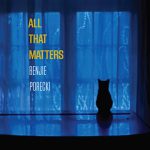
In his prolific career, Benjie Porecki has played keyboards in wide variety of genres. A professional since the age of 15, the keyboardist has worked with such notables as Tom Scott, Kirk Whalum, Nnenna Freelon, Buddy Guy, and Carlos Santana among many others. He’s also led his own albums since 1996. “All That Matters” is the latest accomplishment in Porecki’s career. He leads a trio that includes bassist Michael Bowie and drummer Mark Prince.


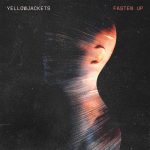
With their 27th studio album, the Grammy Award-winning, jazz-pioneering Yellowjackets return to redefine jazz fusion once again. Known for their genre-blending sound and impeccable musicianship, Russell Ferrante, Bob Mintzer, Will Kennedy, and Dane Alderson deliver a fresh yet timeless listening experience that’s as adventurous as ever. “Fasten Up” bursts with the band’s signature energy, featuring ten originals and a lively cover of Ben Tucker’s “Comin’ Home Baby.”


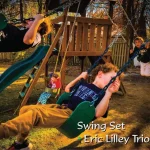
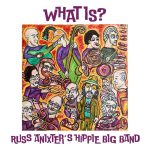
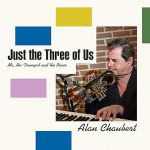
Also this week, the Colorado-based Eric Lilley Trio is back with ten new original compositions on their fourth release, “Swing Set”; Russ Anixter’s Hippie Big Band taps into some classic ’60s and ’70 rock compositions for their new disc, “What Is?”; and trumpeter and pianist Alan Chaubert plays both instruments simultaneously with his trio on “Just the Three of Us.”


This Week’s Shows February 24 thru March 2

Jazz Corner of the World  (Encore)

Mondays at 6:00pm

Listening to “Lucky”

Craig spins fabulous material from legendary saxophonist Eli “Lucky” Thompson’s lengthy career that spanned the early 1940s well into the 1970s. We’ll hear superb work from Thompson, on both soprano sax and tenor sax.


Wednesday Night Special

Wednesdays at 6:00pm

Blake Shaw Big(ish) Band at Jazz Under the Stars

Bassist, singer, and composer Blake Shaw brought his Big(ish) Band to the Jazz Under the Stars stage in 2022, and treated everyone to fresh arrangements of jazz standards and many of his own original charts (he even sang a song or two).


Miles Davis - Bitches Brew - Music & Performance - VinylJazz Night In America  

Thursdays at 11:00pm

Electric Miles

Christian McBride takes a deep dive into Miles Davis’ electric period – bold, controversial, and now legendary. Bassist Marcus Miller lights up the stage at Jazz at Lincoln Center, plus a rare interview with the woman who helped spark Miles’ electric revolution – his trailblazing second wife, the late Betty Davis.


Jazz Corner of the WorldSunnyside Records


Saturdays from 12:00 noon to 4:00pm

Sunnyside Records, Part Two

Craig continues his series of presentations that explore the top-notch Sunnyside record label founded in 1982 and operated by Francois Zalacain. We’ll hear a variety of diverse selections from premier artists, such as Dan Tepfer, Deidre Rodman, Happy Apple, Roswell Rudd, Sal Mosca, Judy Niemack, Ben Wendel, and others!


KCCK’s Midnight CD

KCCK features a new album every night, played from start-to-finish.

Reincarnation of a Lovebird by the Henry Drabkin Quartet on Monday; West by Northwest by Tom Wakeling on Tuesday; Brisket for Breakfast by Joe Alterman featuring Houston Person on Wednesday; Woven by Jeremy Pelt on Thursday; Bluesland Theme Park by Heavy Drunk & Watermelon Slim Friday; Breadman’s Blues by the Bob Lanza Blues Band on Saturday; I Want to Be Happy by Liz Cole on Sunday.

This Week In Jazz February 23 thru March 1

Hey, Jazz fans! Be sure to tune in this week as we celebrate the birthdays of arranger/composer Michel Legrand, saxmen Dexter Gordon, Tommy Newsom, Dave Pell, David “Fathead” Newman and Richie Cole, singers Dinah Shore and Roseanna Vitro, baritone saxophonist Claire Daly and more.

We’ll also mark the recording anniversaries of Jimmy Smith’s “The Sermon!/House Party/Confirmation” (1958), Thelonious Monk’s “Criss Cross” (1963), Sonny Criss’ “Crisscraft” (1975), Diane Schuur & the Count Basie Orchestra (live) (1987), Abbey Lincoln, feat. Stan Getz’ “You Gotta Pay the Band” (1991), Richie Cole’s “Latin Lover” (2017) and many others Mondays thru Fridays at noon on Jazz Masters on Jazz 88.3 KCCK.

Big Mo Pod Show 051 – “Slow And Swampy”

Welcome back to the pod show! On this week’s episode we’re getting back into the swing of things with an episode that covers some swamp blues as well as a few tracks with a slower pace, offering a unique atmosphere unlike any other. Tune in to hear it for yourself! Songs featured in the episode: 

  1. Jimmy Duck Holmes – “Rock Me” 
  2. Graham Central Station – “Hair” 
  3. The Rides – “Don’t Want Lies” 
  4. Coco Montoya – “Good Days, Bad Days”
  5. Irma Thomas – “Ruler Of My Heart” 

Listen to ‘da Friday Blues with Big Mo each week at 6pm, and catch the podcast for a behind the scenes look at the show!

Soundtrack to the Struggle: Harlem Renaissance

It’s 1920, and the Jazz Age has begun. First sprouting in New Orleans, jazz music quickly spread as thousands of African Americans migrated from the Deep South to new opportunities in the North. Jazz found fertile ground in Harlem, where it became an integral element in the new social, cultural, and artistic movement taking root. 

Jazz and the Harlem Renaissance co-existed beautifully. Jazz represented a new art form, the first new art form that was completely American, and, most importantly, that originated in the Black community. It was only natural that the young musicians, writers, poets, and artists of this new Renaissance would embrace the music that so represented their own ideals. 

Jazz music embodied improvisation, a break from traditions, a sense of freedom, a blurring of traditional boundaries. As historian Jack Rutland described, “the music was at the center, blurring lines.” Harlem became the capitol of the Jazz Age. Cab Calloway, Fletcher Henderson, Duke Ellington, and hundreds more changed forever the way we listen, from their bandstands all over the neighborhood. 

“Walls of class, race, and gender were coming down,” said Rutland. “There were Black schoolteachers, Black entrepreneurs, Black police officers,” and Black artists in all disciplines. These artists “would gather in salons and cafes and read and show their work and collaborate with each other,” and the art borne from this era of cooperation still affects society today. The art was the heart of the Harlem Renaissance, and Jazz was at its core.