New Music Monday for February 17, 2025

Listen to this week’s playlist on YouTube and Spotify

Trumpeter Jeremy Pelt’s latest project, “Woven,” is a fascinating album that fuses more traditional aspects of 21st-century jazz with the myriad possibilities of electronic synthesized sound. The full range of contemporary jazz can be found here, from neo-bop, hard-driving rhythms to touching intimate ballad utterances. But Pelt’s trumpet can also weave through electronic textures, creating a sonic landscape where the group’s kaleidoscope tone colors become a fundamental part of the melodic content.


Growing up in Atlanta, Georgia, Joe Alterman’s first musical passions were bluegrass and the blues. So it should come as no surprise that when the pianist started exploring the jazz pantheon, it wasn’t bebop modernists that lured him in but blues-rooted greats like Oscar Peterson, Ramsey Lewis, Les McCann, or Houston Person. Following on the heels of his 2023 disc documenting his close friendship and onstage partnership with McCann comes “Brisket for Breakfast,” a joyous live recording paring Alterman and his Atlanta-based trio with Mr. Person’s burly embrace of a tenor sound.


Also this week, “West By Northwest” is a swinging, melodious album from bass player Tom Wakeling and his quartet performed before a live audience at the amazing Ravenscroft Center in Scottsdale, Arizona; “Reincarnation of a Lovebird” is the newest from reedman Harry Drabkin, a faculty member at the Berklee College of Music in the ‘60s who traded his horns for a medical career and, after 30+ years, dusted off the cases and made a comeback while continuing to practice oncology part time; and it’s refreshing to start off the year with the kind of optimism the vibrant Liz Cole shares on her sublime, stylistically eclectic debut album, “I Want to Be Happy.”  


This Week’s Shows February 17 thru February 23

Jazz Corner of the World  (Encore)

Mondays at 6:00pm

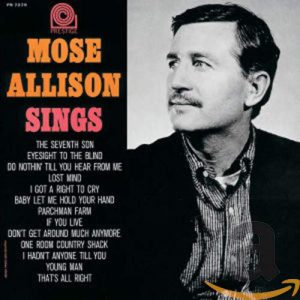
Mose Allison, Part Two

Craig continues his four-part chronological series of presentations of this unparalleled, legendary singer, pianist, and composer. In this week’s show, we’ll get into his famous Atlantic Records releases.


Wednesday Night Special

Wednesdays at 6:00pm

Betsy Hickok & Ron Roberts at Jazz Under the Stars

Singer Betsy Hickok and her husband, guitarist Ron Roberts, led a quintet for a 2022 Jazz Under the Stars gig of standards, fresh arrangements of newer works, and a deep dive into the Great American Songbook.


Jazz Night In America  

Thursdays at 11:00pm

Isaiah J. Thompson is Making Waves

Isaiah J. Thompson’s star continues to rise. The young pianist is making big waves in the jazz world. Discover his fresh sound and the artistry that’s turning heads.


Jazz Corner of the World

Saturdays from 12:00 noon to 4:00pm

Listening to “Lucky”

Craig spins fabulous material from legendary saxophonist Eli “Lucky” Thompson’s lengthy career that spanned the early 1940s well into the 1970s. We’ll hear superb work from Thompson, on both soprano sax and tenor sax.


KCCK’s Midnight CD

KCCK features a new album every night, played from start-to-finish.

Dark Moon by Holly Cole on Monday; Two Roads by Dan Zinn on Tuesday; Celebrating Wayne Shorter: Live at the Pump House by Dan Moretti & Brazilia on Wednesday; Unbound Inner by Willie Morris on Thursday; Doctor’s Orders by the Daddy Mack Blues Band Friday; Sun Come & Shine Redux by Jennifer Porter on Saturday; Holding Space by Dennis Mitcheltree & Johannes Wallmann on Sunday.

This Week In Jazz February 16 thru February 22


Hey, Jazz fans! Be sure to tune in this week as we celebrate the birthdays of hornmen Charlie Spivak, Lew Soloff and Warren Vache, singers Nina Simone, Irma Thomas, Randy Crawford and Nancy Wilson, clarinetist Buddy DeFranco, reedman Bobby Jaspar and more.

We’ll also mark the recording anniversaries of Wynton Kelly’s “Kelly Blue” (1959), Gene Ammons & Sonny Stitt’s “Boss Tenors in Orbit!” (1962), Sonny Fortune’s “Awakening” (1975), Stan Getz Quartet’s “The Stockholm Concert” (1983), Charlie Haden Quartet West’s “The Art of Song” (1999), Richie Cole’s “Latin Lover” (2017) and many others Mondays thru Fridays at noon on Jazz Masters on Jazz 88.3 KCCK.

Soundtrack to the Struggle: E. Simms Campbell

It’s 2016, and Yale University acquires a priceless piece of the Harlem Renaissance. In 1932, young artist E. Simms Campbell drew his “Night-Club Map of Harlem,” a who’s-who illustration of the neighborhood hotspots. Drawn cartoon-style, we see Cab Calloway singing at the Cotton Club. There’s Glady Bentley’s Clam House, with Gladys tickling the ivories in a tuxedo. And Smalls’ Paradise, with its “café au lait girls” and dancing waiters. 

Campbell’s affectionate tribute to Harlem, and the jazz music it cultivated, caught readers’ attention in the first issue of Esquire magazine. He’d been recommended by artist Russell Patterson. “I know a fantastically talented colored kid,” Patterson said, “if you don’t draw the color line.” Thus Campbell became the first African-American illustrator for mainstream white publications. 

Whether in Esquire, or the New Yorker, Cosmopolitan, or Redbook, Campbell’s art indeed crossed the color line. He subtly and subversively poked fun at so-called problems among affluent whites – an impatient husband waiting for his wife, a man caught cheating at a Whites-only nightclub, the crises in choosing wallpaper. Meanwhile, in Black-focused publications, Campbell addressed the deeper issues of creating a Black identity and the power of jazz. Always a jazz advocate, Campbell authored a chapter on blues music for the 1939 book Jazzmen, a study of jazz history and evolution. 

Campbell’s “Night-Club Map of Harlem” has also enjoyed a long career. Cab Calloway included it in his autobiography. Ken Burns published it in the companion book to his film Jazz. It was published twice in National Geographic and was displayed at the Smithsonian. Now at Yale, it’s available to historians for research. 

Soundtrack to the Struggle: Al Hibbler’s March to the Sunrise

Al Hibbler, a jazz vocalist who captivated generations of music lovers with his unique vocal style, was born blind on August 16, 1915, in Tyro, Mississippi. He was the first black singer to have a radio program in Little Rock, Arkansas in the 1930s.

In the early 1940s he joined Jay McShann’s orchestra as a vocalist, but a past encounter with Duke Ellington soon changed the direction of his career. Hoping to join Ellington’s group as a vocalist, he had tried out with Ellington and company during a show they were playing in Little Rock. Excited by the audience’s positive response to his performance, Hibbler celebrated … by getting drunk. The next day, Ellington informed Hibbler that he didn’t want him in the organization, saying, “I can handle a blind man but not a blind drunk.”

Fortunately, after about 16 months singing for McShann, Hibbler got another chance to show Ellington what he could do. This time he made the cut, replacing Herb Jeffries in Ellington’s orchestra as its sole male vocalist in May of 1943. To showcase Hibbler’s unique vocal style, Ellington wrote lyrics for one of his popular instrumental pieces, creating the famous “Do Nothin’ Till You Hear from Me.” Another of Hibbler’s most successful recordings came in 1947 when he sang the opening of Ellington’s Liberian Suite, entitled, “I Like the Sunrise.”

By the late 1950s, Hibbler had become active in the civil rights movement, contributing not just financial support but participating in a number of demonstrations, marching with Dr. Martin Luther King Jr. and being arrested for civil disobedience in New Jersey in 1959 and in Birmingham, Alabama, on April 10, 1963, where he was picketing in front of the Trailways Bus Station. Although Birmingham police officers told reporters they had no intention of arresting him, demonstrators guided the blind jazz singer into the back of a paddy wagon after he insisted on joining 25 others going to the Birmingham City Jail.

Record companies feared Hibbler’s involvement in civil rights would create a backlash and began to shy away from the singer. With one exception. Frank Sinatra, who signed Hibbler to a contract with his Reprise Records shortly after the label’s debut

Culture Crawl 1028 “The Mick Jagger of Czechoslovakia”

Cecilia Rokusek, president and CEO of Cedar Rapids’ National Czech and Slovak Museum and Library, is in the studio with a star studded list of upcoming events at NCSM:

February 19 – “Love” concert with the Slovak Srdcovka Band.

March 7 – Petr Janda, Czech rock icon.

April 16 – Jan Smigmator, Czech swing and jazz singer.

Also, don’t forget to visit the NCSML any day of the week to enjoy and support their array of cultural exhibits.

For more information and tickets to events visit ncsml.org.

Subscribe to The Culture Crawl at kcck.org/culture or search “Culture Crawl” in your favorite podcast player. Listen Live at 10:30am most weekdays on Iowa’s Jazz station. 88.3 FM or kcck.org/listen. 


Soundtrack to the Struggle: Big Jay McNeely and the Photograph

Every picture tells a story … or two.

It’s 1951 Los Angeles, and photographer Bob Willoughby works in his darkroom, listening to the radio. The disc jockey promotes a jazz concert that night at the Olympic arena. The concert starts at midnight. Intrigued, Willoughby packs his camera and heads for the show. What he finds there, and what he captures on film, become iconic images of the power of jazz. Look a little closer to the photos, and another, deeper story unfolds.

Willoughby finds the show in full swing. Hundreds of young fans crowd the stage. They are enraptured. Saxman Big Jay McNeely, famous for his infectious energy, has them whipped into a near frenzy. Caught up in the moment, Willoughby jumps on stage and shoots frame after frame. His most famous image is of McNeely, lying on his back at the edge of the stage, drenched in sweat, wailing on the sax while the kids scream.

The energy emanating from that photograph is palpable. But it is also a telling reflection of the times. Look deeper. You’ll notice that all those screaming kids are white. There isn’t a person of color to be seen. And toward the back, a white policeman patrols the crowd. His expression is sober. His eyes are wary of McNeely’s performance and the young people’s reaction.

As one jazz writer commented at the time, “Music may be colorblind, but society in the 1950’s sure wasn’t.”

Soundtrack To The Struggle: George Shearing

“What is a color?”

British jazz pianist George Shearing was the ninth child born to a poor family in England. His
father delivered coal and his mother cleaned trains in the evening. Blind from birth, he
attended school for the blind where he studied Braille music. Shearing turned down university
scholarships to earn a living playing piano in a pub, joining an all blind band in the ‘30s as
accordionist. (In a press conference in the ‘80s Shearing defined a gentleman as “one who
knows how to play the accordion but doesn’t.”)

Renowned for his inventive, melodic and unabashedly romantic solos, George Shearing had one
of the most popular jazz combos on the planet — so much so that, in the usual jazz tradition of
distrusting popular success, he tended to be underappreciated.  A pioneer of exciting, small-
combo Afro-Cuban jazz in the 1950s.

Shearing was also known for his opposition to racism. As a matter of fact, Shearing led one of
the first integrated bands in jazz.  Percussionist Armando Peraza played with Shearing from the mid-1950s to the mid-1960s. Peraza described touring the United States with Shearing, being stopped by police, club owners refusing to let the band in, and other instances of racism. “I was with the Shearing group from 1954-1966 and recorded approx. 20 albums with him”, he recalled. “During most of my time with George, touring the U.S. was always littered with racial land mines, not always in the South. When we would travel by car, it didn’t matter what part of the country, we would constantly get stopped and ticketed by the cops because of the mix of colors inside the car. It was against the law in a lot of States for race mixing and the Shearing band was one of the first integrated groups in the business.  Many times we’d show up at a gig and the club
owner, promoter or manager would freak out because they didn’t know we were a mixed race band and would refuse to let us enter the club. That’s when George would mess with these people. He would ask them what was the problem. The offender would say he can’t have Black people in his club and George would then ask “What is a color?” Since George was blind from birth, technically it was true that he didn’t know what the hell a color was, but George wanted to make the person explain their own racism to a person who couldn’t see. The person would try and always fail to logically explain it and would eventually give in and let us play, especially when George would say “If my musicians can’t enter, then neither will I.”

Music: From the 1960 album “Latin Affair” – the George Shearing Quintet with “Estampa Cubana”.