Culture Crawl 1027 “Wow, He Knows Me!”

UNI’s Tallcorn Jazz Festival fast approaches and today we have festival coordinator and UNI upperclassman Luke McIlhon on board to talk details. Spoiler alert: they got John Clayton. 

The festival is Thursday, Feb. 20 & Friday, Feb. 21.

For schedules and more information visit tallcornjazzfest.com.

For concert tickets visit unitix.evenue.net.

Subscribe to The Culture Crawl at kcck.org/culture or search “Culture Crawl” in your favorite podcast player. Listen Live at 10:30am most weekdays on Iowa’s Jazz station. 88.3 FM or kcck.org/listen. 


Culture Crawl 1026 “This Time I Won’t Sing ‘Schmoogle'”


Culture Crawl 1026 “This Time I Won’t Sing ‘Schmoogle'”

The Dandelion Stompers celebrate the second volume of their wind-aided recording sessions, “Whirlwind Sessions,” at an album release party and Valentine’s Day Dance Feb. 14 at Wildwood Saloon. Tickets at www.wildwoodsaloon.com. Get the album at the party or www.dandelionstompers.com.

Subscribe to The Culture Crawl at kcck.org/culture or search “Culture Crawl” in your favorite podcast player. Listen Live at 10:30am most weekdays on Iowa’s Jazz station. 88.3 FM or kcck.org/listen.

Soundtrack To The Struggle: The Cotton Club

A historic venue with a divisive past.

The First Great Migration to northern states brought tens of thousands of African-Americans to
New York City, especially Harlem, during the 1920’s. Harlem soon became a nexus for art,
literature, and music. The clubs, speakeasies, and juke joints of Lenox and Seventh Avenues
characterized the nightlife. Places like Smalls’ Paradise, the Lafayette Theatre, Connie’s Inn, and
the Savoy Ballroom attracted Black audiences to their revues, comedy shows, and concerts.
However, it was the famous Cotton Club that attracted curious white patrons. and was THE
place for Cab Calloway’s subtle but indelible influence on American culture began the moment
he forgot the chorus to his own signature song. Picture the scene: The club is packed. Dancers
fill the floor. Calloway steps to the mic and begins that new song he’s been dying to sing. He
reaches the chorus. Something catches his eye. And he can’t remember what comes next.
Always the consummate showman, he improvises with some scat. The crowd joins in. The rest
is history.
That happy accident forever changed “Minnie the Moocher,” and introduced a piece of Black
history to future generations. The “call-and-response,” an intrinsic element of African culture,
was brought to America during the slave trade. Field workers incorporated call-and-response
into their work songs, to set the pace of labor, but also as covert communication. It became a
potent form of resistance, picked up again during the marches of the Civil Rights movement.
Of great pride to Calloway was “Minnie the Moocher’s” legacy for breaking the color barrier.
Over a million copies were sold upon release and was played on both black and white radio
stations. The story of a down-and-out opium addict, it seems, has universal appeal.
Calloway led what was arguably the most popular big band of the Harlem Renaissance and into
the Swing Era. He replaced Duke Ellington as the headliner of the Cotton Club. The fact that his
all-Black orchestra could play the Cotton Club but not enter as guests was not lost on him. As if
in response, he took his band on the road, leading a successful all-Black revue through the deep
South.

Music: Cab Calloway singin’ about “Poor Min” in his immortal “Minnie the Moocher”

New Music Monday for February 10, 2025

Listen to this week’s playlist on YouTube and Spotify

Dan Moretti is an acclaimed saxophonist, composer and educator with a career spanning over four decades. The new album with his band Brazilia, “Celebrating Wayne Shorter: Live at the Pump House Music Works,” captures a vibrant performance dedicated to the legendary composer and saxophonist, blending the genius of Shorter’s compositions with the dynamic rhythms of Latin jazz. The stellar lineup of musicians includes Latin Jazz Grammy winner Oscar Stagnaro from Peru on bass, Maxim Lubarsky from Ukraine on piano, Ernesto Diaz of Columbia on percussion, and Steve Langone from Boston on drums.


“Holding Space” is an intimate musical conversation between two friends and longtime musical collaborators, saxophonist Dennis Mitcheltree and pianist Johannes Wallmann. Their musical partnership originated in the New York City of the late ‘90s when Mitcheltree, on a recommendation from Jim McNeely, recruited Wallmann to join his quartet. Twenty-seven years later, their collaborations span six quartet tours of the U.S., two duo and quartet tours of Germany, countless other performances in venues throughout North America, four albums together, as well as many joint educational and festival workshops throughout the U.S.


Also this week, tenor saxophonist Dan Zinn marks a bold new creative direction with “Two Roads,” navigating a personal and professional turning point with eight open, edgy compositions that plumb the depths of his musical inspirations; tenor saxophonist Willie Morris taps into a wellspring of creativity from the “Unbound Inner” on his third album as a leader; and “Dark Moon” is the new self-produced project from multi-award winning Canadian vocalist Holly Cole featuring new adaptations of American standards, old and new.


This Week’s Shows February 10 thru February 16

Sunnyside RecordsJazz Corner of the World  (Encore)

Mondays at 6:00pm

Sunnyside Records, Part One

Craig begins a series that surveys Sunnyside Records. This wonderful jazz label was founded initially by Francois Zalacain in 1982 in order to record pianist Harold Danko. Since then, the label has grown to well over 600 top-notch titles.


Wednesday Night Special

Wednesdays at 6:00pm

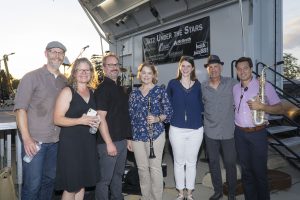
The Dandelion Stompers at Jazz Under the Stars

A sultry August night in 2022 was perfect for the New Orleans swing of the Dandelion Stompers, as they treated the Noelridge Park crowd to many old favorites, some forgotten gems, and new originals.


Blood on the Fields - Wynton Marsalis | Album | AllMusicJazz Night In America  

Thursdays at 11:00pm

Wynton Marsalis & the Truth

Host Christian McBride sits down with trumpeter and composer Wynton Marsalis to explore his powerful studio recordings that confront injustice. Together, they discuss the role of music in speaking truth to power and its lasting impact.


Jazz Corner of the World

Saturdays from 12:00 noon to 4:00pm

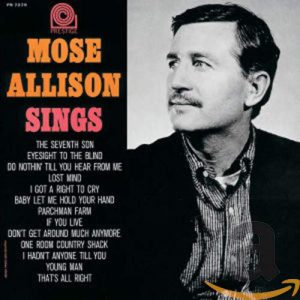
Mose Allison, Part Two

Craig continues his four-part chronological series of presentations by this unparalleled, legendary singer, pianist, and composer. In this week’s show, we’ll get into his famous Atlantic Records releases.


KCCK’s Midnight CD

KCCK features a new album every night, played from start-to-finish.

The Spell is Broken by Hans Luchs on Monday; You Better Bet by Wutzke on Tuesday; Solid Jackson by M.T.B. on Wednesday; New Perspective by Steve Smith & Vital Information on Thursday; Yeah Man by Steve Howell & the Mighty Men on Friday; Closer to the Bone by Tommy Castro & the Painkillers on Saturday; Thank You, Barry Harris! by Bruce Harris & Ehud Asherie on Sunday.

This Week In Jazz February 9 through February 15

Hey, Jazz fans! Be sure to tune in this week as we celebrate the birthdays of drummer/bandleader Chick Webb, pianist Sir Roland Hanna, saxophonists Wardell Gray, Buck Hill, Maceo Parker and Chad Eby, singer Roberta Flack and more.

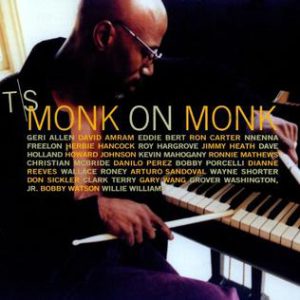
We’ll also mark the recording anniversaries of John Lewis’ “Grand Encounter” (1956), Miles Davis’ “Four and More/My Funny Valentine” (1964), Art Blakey & the Jazz Messengers’ “Night in Tunisia” (1979), Ray Bryant’s “Trio Today” (1987), T.S. Monk’s “Monk on Monk” (1997), Vanguard Jazz Orchestra’s “Monday Night Live at the Village Vanguard” (2008) and many others Mondays through Fridays at noon on Jazz Masters on Jazz 88.3 KCCK. 

Big Mo Pod Show 050 – “Variety Is The Spice Of Life”

Welcome back folks! On this week’s episode we’re featuring another helping of tunes from Friday night’s show! Along with the usual mix of blues genres we also get a little history lesson on Zydeco from professor John! Songs featured in the episode: 

  1. Stuff – “Feelin Alright” 
  2. Rockin Dopsie Jr. – “Down at the Mardi Gras” 
  3. Johnny Burgin – “Stepladder Blues” 
  4. Linn County – “Take A Swing With Me”
  5. Greg Nagy – “Mississippi Blues” 

Listen to ‘da Friday Blues with Big Mo each week at 6pm, and catch the podcast for a behind the scenes look at the show!

Soundtrack To The Struggle: Josephine Baker

“I wasn’t really naked. I simply didn’t have any clothes on.” 

Freda Josephine McDonald Baker was born and raised in the slums of St. Louis. After a successful audition at a local vaudeville theater, she left home at the age of 13, working as a waitress and working on the stage whenever she could. She caught her big break while dancing in the chorus for Noble Sissle and Eubie Blake‘s all-Black revue Shuffle Along. A frenetic dancer and relentless on-stage clown, she quickly attracted notice and was tapped for a bigger part in another Sissle/Blake production, 1924’s Chocolate Dandies. The show made her a star in New York and she became big in Harlem as well with performances at The Cotton Club and The Plantation Club. In 1925, she moved to Paris with the American production La Revue Nègre. Baker’s exotic dancing, uninhibited sexuality, and negligible attire — which included a skirt of feathers” — suited the Continent much more than America. “I wasn’t really naked,” she explained, “I simply didn’t have any clothes on.” She became an overnight sensation. and soon opened her own club (Chez Josephine) and starred in her first movie, the naturally exotic 1927 film La Sirene des Tropiques.

She returned to America in 1936 to star in Ziegfeld’s Follies with Bob Hope and Fanny Brice. However, Baker was subjected to a double dose of discrimination: cultural conservatives railed against the show’s promiscuity, while many hotels and restaurants refused entrance to the star of the show. Returning to Paris, she became a naturalized French citizen after marrying sugar magnate Jean Lion, though his status as a French Jew exposed the couple to additional discrimination when the Nazis invaded two years later.

Baker joined the French Resistance at an early date and worked throughout World War II to help the Allies, acting as a funnel to get important documents out of France several times, as a sub-lieutenant in the French Air Force’s Women’s Auxiliary, volunteering for the Red Cross to assist Belgian refugees streaming into France, and boosting troop morale by performing across Northern Africa. Baker earned several commendations including the Medal of Resistance and the Cross of the Legion of Honor.

After the war, she worked the cabaret circuit in Paris for several years before performing in Cuba and returning to America yet again. During the early ’50s, Baker’s fight to spread the gospel of Civil Rights made headlines when she performed to integrated audiences at a nightclub in Miami and canceled an Atlanta performance after being refused admission to a hotel. 

She participated in the 1963 Civil Rights march on Washington and gave a series of four concerts at Carnegie Hall to raise funds for the cause. After suffering a heart attack in 1964, however, her performance career practically ended, except for a brief comeback just before her death from a stroke in 1975.

Music: Josephine Baker from 1926, singing “La Vie en Rose”