Soundtrack to the Struggle: Cal Massey

Few casual fans of Jazz recognize the name of Cal Massey. Sadly ignored by countless Jazz critics, Massey was revered by the foremost musicians of his day as a genius of composition and as a solid trumpeter. John Coltrane, Freddie Hubbard, Lee Morgan, Archie Shepp, and many others have performed and recorded Massey‘s works. He was a forceful activist for the Black Liberation Movement and was seen as a pillar of his community.

While he was raised in Pittsburgh, Massey‘s family moved back to his birth city of Philadelphia in his teenage years, where by a chance encounter he earned a spot in Jimmy Heath’s big band trumpet section. The group featured a young alto sax player that immediately captivated Massey’s attention: John Coltrane. The two became lifetime friends and Massey’s song Bakai was recorded by Coltrane on the latter’s first recording session as a leader. Massey also contributed to Coltrane’s Africa/Brass sessions, notably “The Damned Don’t Cry,” which would become part of his seminal work The Black Liberation Movement Suite. 

The Black Liberation Movement Suite is Massey‘s masterpiece, thrusting him onto the same level as fellow composers and contemporaries Sun Ra and Charles Mingus. It was premiered at the first of a series of benefit concerts for the Black Panthers, but has rarely been performed since the 1970’s. More recently, Fred Ho rerecorded the suite with a large group ensemble, Each movement has a close connection to the B.L.M., with some numbers dedicated to heroes of the Civil Rights movement like Dr. Martin Luther King and Malcolm X.

Fred Ho, the late baritone saxophonist and Massey expert, related that in the early 1960’s, Massey stepped into an elevator with Francis Wolff, co-owner of the iconic Blue Note records. According to Massey‘s wife Charlotte, Massey attempted to speak to Wolff, but Wolff ignored him. Out of frustration, Massey kicked Wolff as he left the elevator. From then on, Massey was effectively blacklisted by Blue Note and other prominent record labels. If true, this and Massey’s ideology could have resulted in him getting blacklisted (or “whitelisted” according to Fred Ho) from major recording companies and only one album was recorded under his name, contributing to Massey‘s relative obscurity in the Jazz legacy.

Music: From 1961’s “Africa/Brass” – The John Coltrane Quartet with “The Damned Don’t’ Cry”


Culture Crawl 1025 “It Is… Wild”


City Circle Theatre Company presents Andrew Lippa’s “WILD PARTY: In Concert” Feb 7-9 & 14-16 at the Coralville Center for the Performing Arts. In the studio we have director Carrie Pozdol and actress/dancer Anna Slife who will be playing the role of Jackie. This wild show explores the contrast of darker themes with the bodacious glitter of the roaring twenties.

Tickets and more information can be found at coralvillearts.org 

Subscribe to The Culture Crawl at kcck.org/culture or search “Culture Crawl” in your favorite podcast player. Listen Live at 10:30am most weekdays on Iowa’s Jazz station. 88.3 FM or kcck.org/listen.


Talking Pictures 2-5-25

Companion (2025) and Superman (1940s animated film series) with Phil Brown and Ron Adkins.

Soundtrack To The Struggle: Beryl Booker

A child prodigy born in the midst of Black artistic expression in Philadelphia, a leader who never learned to read music, yet excelled at it along the way, she grew up to be a fine swing pianist and nightclub entertainer. 

Beryl Booker began her star-filled career as a girl sweeping kitchen floors for quarters while also touring the local amateur circuit as a preschool pianist, winning awards so frequently that rival parents complained to theater managers.

By her teens, she was performing regularly in clubs and theaters, where her big break came in the personage of bassist Slam Stewart. Stewart was one of the most recorded jazz bassists of the 1940s, and  although he sworn that he never work with women, he was so impressed by Booker’s playing that he invited her to join his trio.

Beryl Booker would go on to lead various trios from 1952 to 1954, including an engagement at the Embers in 1953 and a tour of Europe in 1954 (occasionally with Billie Holiday), and another tour with Dinah Washington in 1959. The even made a film appearance in the 1947 film, Boy What a Girl!.

Booker’s good friend, journalist Thom Nickels learned that she’d earned acclaim from Nat King Cole, received Christmas cards from Lena Horn, and urged her buddy “Frankie” Sinatra to record “Little Girl Blue” – which he did. Nickels said Booker was a self-made woman who turned racist attitudes on their heads in the Jim Crow South.

“She used to talk to me about traveling through the South when she couldn’t get into certain restaurants with her band,” recalled Nickels. “When Beryl was hungry and wanted a hamburger, she would do anything. So she would say, ‘I’m really an Indian princess; you have to let me in,’ and conned her way into a lot of these no-Blacks-allowed restaurants all throughout the South. She was a trickster. She was a handful. She was highly talented and extremely funny. Sometimes outrageously so.”

Music: The Beryl Booker Trio from 1953 with “Ebony”


Soundtrack To The Struggle: Ethel Waters

Rising from extreme poverty and neglect in Baltimore, Ethel Waters attended a costume party
on her 17 th birthday, at a nightclub on Juniper Street. She was persuaded to sing two songs and
impressed the audience so much that she was offered professional work at the Lincoln Theatre
in Baltimore. After her start in Baltimore, she was asked to join the Braxton and Nugent
Vaudeville Show where she became an overnight sensation after singing “St. Louis Blues,” the
only woman to have done so at that time, and establishing herself as a recording artist, Waters
crossed the country on a national tour.

She became the first African American woman to integrate Broadway when composer Irving
Berlin awarded Waters a starring role in his Broadway musical “As Thousands Cheer”, also
becoming one of the highest paid actresses on Broadway regardless of race. Her Broadway
acclaim led Waters into a career in film and later television, including an appearance in the all-
black film, Cabin in the Sky, which stared Lena Horne and was directed by Vincente Minnelli.

Ethel Waters was a devoted advocate for actors’ rights serving on the executive council of
Actors Equity and the Negro Actors Guild of America, and, during World War II, she was part of
the Hollywood Victory Committee singing on the radio for the USO camp shows. She was the
second African American to be nominated for an Academy Award, the first African American to
star in her own television show, and the first African American woman to be nominated for a
primetime Emmy.

She married three times (her first marriage was at age 13) and had no children. In the early
phases of her career, Waters identified as bisexual but never made a public announcement
about her sexuality. During the 1920s, she lived with her girlfriend Ethel Williams. Waters
enjoyed a large lesbian and gay following, including devoted fan Carl Van Vechten, who took
the portraits of Waters found in the National Museum of African American of History and
Culture collection.

Her first autobiography, His Eye Is on the Sparrow, (1951), written with Charles Samuels, was
adapted for the stage by Larry Parr and premiered on October 7, 2005.

Music: From 1933, Ethel Waters singing “Stormy Weather”


Culture Crawl 1024 “You Couldn’t Trust Me Around Wood and Glue”

Cedar Rapids Museum of Art curator, Julia Jessen, is back in the studio today with the woodworking artist behind current CRMA exhibit, “Against the Grain,” John Schwartzkopf. Tune in to hear more about John’s process and for a preview of upcoming exhibitions. 

It’s “Against the Grain: The work of John Schwartzkopf” (open now – April 27) and “All Dressed Up (And Down): Depictions of Clothing in the Collection” (open Feb 8 – May 18). 

A combined exhibition reception will take place Thursday, Feb 6 at 5pm. 

For more info visit www.crma.org & www.johnsawdust.com.

Subscribe to The Culture Crawl at kcck.org/culture or search “Culture Crawl” in your favorite podcast player. Listen Live at 10:30am most weekdays on Iowa’s Jazz station. 88.3 FM or kcck.org/listen.


Soundtrack To The Struggle: Cozy Cole

“Cozy” Cole was born on October 17th, 1909 in Orange, New Jersey and since his three brothers were jazz musicians it was inevitable he’d become one too. His nickname came courtesy of the other kids in school who, instead of calling him William, latched onto “Colesy,” which, with casual use, sounded like “Cozy.” 

 William Randolph “Cozy” Cole was the definitive example of a drummer who was a master of all the rudimentary elements of drumming, and he applied them all to jazz with the ability to combine them all at once as he saw fit. Also, he was among the very few whose individual style evolved and spanned a number of eras. Through it all, listeners could hear virtually all of the rudiments–flam taps, five-stroke rolls, paradiddles and more- applied directly to jazz drumming.

He was a life-long student of the drums as well, studying at Julliard in the mid-1940s, with the New York Philharmonic’s Saul Goodman, and opening his own drum school with dear friend Gene Krupa in New York in the mid-1950s. Most of his long career was as a sideman for such leaders as; Willie Bryant, (the suave, Un-Official Mayor of Harlem), Cab Calloway, Lionel Hampton and Louis Armstrong. Even before these, Cozy had played with Benny Carter’s first (and un-successful) band. That band also had such un-known names as Teddy Wilson (piano); Chu Berry (tenor sax) and a young trombonist named Dickie Wells. 

Cozy Cole was established at a time when jazz ensembles and soloists were outstanding; thus Duke Ellington, Count Basie, Lionel Hampton, Fats Waller, Coleman Hawkins, Jonah Jones, Benny Goodman stood out. Cozy played a wildly rhythmic drum solo in the stage show “Carmen Jones” in 1943 saying, “I think I’m the only drummer to have been featured in a big Broadway show with his name on the program.” 

But, perhaps one of his most important accomplishments went almost completely unnoticed.

With almost complete silence, Cozy Cole broke one of the many racial barriers in American music. He was the first black musician on a network musical staff. CBS radio hired him to work with Raymond Scott in 1943. In 1985, Scott recalled, “Cozy was the most professional musician I’ve ever worked with.”


Music: From 1955, here’s Alan Hartwell’s Big Band featuring Cozy Cole with “Topsy, Part I.

New Music Monday for February 3, 2025

Listen to this week’s playlist on YouTube and Spotify

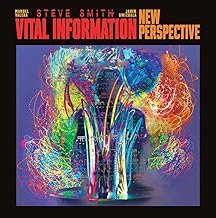
Steve Smith, who originally became well-known as the drummer with the rock band Journey, grew up playing jazz. He has led one of the world’s top fusion-oriented groups, Vital Information, for over 40 years now; they recorded their first album in 1983. Today’s version is a trio with keyboardist Manuel Valera and bassist Janek Gwizdala. Smith rarely looks backwards but he was so inspired by Valera’s transformation of Journey’s “Don’t Stop Believin’” into an up-temp jazz-rock piece, that he decided to record new versions of several songs from his illustrious past for the new album, “New Perspective.”

 

In early 2022, the Montreal-based drummer Jacob Wutzke had the opportunity to work closely with legendary bass player Ira Coleman, who famously was a member of Tony Williams’ quintet in the 1980s and ’90s and still had physical copies of Tony’s handwritten charts for most of his compositions. For four months under Ira’s direction, they met to play the music and to discuss the way that Tony ran his group, in the process developing a beautiful rapport and group sound. The finished tribute album, “You Better Bet,” features five of Williams’ compositions along with five of Jacob’s originals.


Also this week, the all-star quintet MTB, featuring Brad Mehldau, Mark Turner, Peter Bernstein, Larry Grenadier and Bill Stewart, unveil their second release, “Solid Jackson”; “Thank You, Barry Harris,” from pianist Ehud Asherie and trumpeter Bruce Harris, serves as tribute to the musical genius of pianist and composer Barry Harris; and guitarist and Chicago native Hans Luchs drops his first release as leader since relocating to New York, “The Spell is Broken.”