Soundtrack to the Struggle – The Freedom Rider

Art Blakey’s The Freedom Rider is not only a testament to the symbiotic relationship between jazz and the civil rights movement. It’s a sonic rallying cry to stand and protest. Recorded in 1961 for Blue Note Records, this album is a rhythmic and sonic history lesson encapsulating an era fueled by the activism required to effect societal change.

In 1961, a group of courageous people called the Freedom Riders risked life and limb, challenging segregation in the Deep South with their model of nonviolent resistance and strategic planning. They rode interstate buses into the segregated Southern United States in 1961 and subsequent years to challenge the non-enforcement of the U.S. Supreme Court decisions which ruled that segregated public buses were unconstitutional. The Freedom Riders challenged this status quo by riding interstate buses in the South in mixed racial groups to challenge local laws or customs that enforced segregation in seating.

The Freedom Rides, and the violent reactions they provoked, bolstered the credibility of the American civil rights movement, and called national attention to the disregard for the federal law and the local violence used to enforce segregation in the south. Police arrested riders for trespassing, unlawful assembly, violating state and local Jim Crow laws, and other alleged offenses, but often they first let white mobs of counter-protestors attack the riders without intervention. In some places, such as Birmingham, Alabama, the police cooperated with Ku Klux Klan chapters and other white people opposing the actions and allowed mobs to attack the riders.

Blakey’s percussive narrative pays homage to their resilience as he leads his world-class band to join him in a call to action that still resonates decades later. Trumpeter Lee Morgan, saxophonist Wayne Shorter, pianist Bobby Timmons, and bassist Jymie Merritt are all in lockstep with Blakey. Blakey sounds more emotionally invested here than usual because he literally had skin in the game. Art Blakey was beaten badly by police in a racially charged confrontation while on tour during the 1940s, requiring surgery and the placement of a steel plate in his head. This record wasn’t just musical or political—it was personal. 

The Freedom Rider not only commemorates a pivotal historical movement but also underscores the enduring power of music as a vehicle for social change. It’s a reflection on the past that can inspire future generations, and a reminder that the movement isn’t over, and neither is the fight. And that as long as there’s rhythm, there’s resistance. 

Music: From 1961, Art Blakey and the Jazz Messengers “The Freedom Rider.”


New Music Monday for February 16, 2026

Listen to this week’s playlist on YouTube and Spotify
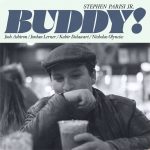
Mentorship, lineage, and community lie at the heart of “Buddy!,” the vibrant debut album from bassist and composer Stephen Parisi Jr. Rooted in his upbring in Buffalo and shaped by his evolution within Chicago’s thriving jazz community, Parisi’s music reflects a young artist deeply committed to understanding—and extending—the traditions that formed him. At a time when jazz often develops in academic settings, the disc stands as a testament to the vital role local scenes, elders, and familial connections continue to play in shaping authentic artistic voices.

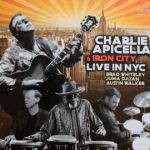
As a young guitarist, Charlie Apicella studied composition and improvisation with jazz titans Yusef Lateef and Pat Martino. He was trained as a historian by Archie Shepp and Billy Taylor. He’s a lecturer and curator of the Yusef Lateef Estate and has received numerous grants for his work preserving Ma Rainey’s legacy. Apicella has performed concerts and recorded with jazz legends Dave Holland and Sonny Fortune and is guitarist for the Sonny Stitt Legacy Band. “Live in NYC” marks the tenth release by the hard bop and blues guitar wizard, recorded with his band Iron City bootleg-style directly off the soundboard in a NYC club in the summer of 2023.
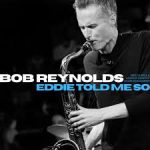
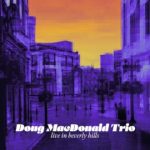
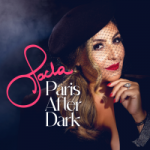
                               

Also this week, 3-time Grammy winning saxophonist Bob Reynolds takes some classic Eddie Harris grooves and puts them on a program of new songs on “Eddie Told Me So”; guitarist Doug McDonald and his trio of L.A. area musicians are captured “Live in Beverly Hills”; and vocalist Sacha Boutros’s new album is a love letter to the City of Lights, “Paris After Dark.”

This Week’s Shows February 16 thru February 22

Jazz Corner of the World (Encore)

Mondays at 6:00pm

Weather Report Live 1970-1986

Craig takes us around to many venues across the globe to experience the excitement of Weather Report live in concert. This wonderful group, led by Joe Zawinul and Wayne Shorter, put on fabulous concerts for 16 years.


Wednesday Night SpecialStefon Harris - Evolution (CD)

Wednesdays at 6:00pm

Stefon Harris at the Iowa City Jazz Festival

Vibe master Stefon Harris made his second appearance at the Iowa City Jazz Festival last July. This week, we listen back to 2004 and his first time on the ICJF stage. Harris jammed on choice charts from his then-recent albums, Grand Unification Theory and Evolution, plus earlier work that built his reputation as a top vibraphonist.


Jazz Corner of the World

Saturdays at 12:00 noon

Blue Mitchell as a Session Leader

Craig spotlights a stack of records led by trumpeter and composer Richard Allen “Blue” Mitchell from his work at Blue Note, Riverside, and Mainstream Records. We’ll enjoy some fine discs led by one of the all-time greats!


KCCK’s Midnight CD   (February 16 –  February 22)

Every Night at Midnight

KCCK features a new album every night, played from start-to-finish.

The Baltimore Jazz Collective by the Baltimore Jazz Collective on Monday; Multiversal: Live at Bop Stop by the Stephen Philip Harvey Jazz Orchestra on Tuesday; Lost and Found by Vance Thompson on Wednesday; Gospel Music by Joel Ross on Thursday; Old New Funky & Blue by Omar Coleman & Igor Prado on Friday; Blast Off! by Duke Robillard & His All Star Band on Saturday; Confidence by Roderick Harper on Sunday.

This Week In Jazz February 15 thru February 21

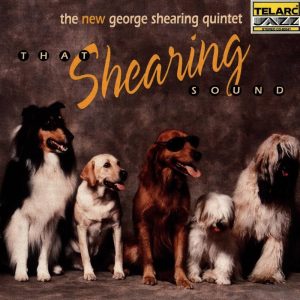
Hey, Jazz fans! Be sure to tune in this week as we celebrate the birthdays of composer Harold Arlen, trumpeters Taft Jordan and Charlie Spivak, baritone saxmen Charlie Fowlkes, Pete Christlieb and Jeff Clayton, clarinetist Buddy Defranco, singers Irma Thomas and Nancy Wilson and more. We’ll also mark the recording anniversaries of Coleman Hawkins’s “Rainbow Mist” (1944), Bing Crosby w/ Bob Scobey’s Frisco Jazz Band’s “Bing with a Beat” (1957), Gene Ammons, Sonny Stitt and Jack McDuff’s “Soul Summit” (1962), Sonny Fortune’s “Awakening” (1975), Stan Getz Quartet’s “The Stockholm Concert” (1983), The New George Shearing Quintet’s “That Shearing Sound” (1994), Jesse Davis “Live at Small’s Jazz Club” (2022) and many others, Mondays thru Fridays and at noon on JAZZ MASTERS on Jazz 88.3 KCCK.

Soundtrack to the Struggle – The Wrong Place for the Right People

In the 1930s, Midtown Manhattan clubs were packed with the bourgeoisie, tuxes and evening gowns, tables and banquettes of rich white people drinking champagne, often entertained by Black performers borrowed from the Harlem music scene.

It was putting on the ritz, it was dancing cheek to cheek. ‘Same-colored’ cheeks.

It was the embodiment of the phrase ‘café society‘, coined by the one of the scene’s wittier celebrities Claire Booth Luce, a darling toast of Broadway.

But what would become one of the New York music world’s most fertile spots for musical innovation was far, far downtown from the ‘real’ nightlife — at 1 Sheridan Square in the West Village.

Café Society was a New York City nightclub open from 1938 to 1948 on Sheridan Square in Greenwich Village. It was managed by New Jersey shoe salesman Barney Josephson. Over the course of its ten-year run — and that of a second location, placed at 58th and Park — Josephson and his partners would host dozens of soon-to-be jazz stars, in many cases paving the way to their success. Josephson created the club to showcase African American talent and to be an American version of the political cabarets he had seen in Europe. As well as running the first racially integrated night club in the United States, Josephson chose the name to mock the rich patrons of more upscale nightclubs. Josephson trademarked the name Café Society, and he also advertised the club as “The Wrong Place for the Right People”.

The club prided itself on treating black and white customers equally, unlike many venues, such as the Cotton Club, which featured black performers but barred black customers except for prominent black people in the entertainment industry. The club featured many of the greatest black musicians of the day, often imposing a strongly political bent. Billie Holiday first sang “Strange Fruit” there; at Josephson’s insistence, she closed her set with this song, leaving the stage without taking any encores, so that the audience would be left to think about the meaning of the song. Lena Horne was persuaded to stop singing “When it’s Sleepy Time Down South”, Pearl Bailey was fired for being “too much of an Uncle Tom”, and Carol Channing was fired for an impersonation of Ethel Waters.

Relying on the keen musical judgment of John Hammond, the club’s “unofficial music director”, Josephson helped launch the careers of Ruth Brown, Lena Horne, Hazel Scott, Pete Johnson, Albert Ammons, Big Joe Turner, and Sarah Vaughan.

Josephson’s club was the scene of numerous political events and fundraisers, often for left-wing causes, both during and after World War II. In 1947, Josephson’s brother Leon Josephson was subpoenaed by the House Committee on Un-American Activities, which led to hostile comments from columnists Westbrook Pegler and Walter Winchell. The FBI even staked out the club, photographing patrons, and Hoover soon ‘opened a file’ on Barney himself. Both locations of Café Society were closed by 1950.

But Josephson managed to pick himself up and soon opened another influential downtown jazz club, the Cookery, which stayed open into the 1980s.

Music: From 1940, Joe Sullivan and His Cafe Society Orchestra with “Solitude.”


Culture Crawl 1168 “Vinyl from the 80s”

UNI celebrates 75 years of jazz at the university with an exciting lineup for the annual Tallcorn Jazz Festival. Festival committee member Eric Torneten has the details. 

It’s Thursday 2/19 & Friday 2/20 at the University of Northern Iowa. The Thursday night concert features UNI Jazz Bands One & Two with drummer Matt Wilson at 7:30pm in Bengtson Auditorium. The Friday night concert will feature two alumni jazz ensembles and Jazz Band One with Matt Wilson at 7:30pm in GBPAC Great Hall. 

For the full schedule visit tallcornjazzfest.com.
For tickets visit unitix.evenue.net/events/TJF.

Subscribe to The Culture Crawl at kcck.org/culture or search “Culture Crawl” in your favorite podcast player. Listen Live at 10:30am most weekdays on Iowa’s Jazz station. 88.3 FM or kcck.org/listen.

https://vimeo.com/1164670296?share=copy&fl=sv&fe=ci

Soundtrack to the Struggle – Southern Trees Bear “Strange Fruit”

In her short life, Billie Holiday performed with a type of genius that is still imitated by singers today. She was best known for sad songs about heartache and pain from losing love. One thing people don’t say about Billie Holiday was that she was a protest singer. While there was plenty to sing about, these weren’t the kind of songs Billie Holiday was known to sing. In 1939, though, she made a recording of a song that brought out into the light one of America’s dirtiest secrets, what experts have called the “window to the soul of white supremacy and African American life in the South”—lynching.

It’s difficult today to imagine what life was like during the years when lynching was popular in the South. Black men lived in constant terror that someone might accuse them of a crime, and that a white mob would grab them, take them against their will to a tree, and lynch them. Lynching wasn’t just a way for white people to keep Black people in line. In some places, it was treated like a sport. Often at a lynching, photographers would take pictures and then sell them door to door. There were collectable post cards showing Black men hanging from trees with white people standing around and smiling. They sold for a dime or a dollar a piece in drugs stores and pharmacies. This is the kind of horrific behavior that Billie Holiday hoped to stop with her new song. And she felt that it wasn’t enough just to sing it for liberals in New York.

“Strange Fruit” originated as a protest poem against lynchings by Abel Meeropol and published under the title “Bitter Fruit” in January 1937. It was inspired by Lawrence Beitler’s photograph of the 1930 lynching of Thomas Shipp and Abram Smith in Marion, Indiana.

Holiday said that singing it made her fearful of retaliation but, she did so because its imagery reminded her of her musician father Clarence Halliday, who fell ill with a lung disorder while on tour in Texas and was refused treatment at a local hospital. He was treated in the colored ward of the Veterans Hospital, but by then pneumonia had set in and without antibiotics, the illness was fatal. Because of the power of the song, Josephson drew up some rules: Holiday would close with it; the waiters would stop all service in advance; the room would be in darkness except for a spotlight on Holiday’s face; and there would be no encore. During the musical introduction to the song, Holiday stood with her eyes closed, as if she were evoking a prayer.

Holiday approached her recording label, Columbia, about the song, but the company feared reaction by record retailers in the South, as well as negative reaction from affiliates of its co-owned radio network, CBS. When Holiday’s producer John Hammond also refused to record it, she turned to her friend Milt Gabler, owner of the Commodore label. Holiday sang “Strange Fruit” for him a cappella and moved him to tears. Columbia gave Holiday a one-session release from her contract so she could record it; Frankie Newton’s eight-piece Café Society Band was used for the session in an arrangement by Newton. Because Gabler worried the song was too short, he asked pianist Sonny White to improvise an introduction. It was recorded on April 20, 1939. The 1939 recording eventually sold a million copies, becoming the biggest-selling recording of Holiday’s career.

Music: From 1939, Billie Holliday sings “Strange Fruit.”


Culture Crawl 1167 “I Am The Light”

Musician, author, and vocal empowerment guide, Mary Jane Knight, is in the studio ahead of the release of her new book of poetry, “The Light Between the Lines.”  A book presentation and mini concert will be held at Prairie Lights Books in Iowa City on Sun, Feb 15 at 3pm and a longer, intimate concert will be held at Prairiewoods Spirituality Center on Fri, Feb 27 at 6:30pm in Cedar Rapids.

For more info visit maryjaneknight.com.

Subscribe to The Culture Crawl at kcck.org/culture or search “Culture Crawl” in your favorite podcast player. Listen Live at 10:30am most weekdays on Iowa’s Jazz station. 88.3 FM or kcck.org/listen.

https://vimeo.com/1164201879?share=copy&fl=sv&fe=ci