This Week’s Shows February 9 thru February 15

Ralph Towner: My Foolish Heart - CDJazz Corner of the World (Encore)

Mondays at 6:00pm

Remembering Ralph Towner

Craig pays tribute to the virtuoso guitarist Ralph Towner, who recently passed on January 18, by presenting a variety of his work with ECM Records, as well as beautiful examples of his brilliant work with his own group, Oregon.


Wednesday Night SpecialA main performing a musical instrument on stage

Wednesdays at 6:00pm

Airto at the Iowa City Jazz Festival

Legendary percussionist Airto Moreira has been a pioneer in Brazilian jazz and jazz fusion since a very young age. In 2007, he brought his current project, Eyedentity, to the Iowa City Jazz Festival main stage and offered up a set of Latin and fusion charts that demonstrated why he is a Brazilian national treasure.


Jazz Corner of the World

Saturdays at 12:00 noon

Weather Report Live 1970-1986

Craig takes us around to many venues across the globe to experience the excitement of Weather Report live in concert. This wonderful group, led by Joe Zawinul and Wayne Shorter, put on fabulous concerts for 16 years.


KCCK’s Midnight CD   (February 9 –  February 15)

Every Night at Midnight

KCCK features a new album every night, played from start-to-finish.

Live at Merriman’s Playhouse by the Scott Routenberg Trio on Monday; Philly 3 by James Fernando on Tuesday; It’s Just Your Turn by The DZ Combo on Wednesday; Dark Days by Noah Preminger on Thursday; This World by Billy Thompson on Friday; Bad at Being Good by Teresa James & the Rhythm Tramps on Saturday; About Time by John Clay on Sunday.

This Week In Jazz February 8 thru February 14

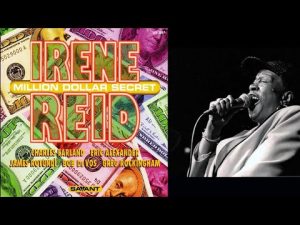
Hey, Jazz fans! Be sure to tune in this week as we celebrate the birthdays of drummers Chick Webb, Joe Dodge, and Walter “Baby Sweets” Perkins, pianists Mel Powell, Sir Roland Hanna and George Winston, saxophonists Wardell Gray and Buck Hill, harmonicist Larry Adler and more. We’ll also mark the recording anniversaries of “Chico Hamilton Quintet in Hi-Fi” (1956), Stan Getz/Charlie Byrd’s “Jazz Samba” (1962), Art Blakey & the Jazz Messengers’ “Night in Tunisia” (1979); Ray Bryant’s “Trio Today” (1987), Irene Reid’s “Million Dollar Secret” (1997), Barbara Morrison’s “I Wanna Be Loved” (2017) and many others, Mondays thru Fridays and at noon on JAZZ MASTERS on Jazz 88.3 KCCK.

Soundtrack to the Struggle – Ellington and Nixon: An Unexpected Party

On the evening of April 29th, 1969, President Richard Nixon and Duke Ellington stood together in the Easter Room in the White House. Nixon, along with an all-star cast of jazz legends including Dave Brubeck, Paul Desmond, Dizzy Gillespie, and Gerry Mulligan spent a night honoring Ellington for his 70th birthday. 

Honoring the Duke for defining an American music genre in a career that spanned over 50 years, President Nixon awarded him a grand birthday gift: the Presidential Medal of Freedom. It was the Nixon administration’s first presentation of the Medal of Freedom–perhaps personifying the 37th president’s love for music and, on this night, his appreciation of jazz.

The Duke used the occasion to share some wisdom passed on from his late friend and composer Billy Strayhorn. “We speak of freedom of expression and we speak of freedom generally as being something very sweet and fat and things like that. In the end when we get down to the payoff, what we actually say is that we would like very much to mention the four major freedoms that my friend and writing-and-arranging composer, Billy Strayhorn, lived by and enjoyed. That was freedom from hate, unconditionally; freedom from self-pity; freedom from fear of possibly doing something that may help someone else more than it would him; and freedom from the kind of pride that could make a man feel that he is better than his brother.”

After the presentation, President Nixon asked all of his guests in the East Room to join him in singing “Happy Birthday” to the Duke. The President, taking his position at the piano, led the crowd through the score and was later joined on the piano bench by the legend Ellington himself.

Amidst of the turbulent times of the 1960s, it was a surreal scene, almost a fantasy, to have an Administration who exploited the culture wars and racial divides all the way to the White House host such an evening. Duke Ellington is the closest thing we have to jazz royalty. Ellington carried himself with honor, grace, and and unshakeable dignity— a man who was larger than life; who transformed music with a driving swing and unmistakable melodies. 

Jazz musician Billy Taylor stated, “Nixon really perceived the arts as non-political. He saw the arts as something that should be encouraged and nurtured, and in which the government should play only a supporting role. He was extremely supportive of jazz and made me feel most comfortable—and I’m a registered Democrat!”

Nixon cherished the Ellington event at the White House for the rest of his life. Upon the death of the jazz great in 1974, Nixon asked singer Pearl Bailey to be his personal representative at the Duke’s funeral and released a statement that “the wit, taste, intelligence, and elegance that Duke Ellington brought to his music have made him, in the eyes of millions of people both here and abroad, America’s foremost composer. We are all poorer because the Duke is no longer with us.”

Music – From his 70th Birthday concert, Duke Ellington and his orchestra with Billy Strayhorn’s “Take the ‘A’ Train.”

Soundtrack to the Struggle – John Coltrane and Amiri Baraka

It’s July 17, 1967, and poet/activist Amiri Baraka whistles John Coltrane charts from his New Jersey jail cell. He’d been beaten and arrested for his part in Newark’s violent protests – the “rebellion,” as he called it. Music keeps his mind off the pain, and his ears distracted from the tanks rolling in the streets … until the jailer passes his cell to tell him that Coltrane is dead.

Amiri Baraka founded the Black Arts Movement, and with Maya Angelou, Nikki Giovanni, and others, he sought to alter American consciousness through African-American arts. Like the protests erupting across America, his poems and plays were intense, often incendiary, but deep with a passion for change.  

He and the Movement found a kindred spirit in John Coltrane. From his writings on jazz, Baraka wrote, “Trane was our flag. We could feel what he was doing. We heard our own search and travail.” Baraka felt the connection between Black politics and jazz improvisation. He noted that, “Black music has its own kinetic philosophy … the fundamental call for freedom.” 

Elements of the Black Arts Movement are still active today, and Coltrane’s jazz is still its soundtrack. From “Alabama” – Coltrane’s elegy to the 1963 Birmingham church bombing, to A Love Supreme – the deeply spiritual testimony to Coltrane’s own struggle to find peace in the turmoil of the times, Baraka believed Coltrane’s music would carry the message longer than any “movement.”

Culture Crawl 1165 “The Odd Couple in a Retirement Home”

Trent Yoder and Michelle Payne Hinz are in the studio ahead of the IC Community Theatre production of “Ripcord” by David Lindsay-Abaire. It’s Feb 13-14 & 20-21 at 7:30pm and Feb 15 & 22 at 2pm at The James Theater in Iowa City.

For tickets and more info visit iowacitycommunitytheatre.org & thejamesic.com.

Subscribe to The Culture Crawl at kcck.org/culture or search “Culture Crawl” in your favorite podcast player. Listen Live at 10:30am most weekdays on Iowa’s Jazz station. 88.3 FM or kcck.org/listen.

https://vimeo.com/1161953362?share=copy&fl=sv&fe=ci

Talking Pictures 2-4-26

“Send Help” (2026  Horror/Comedy) and “Marty Supreme” (2025 Sport/Drama) with Hollis Monroe, Phil Brown and Monica Schmidt.

Soundtrack to the Struggle – The Trial of Betty Boop

It’s 1934, and performer Helen Kane sues cartoonist Max Fleischer and this studio. Kane asserts
that Fleischer appropriated her physical characteristics, her “baby vamp” performance
mannerisms, and squeaky “boop-boop” scat style for Fleischer’s character Betty Boop.

Fleischer holds his ground. At the trial, before the New York Supreme Court, he testifies that his
true inspiration for Betty Boop is, in fact, “Baby Esther” Jones, a Black Singer from Chicago. He’d
caught her popular act many times at Harlem’s Cotton Club in the 1920’s. Fleischer thought
Baby Esther’s stage persona, with her flapper looks, suggestive lyrics, and baby-talk scat,
epitomized the Jazz Age cartoon character he had in mind.

Helen Kanes’s case crumbles when her own manager testifies that he and Kane saw Baby
Esther’s act at the Cotton Club in 1928. Fleischer also produces film of Baby Esther on stage,
and of an early screen test of Baby Esther in full flapper regalia.

Only recently has the Trial of Betty Boop gained more attention than a footnote. Cultural
historians credit the Fleischer cartoons for keeping jazz music alive during the Depression.
Social activists see the then-famous trial as a precedent for acknowledging the work of
forgotten, uncredited Black artists. And, in a contemporary bit of historical irony, the Musical
Boop debuted on Broadway in early 2025, starring African-American rising star Jasmine Amy
Rogers as Betty Boop.

Soundtrack to the Struggle – John Coltrane in Nagasaki

 In July 1966, the great jazz saxophonist John Coltrane embarked on a tour of Japan with his wife Alice Coltrane and the rest of his band. When they arrived at Tokyo airport Coltrane was shocked by the hundreds of fans who welcomed them. Coltrane and some other US jazz musicians had a massive following in both Japan and Germany at the time. Paradoxically, the popularity of jazz in these countries was a legacy of the tens of thousands of US troops stationed in both after the second world war. 

When the group arrived by train on July 16th for the concert that Coltrane had insisted on in Nagasaki, his hosts found him playing the flute in the express train. He said he was searching for an appropriate sound and asked if he could go immediately to the site where the atomic bomb had fallen on the city 21 years before. They took him there and he stayed for some time in silence and laid a wreath of flowers.  

During the sixties, partly in response to the growing civil rights and black power movement, John Coltrane had become progressively more political and his music more experimental. His 1964 ballad “Alabama” famously served as a requiem for four young girls killed by racists in an arson attack in Birmingham.

As Coltrane became more political his style became freer and less conventional and his popularity waned in the US. But in Japan and in Germany it grew. Partly this was because Coltrane’s music was taken up by the new left seeking a culture opposed to their national pasts but critical too of the cold war superpowers. 

On the night of July 16th at Nagasaski, John Coltrane and his band performed a new song, Peace on Earth, an elegy for the dead in the US nuclear attack on Nagasaki and a condemnation of war in general. The performance was received with reverence and rapture. 

Coltrane’s pioneering anti-war song was amongst the last pieces of music he created. He died tragically young at the age of 40 in the July of 1967. But the ghetto uprisings, anti-colonialism, the racism of the draft and the growing movement against the Vietnam War were starting to generate a militancy that linked the struggle against racism and poverty with the struggle against an imperial system.

Music:  Coltrane and Pharoah Sanders, pianist Alice Coltrane, bassist Jimmy Garrison and drummer Rashied Ali  with “Peace on Earth.”