
“The Housemaid” (2025 Thriller/Mystery) and “The Wrecking Crew” (Amazon Prime Action/Comedy) with Hollis Monroe, Phil Brown and Scott Chrisman.
Podcast (talkingpics): Play in new window | Download
Subscribe: Apple Podcasts | RSS
“The Housemaid” (2025 Thriller/Mystery) and “The Wrecking Crew” (Amazon Prime Action/Comedy) with Hollis Monroe, Phil Brown and Scott Chrisman.
Podcast (talkingpics): Play in new window | Download
Subscribe: Apple Podcasts | RSS
In June 1943 Los Angeles erupted. Mobs of servicemen, off-duty police, and civilians attack young Latinos, Blacks, and other people of color. Any man wearing a “zoot suit” is fair game.
The zoot suit had its origins in Jazz. Oversized and baggy, with wide shoulders and lapels, loose-fitting pants and tailored cuffs, they were wildly popular in 1930’s Harlem and Chicago. Jazz and Jump-Blues musicians liked how they looked on stage. Tap and Lindy-Hop dancers enjoyed the freedom of movement. Sporting a zoot suit made one feel like a hep-cat, a jive-talker, a bit of a rogue. A sub-culture emerged. Jazz-speak entered the American lexicon, and zoot suits became flags of cultural pride. Cab Calloway dubbed the fashion, “totally and truly American.”
But by 1943, zoot-suiters drew fire for wasting rationed wool. Clashes erupted, fueled by war fervor and simmering racism. In Los Angeles, full-blown riots spread into ethnic neighborhoods. An LA newspaper reported, “… mobs of several thousand … beat up every zoot-suiter they could find. Mexicans, Blacks, and Filipinos were attacked with sadistic frenzy.” A Governor’s Committee report stated that “the existence of racism cannot be ignored.”
But rather than intimidate people of color, the riots ultimately fueled activism. The zoot suiters’ defiance inspired other minority groups and forged bonds between them. Zoot-suiters Cesar Chavez and Malcolm X. rose to spearhead the demand for racial equality. And historians now consider the Zoot Suit Riots a major impetus in the Civil Rights Movement.
Podcast (soundtrack): Play in new window | Download
Subscribe: Apple Podcasts | RSS
It’s September, 1924, and Lil Hardin Armstrong gives her husband, Louis Armstrong, a
makeover. She teaches him how to dress for success, and she pushes him to be more of a
showman. Then, she persuades the new Louis Armstrong to leave the security of King Oliver’s
band to form his first Hot Five.
And while Lil enjoyed being the driving force behind Armstrong’s early career, she was not
content standing in her husband’s shadow. She was already an accomplished pianist, composer,
and bandleader. Many of the Hot Five’s biggest hits – the now-classic “Struttin’ With Some
Barbecue,” “Two Deuces,” and “Doin’ the Suzie Q,” – were Lil Hardin originals.
She was also a shrewd marketer. Dubbing her own band “Mrs. Louis Armstrong and her Chicago
Creolians” opened many doors. But it also presented challenges in Jim Crow, male-dominant
America. The band played over catcalls and racial slurs. They were often short-changed for their
work, and the threat of assault was a nightly fear. Wrote one jazz historian, “While Black
jazzmen had a hard time on the road, Black jazzwomen had it tougher.”
Lil knew the dangers, but they were worth the risk. Name recognition afforded her the chance
to prove women could be more than girl singers. Audiences and critics agreed. The Chicago
Defender wrote that Lil’s band could swing, “as capably as any masculine orchestra.”
Podcast (soundtrack): Play in new window | Download
Subscribe: Apple Podcasts | RSS
Ospreys and peregrine falcons…whose populations in North America crashed in the mid-20th Century…are now doing well in Iowa.
Podcast (cuya): Play in new window | Download
Subscribe: Apple Podcasts | RSS
Ospreys and peregrine falcons…whose populations in North America crashed in the mid-20th Century…are now doing well in Iowa.
It’s April 10, 1956, and singer Nat King Cole is assaulted on stage at a whites-only show in Birmingham, Alabama. In all, six men from a white supremacist group are charged with attempted kidnapping and intent to commit murder. Cole is injured in the attack and ends the show. “I can’t understand it,” Cole said later. “I haven’t taken part in any protests. Why should they attack me?”
Critics of Cole were quick to rebut that his “fence-riding” was part of the problem. “Organized bigotry makes no distinction between neutrals and activists in the fight for equality,” stated Roy Wilkins of the NAACP. A New York newspaper wrote that the singer had turned his back on the struggle by playing to Jim Crow audiences. Judge Thurgood Marshall said, “All Cole needs to complete his role as an Uncle Tom is a banjo.”
The criticism of Cole was a turning point. He had been content in what one historian called “quiet activism.” He gave anonymously to Black causes, and insisted on equal accommodations on the road. But following the attack, he openly supported the Montgomery Bus Boycott, he joined the NAACP, and was a civil rights consultant for President Lyndon Johnson.
Music historians are quick, however, to note that Cole’s quiet activism was effective, as well. Later in 1956, The Nat “King” Cole Show debuted on NBC. It aired for two seasons, though mostly unsponsored. This, declared one music critic, was a landmark. A Black entertainer, with talent, poise, eloquence, and style, was seen by millions, and opened the door to greater exposure for Black artists.
Podcast (soundtrack): Play in new window | Download
Subscribe: Apple Podcasts | RSS
 Listen to this week’s playlist on YouTube and Spotify
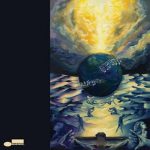
Vibraphonist and composer Joel Ross releases his fifth Blue Note album, “Gospel Music,” a sonic interpretation of the biblical story and an exploration of his faith that delivers a message of hope and love, performed by an expanded version of his Good Vibes band. An homage to an array of influences, the disc follows the arc of the grand biblical story. Each composition carries the emotional weight of the story of creation, the fall, and salvation, corresponding to biblical texts.
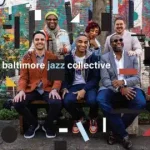 The way the members of the Baltimore Jazz Collective describe their hometown could just as easily apply to themselves—and to their striking self-titled debut album. “Musically, Baltimore is one of the most soulful cities, and you can’t really put the scene in a box,” say BJC founder Sean Jones, who ranks among the most revered jazz trumpeters of his generation. Overflowing with swing and spirit, the album features original compositions and arrangements by each member of the band: Jones, bass clarinetist Todd Marcus, pianist Alex Brown, bassist Kris Funn, drummer Quincy Davis and Brinae Ali, a singer, tap dancer and interdisciplinary artist.
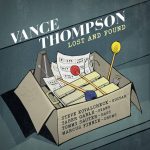
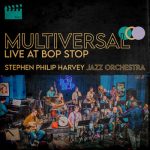
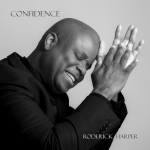
Also this week, “Lost and Found” is the first album in more than ten years from Grammy-nominated composer and bandleader Vance Thompson, who embarks on a new chapter as a vibraphonist after a career-threatening neurological disorder forced him to set aside the trumpet; “Multiversal: Live at Bop Stop” is the eighth release from saxophonist, composer and educator Stephen Philip Harvey, and the second by his 17-piece Jazz Orchestra; and vocalist and songwriter Roderick Harper unveils his newest album, “Confidence.”
Nate Basinger with Swampland Jewels is in the studio ahead of the band’s upcoming Carnival 2026 tour. The schedule for this Mardi Gras/Carnival celebratory tour is as follows:
2/13/26: RIBCO, Rock Island IL
2/14/26: Club 76 The Lodge, North Liberty IA
2/17/26: Wildwood Saloon, Iowa City IA
2/22/26: Old Neighborhood Pub, Cedar Rapids IA
For tickets and more info visit theswamplandjewels.com.
Subscribe to The Culture Crawl at kcck.org/culture or search “Culture Crawl” in your favorite podcast player. Listen Live at 10:30am most weekdays on Iowa’s Jazz station. 88.3 FM or kcck.org/listen.
https://vimeo.com/1163102916?share=copy&fl=sv&fe=ci
Podcast (culturecrawl): Play in new window | Download
Subscribe: Apple Podcasts | RSS